




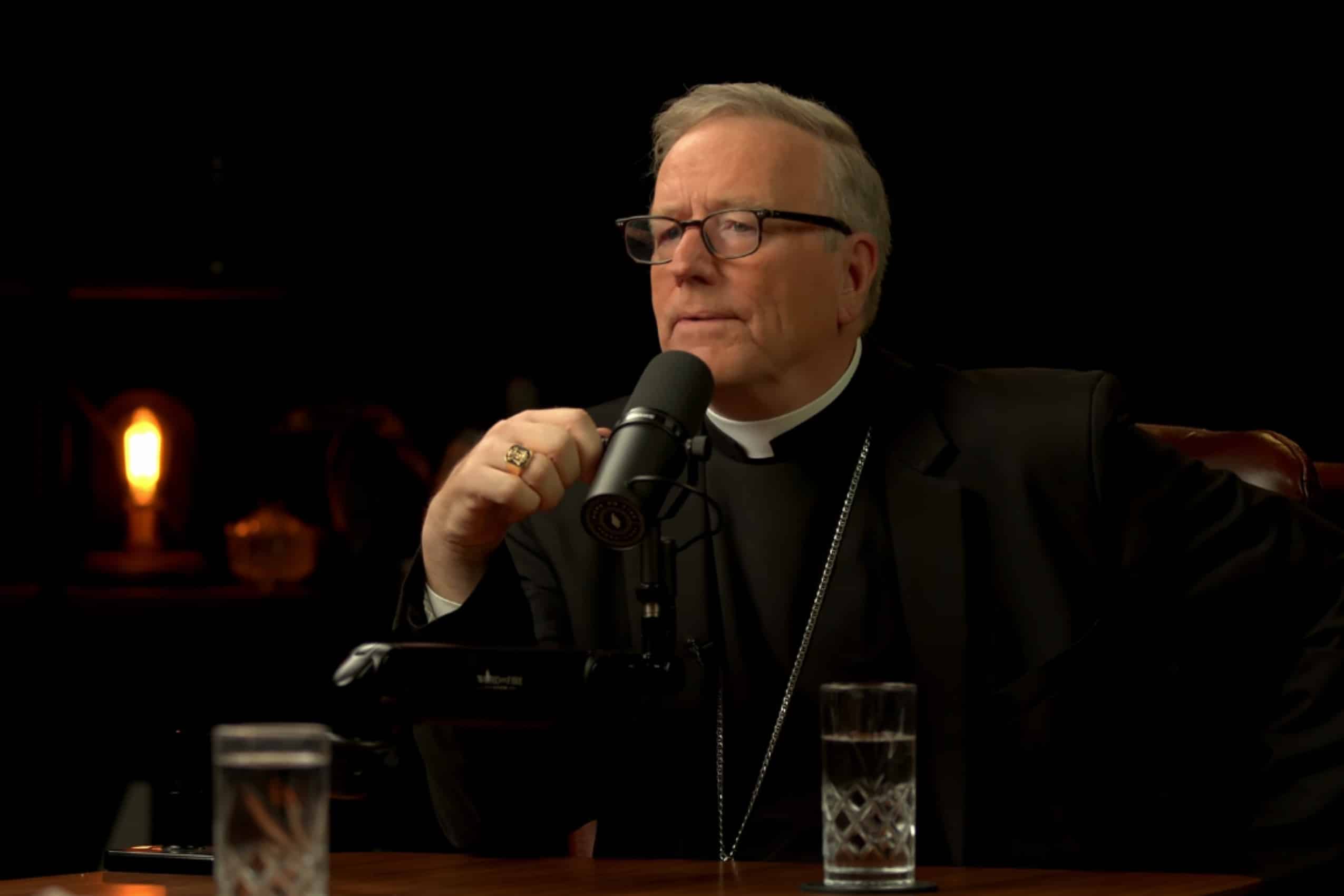
Bishop Robert Barron of the Diocese of Winona-Rochester is sounding the alarm over the scale of fraud in America, calling the amount of money stolen each year “staggering” and linking the problem to declining religious affiliation.
“Friends, the sheer volume of fraud taking place in recent years throughout the world, and in America in particular, is staggering,” Barron wrote in an Oct. 27 post on X.
Barron said he recently heard that the high end of federal estimates for the amount of money stolen each year in America is greater than the gross domestic product of Vietnam, the Philippines, or Denmark.
“This is a real blight upon our society, made possible, at least in part, by religious disaffiliation,” Barron wrote.
“Since morality is grounded, ultimately, in God, one consequence of disaffiliation is an increase in moral drift, relativism, and indifference,” he continued.
Barron concluded by calling for a return to Christian moral teaching.
“If we want to protect the common good, we have to recover a moral integrity rooted in the Ten Commandments, the Beatitudes, and the parables of Jesus,” he wrote.
Friends, the sheer volume of fraud taking place in recent years throughout the world, and in America in particular, is staggering. I heard recently that the high end of federal estimates of the amount of money stolen per year in America is greater than the GDP of Vietnam, the…
— Bishop Robert Barron (@BishopBarron) October 28, 2026
Barron expanded on those concerns during an episode of the Word on Fire Show, where he and host Matthew Petrusek discussed fraud nationally and in Minnesota.
Petrusek described Minnesota as “an epicenter of the systematic theft of public dollars” and cited an estimate from a former U.S. attorney that as much as $9 billion may have been lost to fraud in 14 state-run programs.
After hearing figures describing the scale of fraud nationally and in Minnesota, Barron again called the numbers “staggering.”
“And then you wonder, don’t you, what makes that possible? How could larceny at that scale be possible?” he said.
Barron again connected fraud to what he described as “moral drift,” “moral relativism,” and a declining awareness of traditional religious teachings.
He also argued that fraud involving public programs should not be considered victimless because the money ultimately comes from taxpayers and, in many cases, is intended to assist people in need.
“It may be white-collar, but certainly not victimless,” Barron said. “You’re taking it from those who are owed that money.”
Barron said that, from the perspective of Catholic social teaching, fraud can disproportionately harm the poor because government programs are often designed to provide assistance to people who need it most.
“If I’m stealing in massive quantities, I’m stealing precisely from the people who need it the most,” Barron said.
Barron also raised questions about government oversight in Minnesota.
“I don’t know the details here because I’m not involved in the inner workings of government,” Barron said before questioning how fraud on such a large scale could occur without failures in oversight.
Referring to fraud being exposed in Minnesota, Barron asked, “Who wasn’t doing his job here?” and questioned whether failures resulted from negligence, willfulness, or people “actively looking the other way.”
“There was certainly massive moral failure,” he said.
Barron argued that fraud on this scale goes beyond a managerial problem.
“To my mind, there has to be a massive moral failure for this kind of fraud to take place,” he said.
He also said widespread fraud damages trust between citizens and government.
“The bonds of trust are so loosened by this that the society begins to corrode from the inside,” Barron said.
Later in the discussion, Barron rejected the argument that exposing or prosecuting fraud should be dismissed as partisan politics.
“If something’s wrong, we should fight it. Period,” Barron said. “I mean, I don’t care what side’s doing it or, you know, where you land on the political spectrum.”
Barron called fraud a “major, major injustice” and said both the church and political leaders should address it.
“I’ve tried to say that even here in Minnesota to political people that I’ve been in touch with, that this should be a top priority for you,” Barron said.

Symone Harms
Symone Harms is a Media Production and Business Marketing student at Bethel University. She is actively involved in The Royals Investment Fund, The 25, theatre, and other leadership positions. She also cohosts Rooted, a podcast dedicated to being rooted in truth, growing in freedom, and prospering in life. A Minnesota native with a passion for storytelling and digital media, she aspires to a career in broadcasting as a news anchor and reporter.