


A Kenyan national named Ahmednaji Maalim Aftin Sheikh has been indicted for his alleged role in the $300 million Feeding Our Future fraud scheme. The 28-year-old is facing one count of conspiracy to commit international money laundering.
Sheikh is the 74th person to be charged in connection with the COVID-era scheme that saw fraudsters steal hundreds of millions of dollars from a federal child nutrition program which reimbursed participants for feeding hungry children. According to the U.S. Attorney’s Office in Minnesota, Sheikh is a resident of Kenya.
Earlier this year, Sheikh’s brother, Abdiaziz Farah, was sentenced to 28 years in prison for his role in a criminal operation that used the Feeding Our Future nonprofit organization to fraudulently receive federal funds between 2020 and 2022. In short, Farah and his co-conspirators falsely claimed they were providing millions of meals to kids.
According to authorities, Farah personally received over $8 million. Farah used the funds to purchase luxury cars, property throughout the United States, and real estate in Kenya. The 36-year-old, who came to the United States as a refugee, has also pleaded guilty for his role in a plot to bribe a juror participating in his criminal trial.
On Wednesday, the U.S. Attorney’s Office said Sheikh was in Kenya when the scheme was taking place and helped to launder and hide the funds fraudulently obtained by his brother. Farah reportedly sent a portion of the money to Sheikh who invested those funds in Kenyan real estate via sham companies.
Authorities said Farah bought an apartment building in Nairobi, and Sheikh helped his brother purchase land in a town near the country’s border with Ethiopia and Somalia.
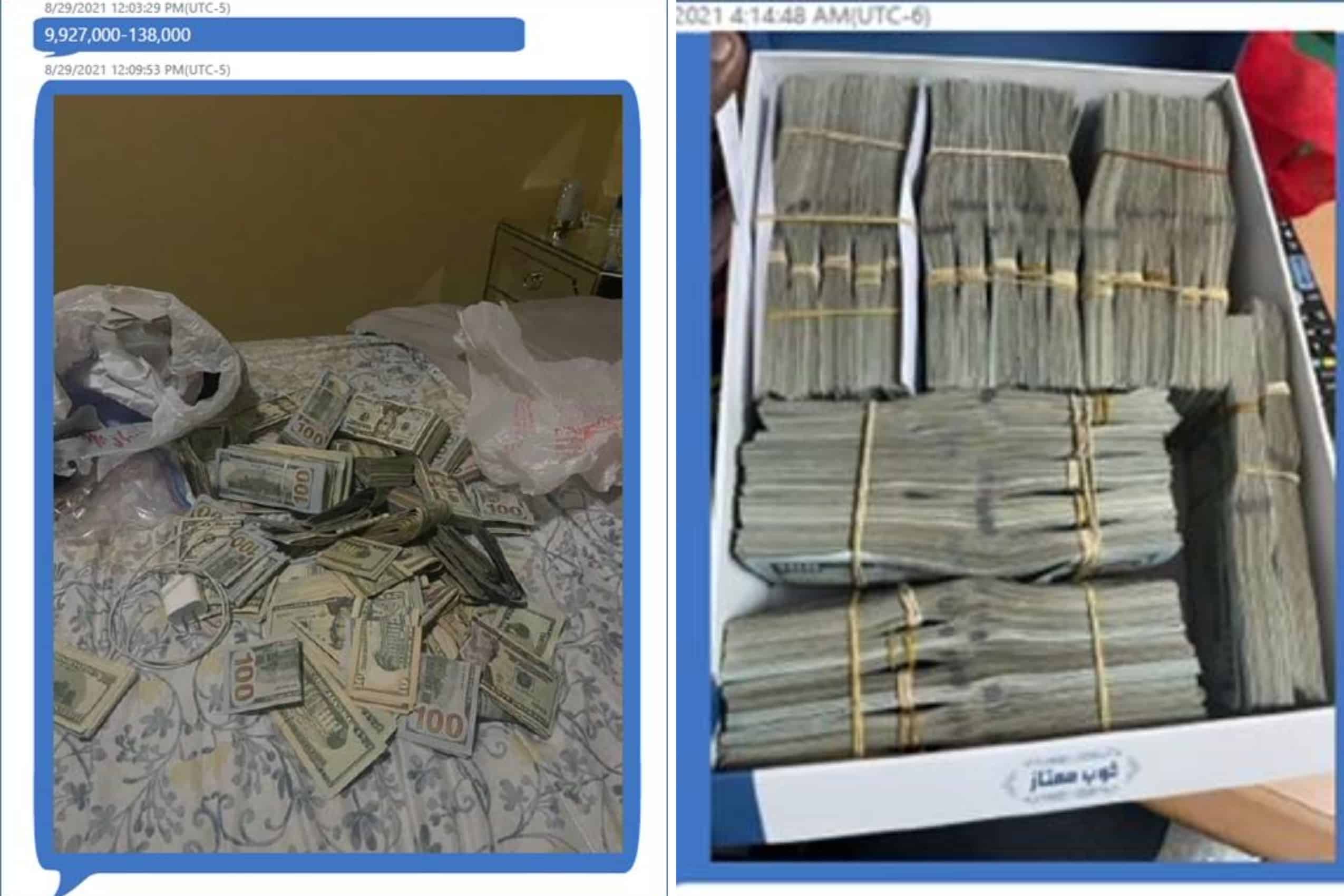
The U.S. Attorney’s Office said the two brothers routinely discussed the money via text messages. Some of those alleged messages, which included photos of large amounts of cash, were published on Wednesday.
“You are gonna be the richest 25 year old InshaAllah,” says one of the messages that was sent from Farah to his younger brother in July of 2021.
According to officials, Sheikh entered his name in a U.S. immigration lottery in November of 2024. That lottery program, administered by the U.S. State Department, gives out visas, and eventually green cards, to over 50,000 lottery winners.
Sheikh’s apparent attempt to gain entry to the United States came several months after his brother had already been arrested, charged, and convicted of more than 20 federal crimes.
The indictment against Sheikh was the result of an investigation by the FBI, U.S. Postal Inspection Service, and the IRS. The case is being prosecuted by Acting U.S. Attorney Joe Thompson and his assistant U.S. Attorneys.
“I share the outrage of my fellow Minnesotans at seeing money meant to feed hungry children converted into fortunes half a world away,” said Thompson. “Sheikh’s indictment shows yet again what we are up against. It is another window into the many fraud schemes that have seeped into every corner of our state.”
“But we cannot shrink from confronting this crisis,” added Thompson. “We must come together as Minnesotans and demand that the frauds stop now. We must protect the future of our children and our state.”
A previous version of this story incorrectly stated who purchased the properties in Kenya according to authorities. This story has since been updated.
Luke Sprinkel
Luke Sprinkel previously worked as a Legislative Assistant at the Minnesota House of Representatives. He grew up as a Missionary Kid (MK) living in England, Thailand, Tanzania, and the Middle East. Luke graduated from Regent University in 2018.