


As Minnesota reels from one fraud bombshell after another — autism therapy costs exploding into the hundreds of millions, a $100 million housing program shut down over phantom claims, and new allegations of taxpayer dollars reaching overseas terrorist group Al-Shabaab — Alpha News continues to receive a flood of tips from residents who say something in their community doesn’t look right.
One of those tips arrived over the summer about a taxpayer-funded autism therapy center in Burnsville that has billed the state nearly $2 million since October 2023. Yet a neighboring business owner says the facility is almost always empty, and weeks of surveillance footage reviewed by Alpha News appear to back that up.
Tip about Burnsville autism center
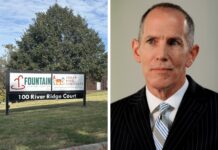
Fountain Autism Center LLC is owned by Sharmake Hassan and Sacdiyo Huruse Abdi Ali.
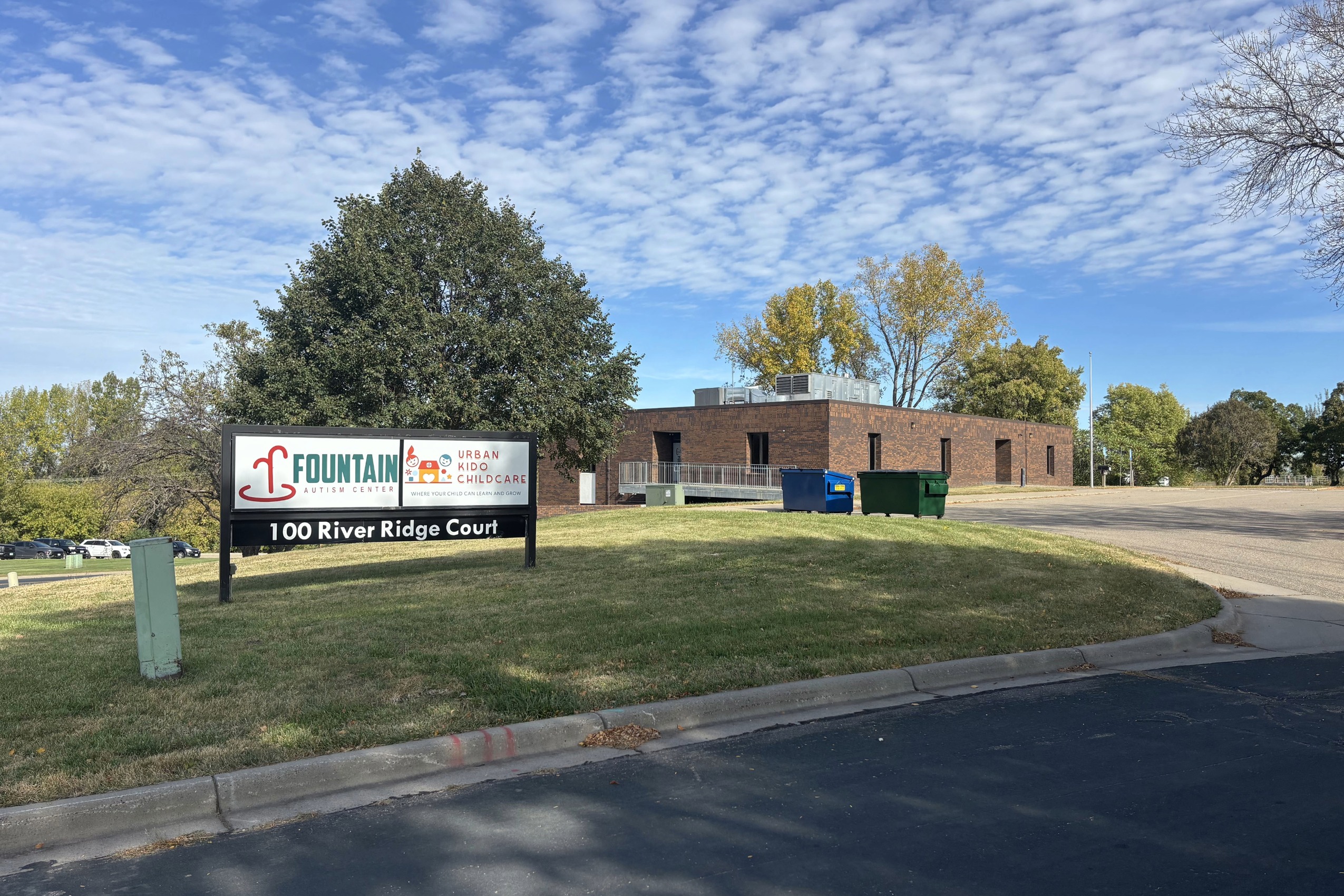
The business posts hours of 10 a.m. to 7 p.m. weekdays and 11 a.m. to 6 p.m. weekends, according to signage on its front door, but a neighboring business says it rarely appears open.
“No one is ever there,” a nearby business owner told Alpha News. “It just doesn’t add up when you see how much money they’re getting from the state.”

The business owner, who has owned property near Fountain Autism Center for roughly 20 years and asked to remain anonymous out of fear of retaliation, said he and other nearby tenants have long joked that it’s a “fake business” because of the lack of visible activity.
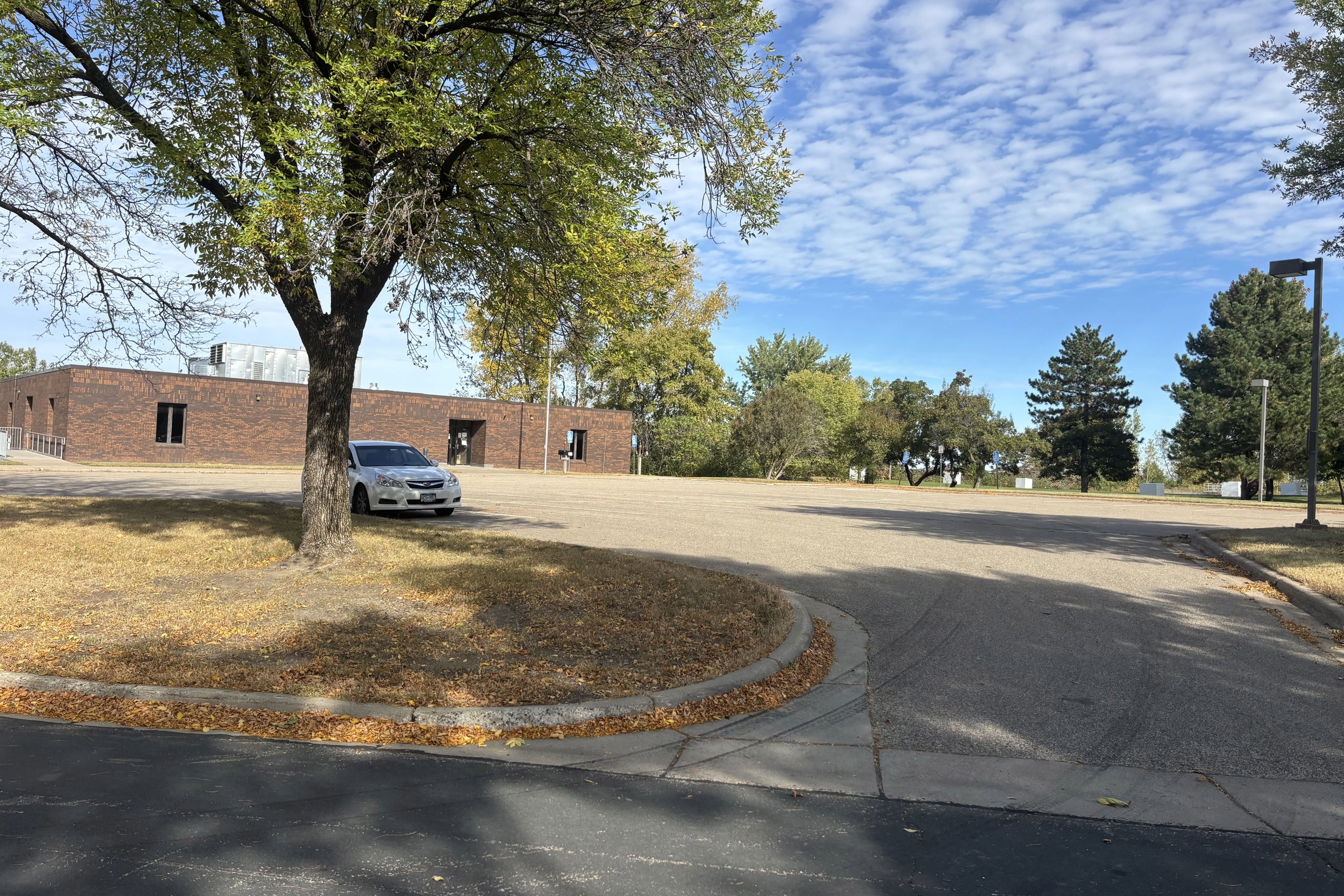
Alpha News reviewed weeks of video footage of the entrance to the Burnsville autism facility. The video showed only a few cars and individuals ever entering or leaving the center over a span of weeks. The parking lot, which has about a dozen or so spaces, remained mostly empty during normal business hours, according to the video reviewed by Alpha News.
Inside the building
Alpha News visited Fountain Autism Center during posted business hours and found only one employee present. She offered a brief tour of the facility, which included multiple therapy rooms and a kitchen, but there were no children or additional staff on site.
Asked why the building looked empty, she replied, “Most of them come after school.”
Asked how many clients the center serves, she first said, “A good ten,” then added that “most of them come after school or they do like in-home services.”
However, surveillance footage reviewed by Alpha News from multiple weekdays after school hours did not show an influx of children or staff entering the facility.
The employee also confirmed the center primarily accepts Medical Assistance and UCare clients.
In a follow-up phone call, the same employee said the center currently serves “four” children in person.
No license required despite millions in taxpayer funding
According to public state payment records, Fountain Autism Center has received at least $1,978,763 in taxpayer-funded reimbursements since October 2023.
Yet despite taking in millions, the center does not need a state license to operate. That’s because businesses in Minnesota’s Early Intensive Developmental and Behavioral Intervention (EIDBI) program are not required to be licensed.
The EIDBI program, which provides services to people under the age of 21 with autism spectrum disorder, itself has come under scrutiny amid widespread fraud concerns. The Minnesota Department of Human Services (DHS) told Alpha News there are currently 85 open investigations of EIDBI autism providers. DHS labeled EIDBI a “high-risk” provider type earlier this year.
As for licensing, DHS says as a result of the 2025 legislative session, the state will begin issuing provisional licenses for EIDBI programs in 2026, and comprehensive licensing standards for EIDBI services will be proposed to the 2027 legislature.
Felon with four drug convictions helps oversee treatment
As part of its investigation into Fountain Autism Center, Alpha News learned that one of main clinicians in charge of treatment is a four-time convicted felon, according to public records.
Tracy Lee Doerr is the center’s Qualified Supervising Professional (QSP) — the clinical authority responsible for designing treatment plans and overseeing autism services. He also has a criminal history that includes four felony drug convictions, a misdemeanor conviction for domestic abuse-violate order for protection, and two DWIs.
Asked about his criminal history, Doerr said his convictions should be considered an asset, stating: “Yes, I do have a criminal record, which I believe contributes to my growth and perspective as a clinician. It has helped me develop empathy and a broader understanding of the human experience,” Doerr stated.
“I have no connection to any fraudulent activity, and if Fountain were found to be involved in such issues, I would want to know immediately to reassess my professional associations,” he added.
On his LinkedIn profile, Doerr states that he works with “EIDBI centers as a QSP at numerous centers.” That model is one of the concerns highlighted in a recent DHS report, which warned that Minnesota’s limited pool of QSPs is being stretched across too many agencies.
“The number of QSPs working in the state is not growing at nearly the same rate as the number of provider agencies,” the report stated.
Owner disputes lack of activity, says majority of services happen off-site
In response to questions from Alpha News, co-owner Sacdiyo Huruse Abdi Ali said the center operates at “near full capacity” during summer months and provides both in-clinic and in-home services.
Ali said the apparent lack of activity at the Burnsville site is because most clients receive therapy at home, particularly during the school year when the majority of enrolled children are in school during daytime hours.
“During the summer months, our center operates near full capacity, serving approximately 80% of our clients between 9 a.m. and 7 p.m.,” she wrote. “During the school year, about 90% of our clients are school-aged children, and most families prefer in-home therapy sessions after school hours.”
However, the business owner who first alerted Alpha News to the center did so during the summer, saying the site appeared vacant even during the period Ali describes as its busiest.
“I’ve never noticed any type of traffic there whatsoever,” the nearby business owner said. “The most traffic I’ve seen there was after you guys started poking around.”
Alpha News reviewed surveillance footage, including weekends and after-school hours, and did not observe any noticeable increase in activity at the Burnsville facility.
DHS said that “whether or not an autism provider has a majority or nearly all of the clients serviced in the home varies by provider and the child.”
“Some providers offer center-based services, some offer home-based and others offer a hybrid approach,” the agency said. “The choice should be based off what is clinically necessary for the child, availability of service providers and parent preference.”
Ali said Fountain Autism Center underwent a DHS audit in 2024 and was found to be in “full compliance and in good standing.”
DHS confirmed to Alpha News that it conducted one site visit — in October 2024 — but said it cannot comment on whether any complaints were filed or whether any investigations are currently open.
“Our team is composed of two Board Certified Behavior Analysts (BCBAs), one Qualified Supervising Professional, four Level 1 providers, and sixteen active Level 2 providers. All staff are trained and credentialed according to state EIDBI standards,” Ali added, saying the state funds the company has received are “fully accounted for and aligned with state reimbursement guidelines.”
Wider concerns about EIDBI oversight
This case surfaces as questions continue to grow around Minnesota’s rapidly expanding EIDBI autism therapy sector. An X account identifying itself as Minnesota Department of Human Service Employees recently wrote:
“Our internal research is showing that autism fraud (EIDBI) fraud is significantly WORSE than Feeding Our Future.”
Our internal research is showing that autism fraud (EIDBI) fraud is significantly WORSE than Feeding Our Future.
— Minnesota Staff Fraud Reporting Commentary (@Minnesota_DHS) November 5, 2025
A January DHS report speaks to the rapid growth of the EIDBI program, noting that the number of providers has “more than quadrupled over a four-year period from 2020 through 2024.”

“In 2023, a total of 4,232 Minnesota children received EIDBI services as compared to 3,296 in 2022; this represents a 28 percent growth in the number of participants in a year and more than a tripling of program participants since 2020,” the report says.
Additionally, the report explains that average spending per client has “increased sharply over the life of the program,” reaching $45,000 in 2023.

Abuse in EIDBI and other Medicaid programs has reached the point “where the fraud has overtaken the legitimate services,” Assistant U.S. Attorney Joe Thompson said in September.
Shortly after, he announced charges against Asha Farhan Hassan, the owner of an organization called Smart Therapy and the first person charged with defrauding EIDBI.
“To be clear, this is not an isolated scheme. From Feeding Our Future to Housing Stabilization Services and now Autism Services, these massive fraud schemes form a web that has stolen billions of dollars in taxpayer money,” Thompson said.
In a statement to Alpha News, DHS said it is “acting aggressively to detect and prevent fraud” in the EIDBI program and will cut off funding to providers “when credible allegations of fraud come to light.”
The agency urged anyone with information about suspected Medicaid fraud to contact its Office of Inspector General at 651-431-2650 or submit a report online.
Fountain Autism Center denies any wrongdoing, and neither the center nor its owners Sharmake Hassan and Sacdiyo Huruse Abdi Ali have been charged with fraud.

Jenna Gloeb
Jenna Gloeb is an Edward R. Murrow Award-winning journalist, media producer, public speaker, and screenwriter. Most recently, she worked as a reporter and on-air host for CCX Media. Jenna is a Minnesota native and resides in the Twin Cities with her husband, son, daughter, and two dogs.

Liz Collin
Liz Collin is a multi-Emmy-Award-winning investigative reporter, news anchor, and producer who cares about Minnesota. She is the producer of The Fall of Minneapolis and Minnesota v We the People documentary films, and author of the Amazon best-selling book, They’re Lying: The Media, the Left, and The Death of George Floyd. Her work has prompted important state laws. Yet perhaps most of all, Liz has been giving a voice to the truth—and helping others tell their stories—for more than 20 years.