



A children’s book called “We Miss You, George Floyd” is available at libraries throughout the Twin Cities “for children working through George Floyd’s murder and the police violence plaguing our country.”
The book, published by University of Minnesota Press, describes Floyd’s death as “the longest, cruelest 8 minutes and 46 seconds.”
“The police came. They pinned him down. They didn’t listen, even when he said ‘I can’t breathe,’” one page says.
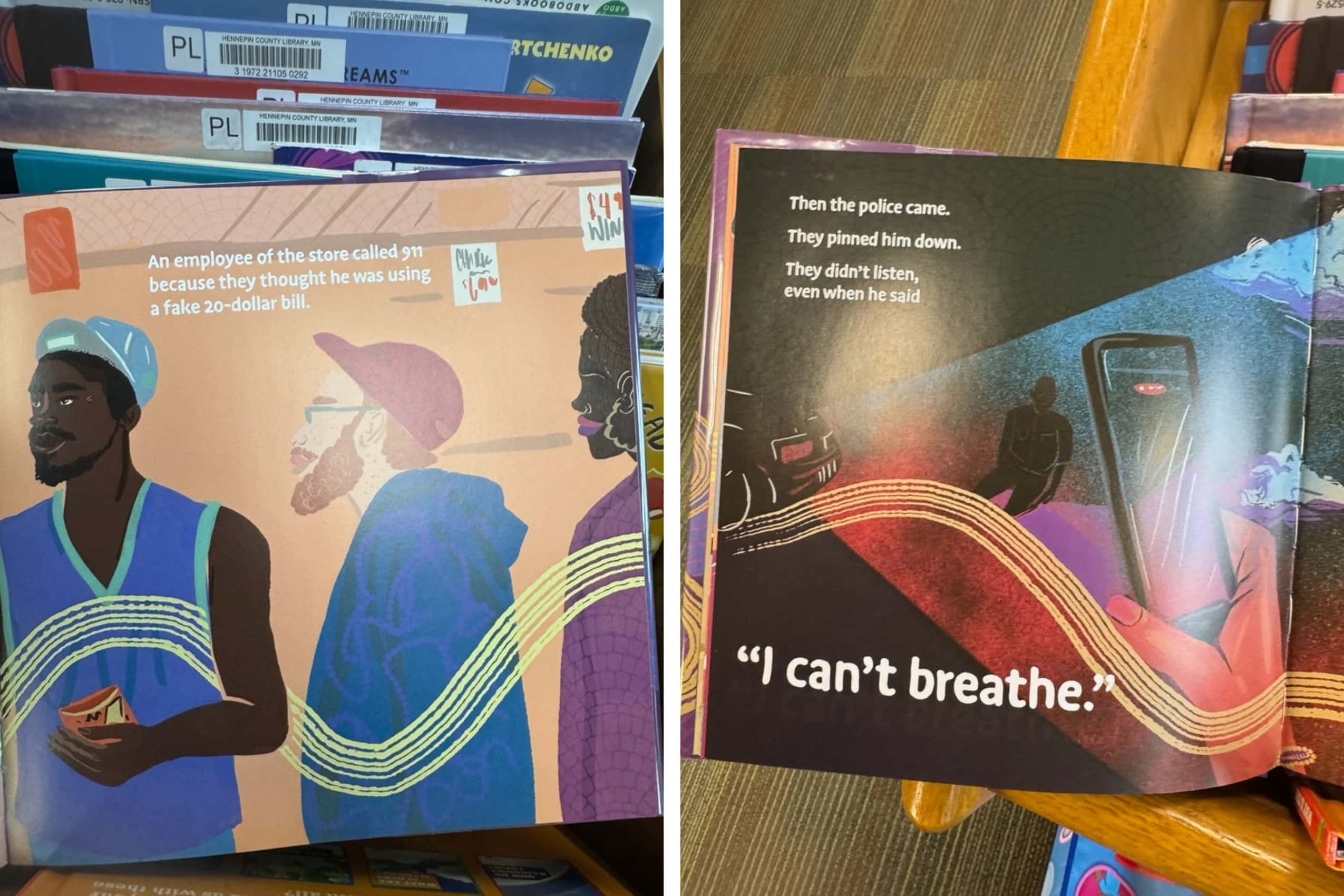
University of Minnesota Press says the book follows a young girl as she “tries to reckon with the senseless violence of [Floyd’s] killing.”
“For children working through George Floyd’s murder and the police violence plaguing our country, and for the grown-ups trying to help them, this book is an invitation to open up difficult conversations,” says the book description.
University of Minnesota Press also provides a reading guide that is aligned with certain “common core, national core, and Minnesota state standards,” and recommended for use by “educators in grades K-6,” “librarians responsible for story time activities,” and “childcare providers.”
The guide includes a glossary of terms that defines “systemic racism” as “unfair treatment of certain groups, especially people of color,” that is “built into the rules and routines of big systems, like schools, workplaces or even the government.”
“These rules make it harder for people of color to get the same opportunities and rights as others, and they give more advantages to people with privilege,” it says.
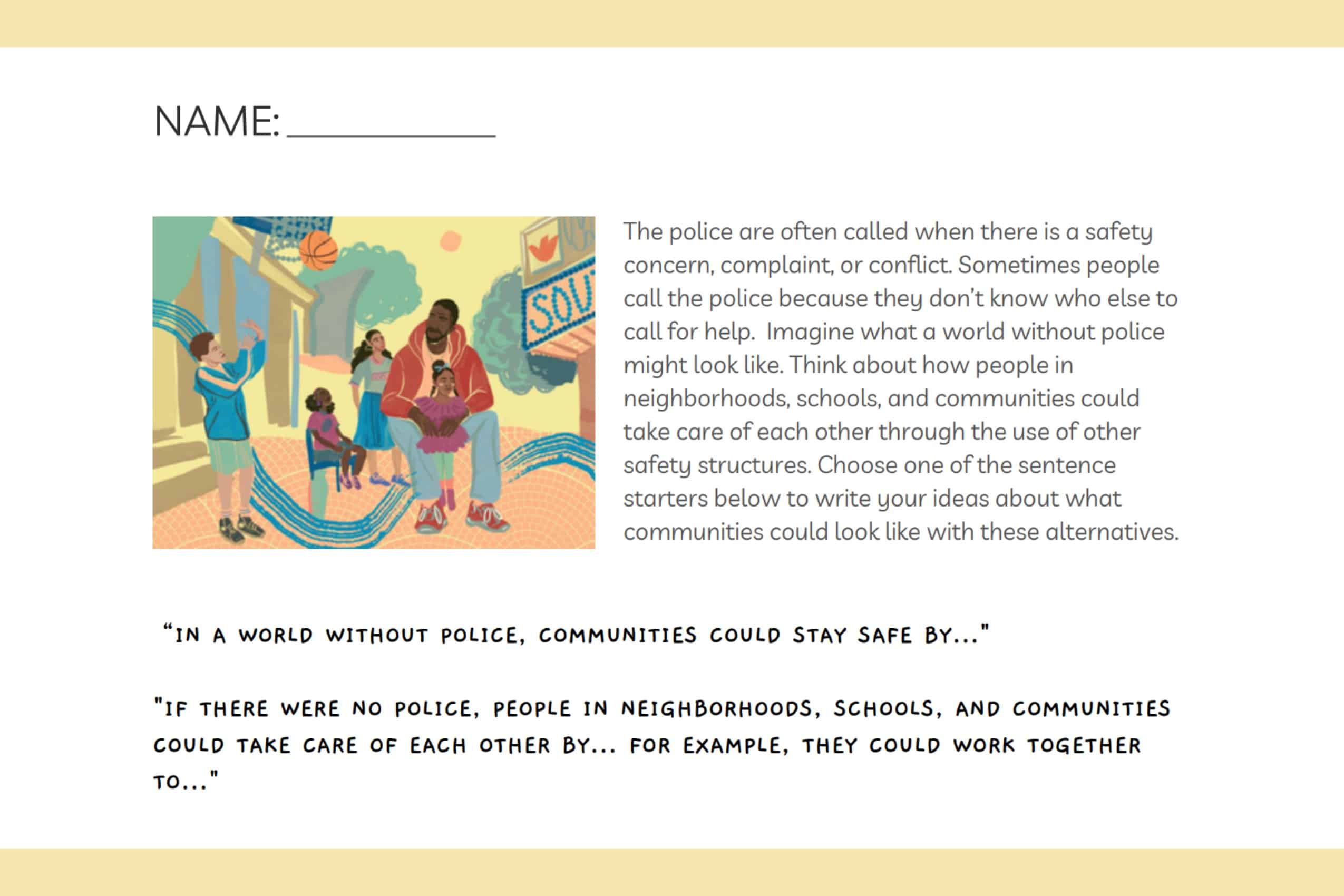
One of the activities in the reading guide invites children between the ages of 6 and 10 to “imagine a world without police.”
“Because we have had them for so long, it is often hard for people to imagine what a world without police could look like. Encourage children to think up police alternatives, considering how people in neighborhoods, schools and communities could take care of each other without the police,” the activity prompt says. “Using the next page, give children time to write their ideas for a world without police.”
Another activity tells educators to “show images, or have children research, different examples of protest art” and then create their own.
Shannon Gibney, the author of the book and a professor at Minneapolis College, recalled in an interview with the Star Tribune her experience discussing the book with elementary students.
“There’s a line in [the book] about how we can imagine a world without police violence because we can imagine a world without police. Some kids really seized on that: ‘We can’t have a world without police. We have to have police to stop crimes.’ And I would say, ‘Do police really stop crimes?’” she told the Star Tribune. “One kid said, ‘We could take all that money and put it into housing and food.’ And these are third graders!”
Libraries throughout the Twin Cities carry the book, including 25 copies that are available in the Hennepin County Library system, five in Ramsey County Library, and one in the Great River Regional Library.

Anthony Gockowski
Anthony Gockowski is Editor-in-Chief of Alpha News. He previously worked as an editor for The Minnesota Sun and Campus Reform, and wrote for the Daily Caller.