





If you drove up Snelling Avenue to the Minnesota State Fair this year, you may have driven right past Kimball Court without knowing it.
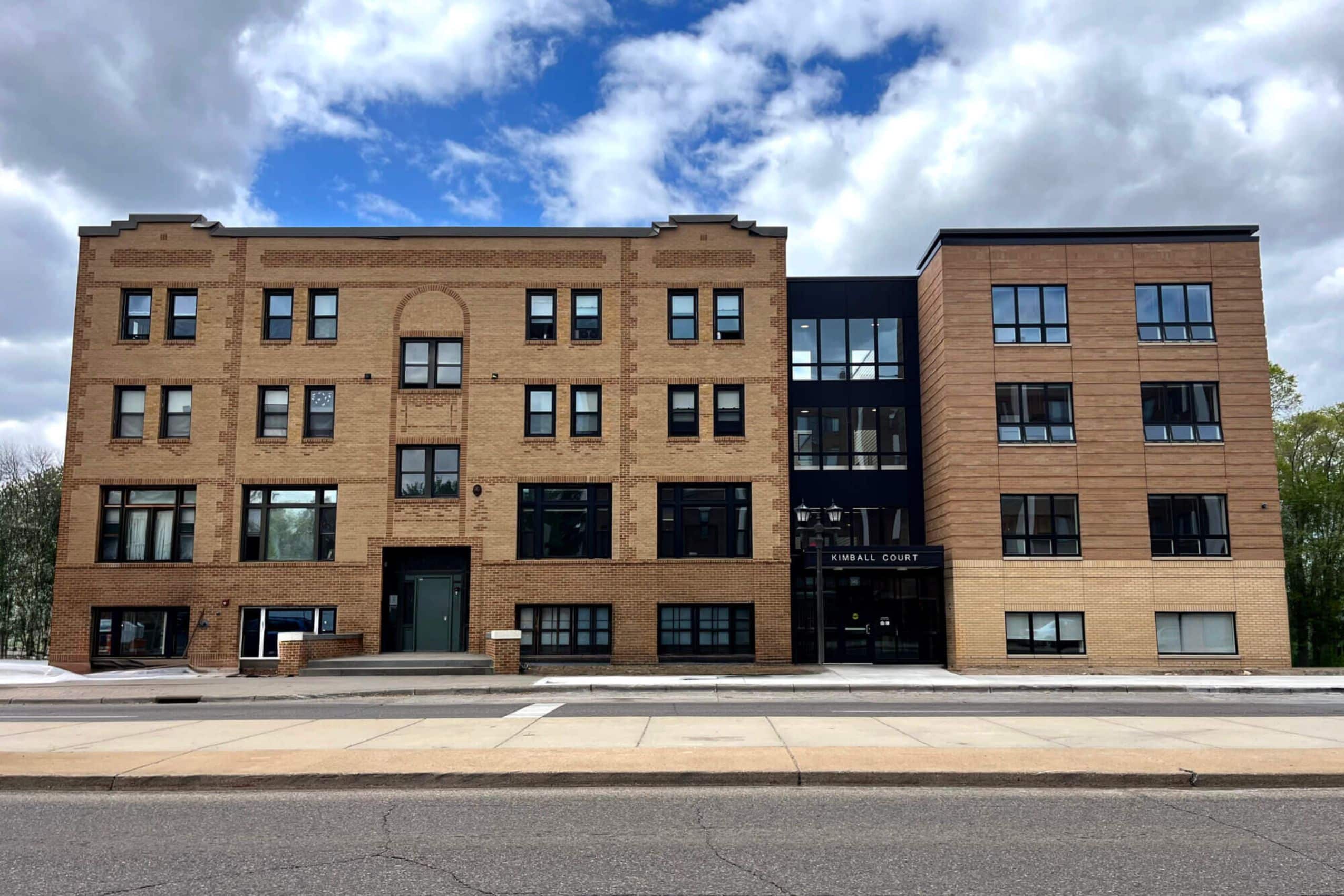
Kimball Court is a 98-unit permanent supportive housing complex near Snelling and University avenues in St. Paul’s Hamline-Midway neighborhood. It provides apartments for people who have experienced chronic homelessness, pairing permanent housing with on-site services and case management intended to help residents remain stably housed.
Unlike a homeless shelter or transitional housing program, residents live at Kimball Court under leases and can remain there long term.
The complex sits just a few blocks north of I-94, along a stretch where scenes of open drug use have become difficult to miss: people hunched over in the telltale “fentanyl fold,” sprawled on sidewalks or urinating against buildings.
For the motorists passing through, it’s a brief glimpse from the car window.
For the people who live and work there, it’s everyday life.
One property owner who has had a nearby rental home for nearly two decades says he regularly finds needles and burned tinfoil in his yard, witnesses open drug use and has watched people pull down their pants and defecate outside his property.
Next door, employees at DEY Appliance Parts — a family business that has operated at that location since 1971 — say picking up used needles, condoms and other debris has become part of their daily cleanup routine.
Both say the neighborhood has deteriorated.
“It’s never been like this before,” the property owner told Alpha News.
And both point, at least in part, to Kimball Court.
Its owner, Beacon Interfaith Housing Collaborative, recently completed a major renovation and 22-unit expansion backed by approximately $19 million in public investment — an effort Beacon says was specifically designed to improve a troubled property.
Beacon says it is working.
The neighbors aren’t so sure.
But on one point, there appears to be common ground: St. Paul leaders need to come up with a solution to the homelessness, drug activity and disorder playing out on its streets.
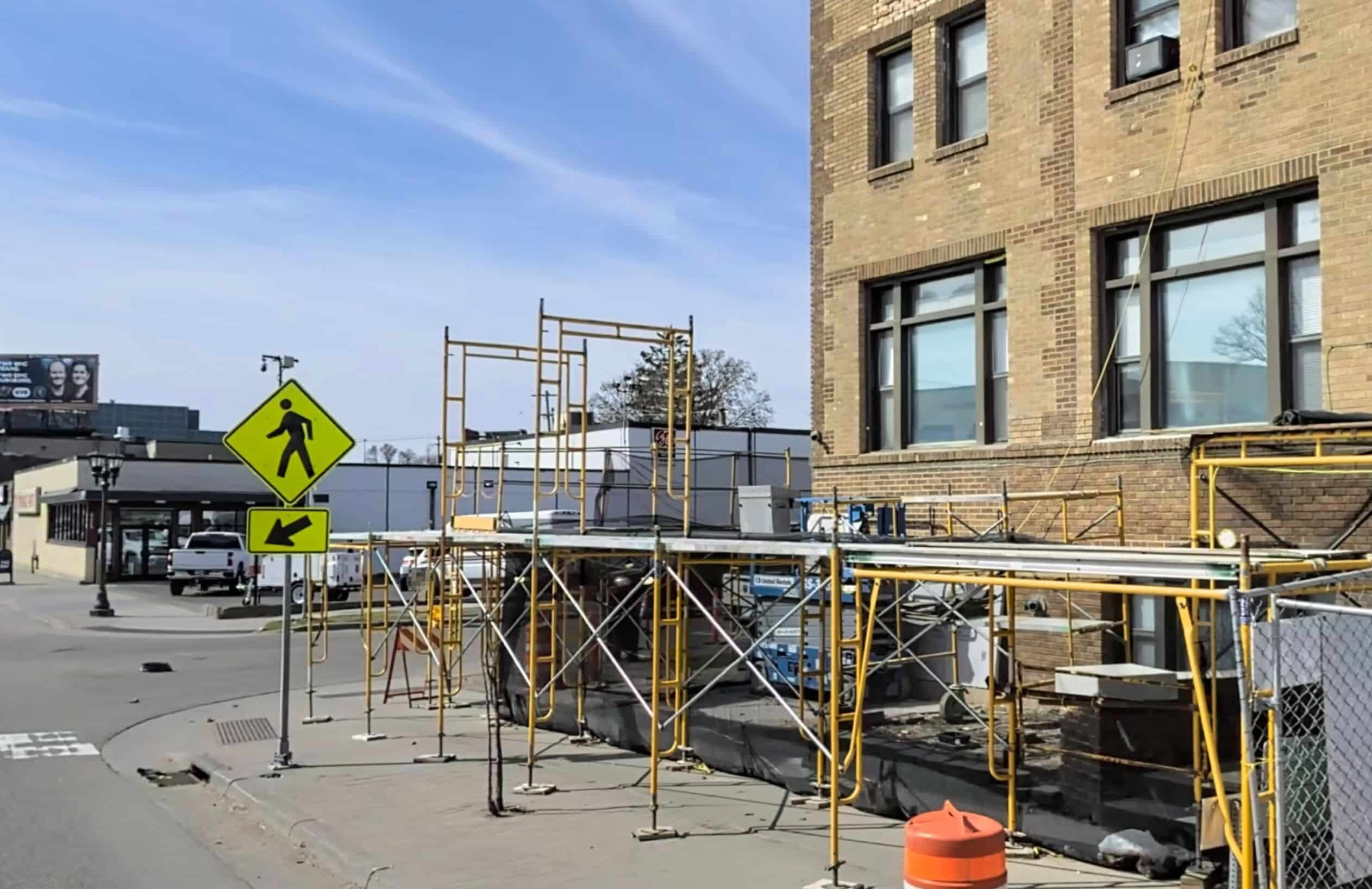
A business that’s seen the neighborhood change
Peter Dey has had a front-row seat to the comings and goings along Snelling Avenue for more than half a century.
“The neighborhood has always been a little quirky, but nothing that serious or scary,” said the second-generation owner of DEY Appliance Parts.
But Dey said that began to change about five years ago.
“It’s gotten a lot more sketchy.”
Dey said people have camped behind the building and started fires, and customers have become apprehensive about leaving their vehicles outside.
“It’s like an ongoing, almost a daily something or other you got to clean up,” he said.
Dey said activity involving Kimball Court residents and their guests has contributed to what his employees encounter.
He initially supported the Kimball Court expansion, believing the promised enhanced security, additional services and other improvements could make things better at a property Beacon had previously acknowledged had “become part of the problem in the Hamline Midway community.”
Asked whether they did, he didn’t hesitate.
“Oh, it definitely has gotten worse,” he said of the expansion. “There’s more people. What I’ve come to realize is, it just created just more and more people out there doing the same stuff.”
Concerns about Kimball Court — and opposition to its expansion — were well documented before construction began.
A 2024 Pioneer Press article reported that residents and business owners had raised concerns about loitering, panhandling, litter, open-air drug use, drug dealing and prostitution.
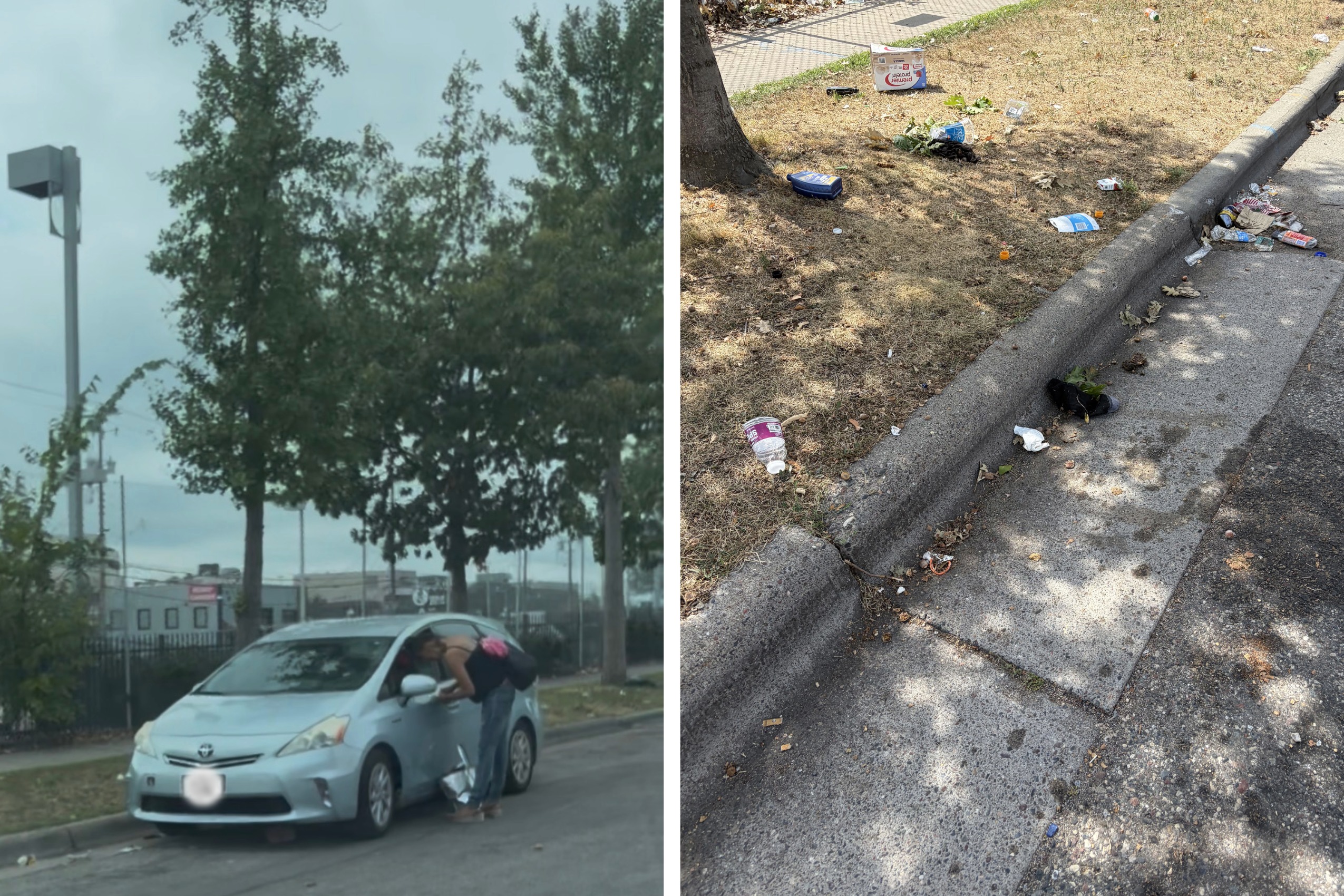
The concerns were serious enough that two St. Paul police officers who regularly patrolled the area described Kimball Court in a September 2024 incident report as “the hub for most of the narcotic traffic” in the department’s western district, according to the article.
Officers reported seeing people who did not live at Kimball Court enter the building with backpacks and leave minutes later without them, followed by groups arriving outside the building. One officer reported confiscating fentanyl from people in nearby alleys or catching them smoking it.
Neighbors and nearby businesses also pushed back against the proposed expansion.
The St. Paul City Council nevertheless approved $3.35 million in federal American Rescue Plan Act funding toward the project. That money represented just one piece of the financing, which carried an overall price tag of approximately $19 million and increased Kimball Court from 76 to 98 units. The project was backed by a mix of federal, state and local public funding.
‘I just gotta move on’
A nearby residential property owner described the neighborhood becoming more problematic since the multimillion-dollar expansion.
Alpha News agreed not to identify him because of concerns about speaking publicly.
After roughly 20 years of owning his home, he said he routinely finds evidence of drug use on his property.
“I find needles and tinfoil in my yard nonstop,” he said.
He also described people openly using his front yard as a toilet.
“Many times, people just right in front of my property, pulling their pants down and defecating,” he said. “I just gotta move on and get rid of this place.”
The property owner also described long-standing problems with abandoned vehicles in a lot near Kimball Court, including several that he said sat for more than a year while people regularly came and went from them at all hours.
A graffiti-covered semi-trailer remained on the same lot even longer, he said, going unmoved for more than two years before recently catching fire.
He said he spent more than a month trying to get the vehicles removed, working with the out-of-state property owner and city officials before a police officer eventually ran the VIN numbers and contacted the vehicles’ owners, who had no idea they were there.
According to the property owner, the vehicles met the city’s definition of abandoned, but removing them became complicated because they were on private property. He said he witnessed the vehicles being used for drug activity and prostitution before the passenger vehicles were ultimately towed.
“It was a weird loophole where everybody knew they were abandoned and used for drugs or prostitution, but everybody’s hands were tied,” he said.

Beacon: ‘No rose-colored glasses’
In a lengthy interview with Alpha News, Beacon Interfaith Housing Collaborative President and CEO Chris LaTondresse acknowledged the significant challenges associated with operating supportive housing for people emerging from chronic homelessness, many of whom arrive with mental illness or substance use disorders.
LaTondresse repeatedly said he has “no rose-colored glasses” when it comes to Kimball Court, making clear that Beacon is not minimizing the challenges or suggesting everything is working as it should. But he pushed back on the idea that Beacon has failed to address the problems.
In 2022, Beacon publicly acknowledged that its operations at Kimball Court had “not been up to our own high standards.”
LaTondresse, who was not leading Beacon at the time, said the organization decided not to retreat from Kimball Court but to “double down” on fixing it.
LaTondresse also disputed a perception among some neighbors that residents are allowed to use illegal drugs at Kimball Court.
Every resident signs a lease and drug-free addendum, he said.
“Drug use is a lease violation. Drug sales is an egregious lease violation,” LaTondresse said.
Residents don’t have to be sober before moving in, and some arrive with substance use disorders. But LaTondresse said drug use, possession and sales can lead to lease enforcement and ultimately eviction.
“This is a second chance,” he said. “It’s not an unlimited opportunity.”
Beacon’s responsibility also doesn’t stop at the front door, he said.
“Our responsibility follows our residents past the property line,” LaTondresse said, explaining that residents can face consequences for their own conduct and that of their guests on neighboring property.
The renovated building now has 24-hour security, controlled entrances and exits and more than 60 cameras, according to LaTondresse.
He also stressed that the full security overhaul is new.
“We have literally just opened up the renovated Kimball Court,” he said. “Let’s have this conversation a year from now and see where we’re at.”
Beacon CEO offers to meet with neighbors
When Alpha News told LaTondresse about Dey’s concerns and his family’s decades in the neighborhood, he didn’t challenge Dey’s account.
He offered to meet with him.
“If he has ideas about how we can be better neighbors and better partners … I will sit and talk to him,” LaTondresse said. “I’ll take that meeting.”
He said Avivo, which provides services at Kimball Court, conducts weekly cleanups around the property and that he has personally participated. But LaTondresse also said there is a limit to what one housing provider can do about homelessness, addiction and disorder across an entire neighborhood.
“We control what is directly within our control,” he said. “No individual organization can be responsible for the challenges facing an entire community.”
LaTondresse also said police calls associated with Kimball Court have “gone down dramatically.”
Police calls decrease at Kimball Court, but increase nearby
Data provided to Alpha News by the St. Paul Police Department backs that up — with a caveat.
Police recorded 424 calls for service at Kimball Court in 2022, compared with 120 in 2025, a decline of more than 70%. The data show 60 calls through Aug. 9 of this year.
But the picture looks different in the area immediately surrounding Kimball Court.
Police recorded 5,038 calls for service in the surrounding area in 2022, compared with 5,662 in 2025 — an increase of about 12%. There were 4,484 calls through Aug. 9 of this year.
SPPD cautioned that calls have fluctuated from year to year, both at Kimball Court and in the surrounding area.
“Kimball Court has really turned a lot of things around compared to years past,” SPPD told Alpha News. “The number of calls has diminished, and they are proactively working to make their property a livable location for many.”
At the same time, police confirmed that significant public safety and quality-of-life problems persist in the surrounding area.
SPPD said department leadership has been working with businesses, community organizations and city resources to address ongoing narcotics activity, mental health concerns and issues involving homelessness. Among the concerns reported are loitering, disorderly conduct, narcotics use and sales, fights and assaults, the department said.
Police said directed patrols have been conducted throughout the area for “a couple of years,” with officers proactively addressing crime, trespassing and disturbances.
What’s St. Paul’s plan?
That’s where the problem becomes bigger than Kimball Court.
Beacon can install cameras, hire security, enforce leases and provide case management.
It cannot police Snelling Avenue, operate St. Paul’s addiction and mental-health systems or determine what happens to people for whom supportive housing doesn’t work.
Those broader problems require a response from the city and other public systems — something LaTondresse himself acknowledged.
“Our public systems need to be doing more,” he said.
And that puts the question squarely before St. Paul leaders.
Mayor Kaohly Her inherited a city grappling with homelessness, addiction, mental illness and public disorder. Her administration now has to decide how to address those problems when housing and voluntary services aren’t enough.
Alpha News asked Her’s office whether the city believes conditions surrounding Kimball Court have improved, what measurable outcomes it expects from the public investment and, more broadly, what its plan is for addressing the drug use and disorder affecting residents and businesses in the area.
The mayor’s office did not respond.
Her’s office also has not responded to previous Alpha News inquiries regarding homelessness and public safety concerns at Pig’s Eye Regional Park or Waterford Bay, two other problem areas Alpha News has extensively reported on.
For Dey, the issue is no longer theoretical. His family’s business has been on Snelling Avenue for more than 50 years.
Asked whether he would now consider leaving, his answer was simple.
“In the past, it’s not something I would have considered,” he said. “But now I would.”

Jenna Gloeb
Jenna Gloeb is an Edward R. Murrow Award-winning journalist, media producer, public speaker, and screenwriter. Most recently, she worked as a reporter and on-air host for CCX Media. Jenna is a Minnesota native and resides in the Twin Cities with her husband, son, daughter, and two dogs.