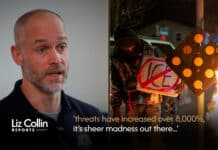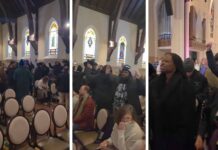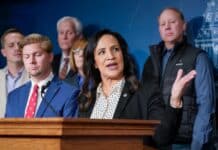

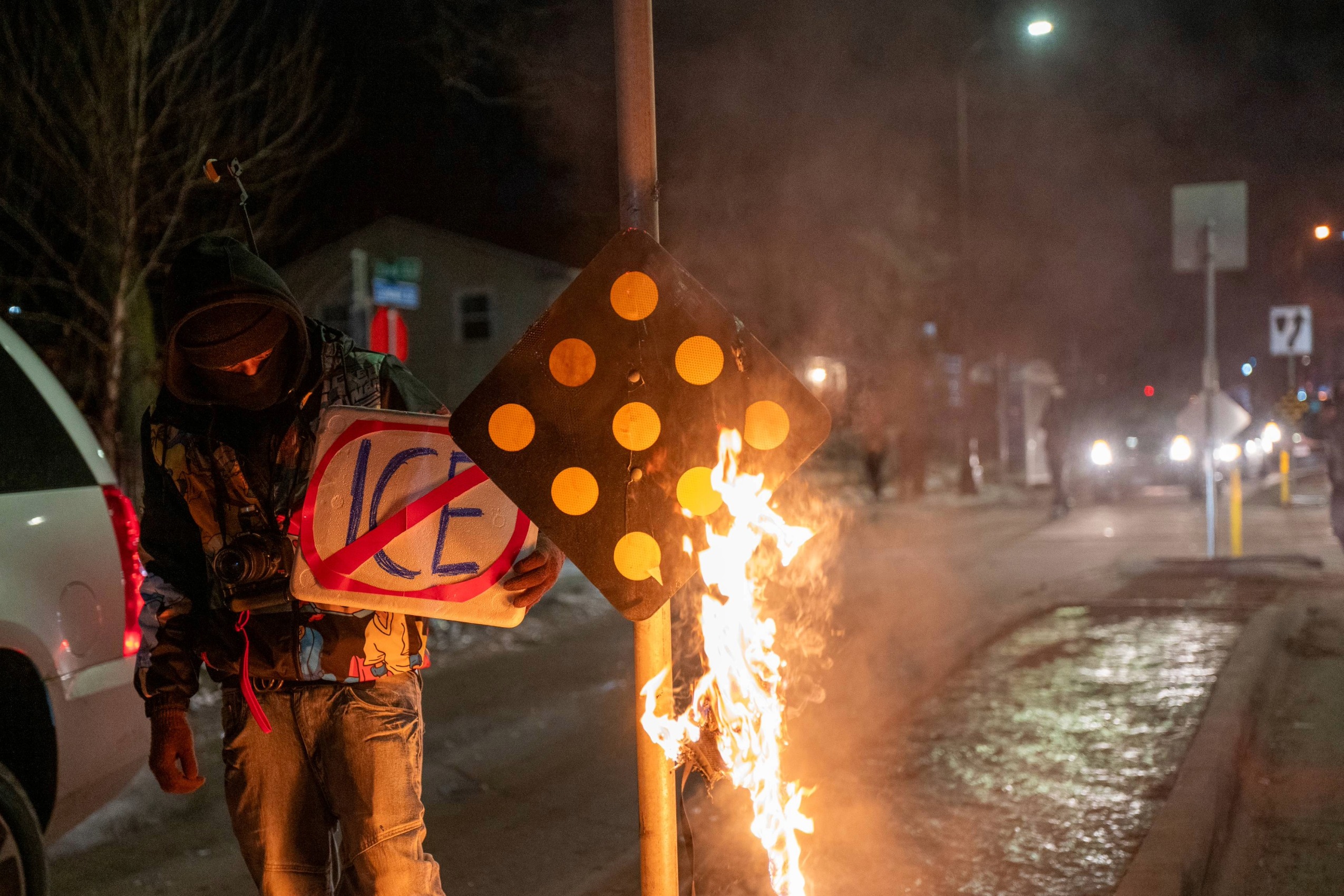
An in-depth investigation by City Journal is raising serious questions about whether a Minneapolis-based anti-ICE network is pushing civilians into dangerous confrontations with federal immigration agents after the shooting deaths of two activists in less than a month.
City Journal reports that both Alex Pretti, a 37-year-old Veterans Affairs ICU nurse killed Jan. 24, and Renee Good, a 37-year-old mother killed Jan. 7, were participants in “ICE watching,” an activist tactic that includes tracking and filming federal agents, and alerting others to enforcement actions.
Defend the 612 identified as organizing hub
According to City Journal, one group sits at the center of Minneapolis’ anti-ICE movement: Defend the 612.
The organization oversees a large network of Signal chats that monitor immigration enforcement, coordinate protests, and mobilize rapid-response actions across Minneapolis neighborhoods, City Journal reported.
City Journal said it examined Defend the 612’s trainings, accessed its Signal channels, and traced its organizational support.
The outlet reported that its investigation found that members and “related officials have encouraged protesters to impede law enforcement; pushed civilians toward legally and physically risky confrontations; and helped mobilize a counterprotest that turned violent.”
Some of Defend the 612’s trainings were led by outside activist organizations, including States at the Core and Protect RP.
Protect RP has been explicit about its goals. A Protect RP organizer previously described the group’s activities as “interfering with [immigration enforcement], confusing them, slowing them down so they can’t take more people, and doing it so well that they never want to come back,” according to City Journal.
‘Too expensive,’ ‘too difficult,’ and ‘too annoying’
City Journal reports that Defend the 612’s trainings, while less explicit than Protect RP’s, still promoted interference with law enforcement.
At one training, instructor Lex Horan encouraged participants to make ICE’s work “too expensive,” “too difficult,” and “too annoying,” and claimed that blowing a whistle during a protest allowed a person ICE was questioning to “g[e]t away,” City Journal reported.
At the same session, Minneapolis Park Board Commissioner Dan Engelhart spelled out the mission even more clearly.
“Defend the 612’s goal, he said, is to ‘slow [law enforcement actions] down and cost them money,’” according to City Journal, who added that Engelhart did not respond to their request for comment.
City Journal describes Defend the 612’s Signal infrastructure as extensive and highly organized, with “more than 150 neighborhood- and task-based groups across Minnesota.”
Some “rapid response” chats track suspected ICE agents by vehicle and on foot, sharing locations, photos, and license plate numbers. Dispatchers coordinate movements using “paramilitary jargon” such as “copy,” “roger,” and “eyes on,” the outlet reported.
Reference materials shared in these chats include instructions for following suspected ICE vehicles, a database of more than 4,800 confirmed or suspected ICE license plates, logs of “deportation-related travel,” and a list of nearly 70 hotels where agents have been known to stay, City Journal reported.
Minnesota Reformer coverage
City Journal’s investigation also examined the relationship between the ICE-watch movement and Minnesota-based media, specifically the Minnesota Reformer.
According to City Journal, Defend the 612 activists described their media strategy as “propaganda” and emphasized the need to “maintain control of your narratives.”
In a Signal exchange cited by City Journal, an account appearing to belong to activist Elle Neubauer said a Minnesota Reformer reporter accompanied him while he followed ICE agents for a Jan. 13 story.
“Neubauer claimed the reporter had agreed in advance to give activists final say over the article, which he said was read aloud to them line by line, revised at their request, and would have been pulled entirely on request,” City Journal reported.
The Minnesota Reformer disputed that account.
“We stand by our story. We absolutely dispute the characterization,” Minnesota Reformer Editor-in-Chief J. Patrick Coolican told City Journal. “We offered to call and read their quotes and the context prior to publication to check for accuracy and their personal safety, which is standard practice on a story like this. We assured the sources their participation was entirely up to them. We explicitly told them we would not send them a draft of the story.”
City Journal reported that Neubauer did not respond to a request for comment.
Escalation and deadly consequences
City Journal reports that some Signal chats were devoted to disrupting federal enforcement, urging participants “to be super annoying and waste” law enforcement’s “time and resources.” Members referenced the “Simple Sabotage Field Manual,” praised throwing urine at agents as “mvp” behavior, and promoted “noise making and interrupting their meals and bathroom breaks.”
Those same networks were used to organize a counterprotest against right-wing influencer Jake Lang, City Journal reports. While organizing the “counteraction,” members circulated images of a hanging Klansman and dismissed the claim that “Nonviolence is the only strategy,” the outlet said.
City Journal reports that anti-ICE activists described Good’s death as an “assassination,” used it as a “recruiting opportunity,” and stated her role was “driving patrol.” At a training, defense attorney Kira Kelley said “driving patrols do carry some physical risk,” but added, “The biggest risk of all is to do nothing,” according to City Journal.
After Alex Pretti’s death, City Journal reports Defend the 612 escalated further, urging more participation. “The only way these senseless murders, detentions and acts of violence will stop,” an organizer wrote, “is if tens and thousands [sic] of us are on the streets protecting each other.”

Jenna Gloeb
Jenna Gloeb is an Edward R. Murrow Award-winning journalist, media producer, public speaker, and screenwriter. Most recently, she worked as a reporter and on-air host for CCX Media. Jenna is a Minnesota native and resides in the Twin Cities with her husband, son, daughter, and two dogs.