




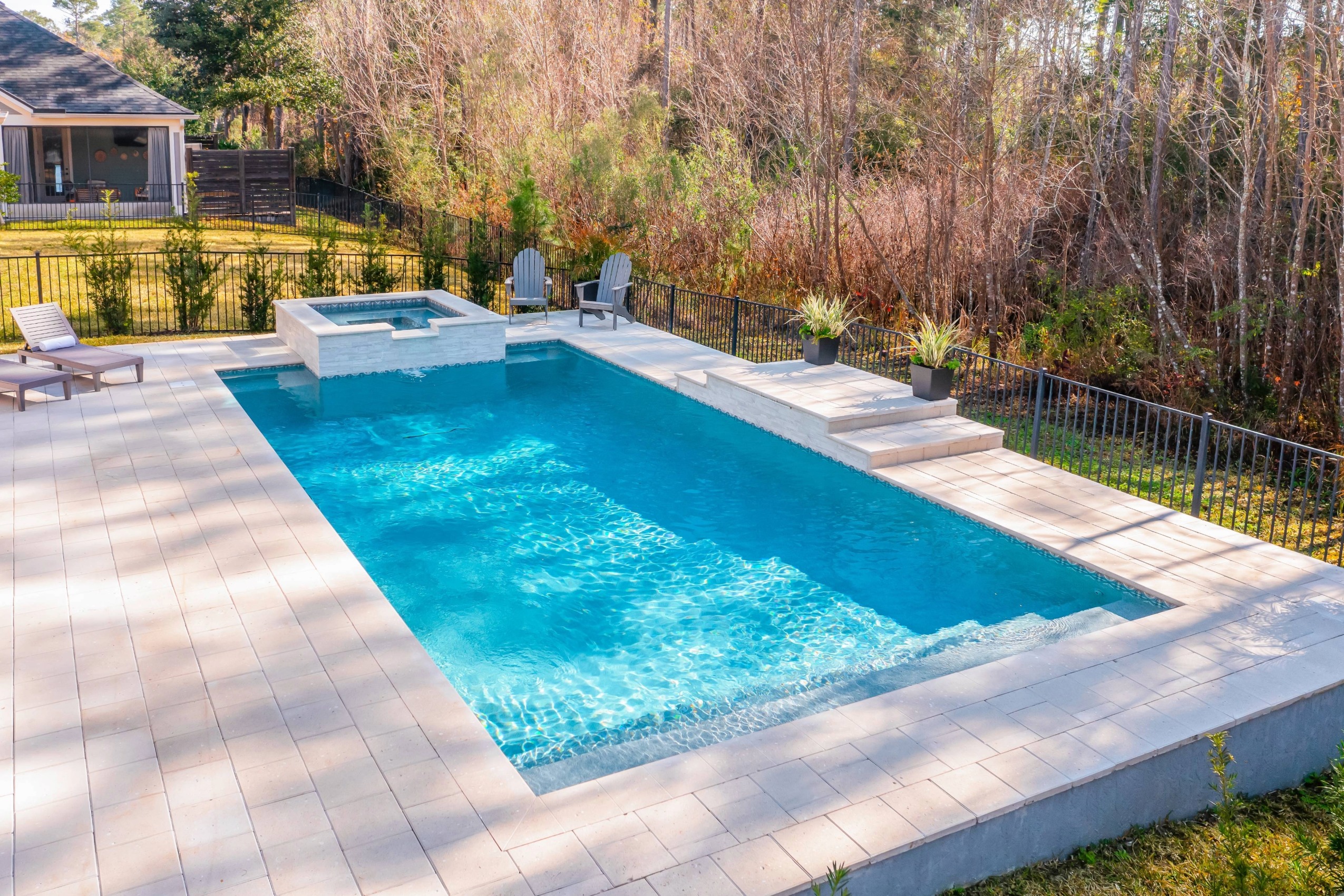
When the Minnesota Department of Health (MDH) abruptly declared in 2021 that any backyard pool listed for short-term use is suddenly “turned” into a public pool, it crossed both a legal line and a common-sense one.
Without notice, public comment, or rulemaking, MDH transformed private family pools into “public” ones, subject to commercial-grade construction requirements, inspections, and licensing—simply because a homeowner might ask guests to help offset chlorine costs or rent the pool for a few hours. Suddenly, Minnesotans found that their backyards had been reclassified by bureaucratic fiat.
That’s not what the law says. And it’s not how the Legislature—or ordinary Minnesotans—understand the difference between private life and public space. That’s why we’ve asked the Minnesota Court of Appeals to step in.
Minnesota law gives MDH authority to regulate public pools, not private residential ones. As relevant to this case, to qualify as “public,” a homeowner’s pool must be “open to the public generally.” The phrase has an ordinary meaning: anyone can show up, pay a fee, and use it. That’s not the same as inviting paying guests a few times a year.
MDH’s 2021 guidance ignored this distinction. The department claimed that any backyard pool is “used as part of a business” and automatically becomes “public” whenever any money changes hands in connection with its use, no matter how rarely or informally it happens. That interpretation defies logic. If a neighbor chips in for cleaning supplies or a mom collects $10 from parents to cover pizza at a pool party, that’s not running a business—it’s just Minnesotans being Minnesotans. Yet under MDH’s theory, those families could face the same requirements as a hotel pool operator, complete with construction codes, licensing, and the threat of five-figure fines.
Even if MDH genuinely thought the law was unclear, that didn’t give it the power to just declare its own rules. Minnesota’s Administrative Procedure Act requires agencies to go through a public rulemaking process before creating new regulations. That process exists for a reason—to prevent precisely what MDH did here: expanding its power by issuing a surprise “guidance” that carries the force of law.
Our appeal asks the Court of Appeals to do two things: first, declare MDH’s guidance invalid because it’s an unpromulgated rule; and second, reaffirm that “private residential pools” remain exempt from public regulation regardless of whether a homeowner occasionally offsets costs or selectively allows others to swim on a short-term rental basis.
When the Legislature modernized pool safety in 2008, MDH itself told lawmakers the rules would cover community pools, apartments, and hotels—not backyards. The agency even conducted a statewide inventory of “public pools” that included schools, parks, and health clubs—but not single-family homes. No one imagined the definition would one day stretch to include private families sharing their backyards.
MDH’s reinterpretation upends that balance, replacing legislative intent with bureaucratic whim. And if agencies can rewrite words like “public” and “private” on their own, there’s no clear limit to what they can claim authority over next.
This case isn’t just about swimming pools—it’s about the boundary between citizens and the state. If the government can call your backyard “public” because you listed it online or split the cost of chlorine, what stops it from doing the same with your garage, garden, or guest room? Minnesotans deserve predictable rules made the right way, not sweeping edicts disguised as “guidance.”
We’re not asking the court to strip MDH of legitimate power. We’re simply asking it to remind the agency that the law still means what it says—and that even regulators must follow the rules. The Legislature drew a bright line between public and private spaces. It’s time to restore it.
Alexandra (Allie) Howell and Nicholas J. Nelson are attorneys at the Upper Midwest Law Center and counsel for the petitioners in the Swimply/MDH appeal before the Minnesota Court of Appeals.
The views and opinions expressed in this commentary are those of the author and do not represent an official position of Alpha News.

Alexandra Howell
Allie Howell is Trial and Appellate Counsel for the Upper Midwest Law Center.