
When Minnesota’s 2026 legislative session began on Feb. 17, the Trump administration’s large-scale immigration enforcement effort in Minnesota, known as Operation Metro Surge, was just beginning to conclude. For DFL lawmakers, that meant the show could begin.
Since the legislative session started, Democrats in the Minnesota House of Representatives have pushed an array of bills that attempt to regulate federal ICE agents. Republicans have repeatedly said Minnesota has no authority to regulate the federal government.
Despite this, DFLers have claimed that ICE agents terrorized Minnesotans during Operation Metro Surge, and have argued that those agents must be constrained from doing so again.
To that end, Democrats have pushed legislation that would require federal authorities to submit to state investigations of officer-involved shootings, require federal agents not to wear masks, and require federal law enforcement vehicles to be marked as such.
Related bills include legislation requiring ICE to obtain a judicial warrant before entering a school for immigration enforcement, creating a state venue for Minnesotans to sue federal officials for constitutional violations, and new taxes on people enforcing immigration law.
While DFLers have held press events to highlight their affordability and anti-fraud priorities, much of their legislative activity has been focused on pushing ICE-related bills in committee meetings and on the House floor.
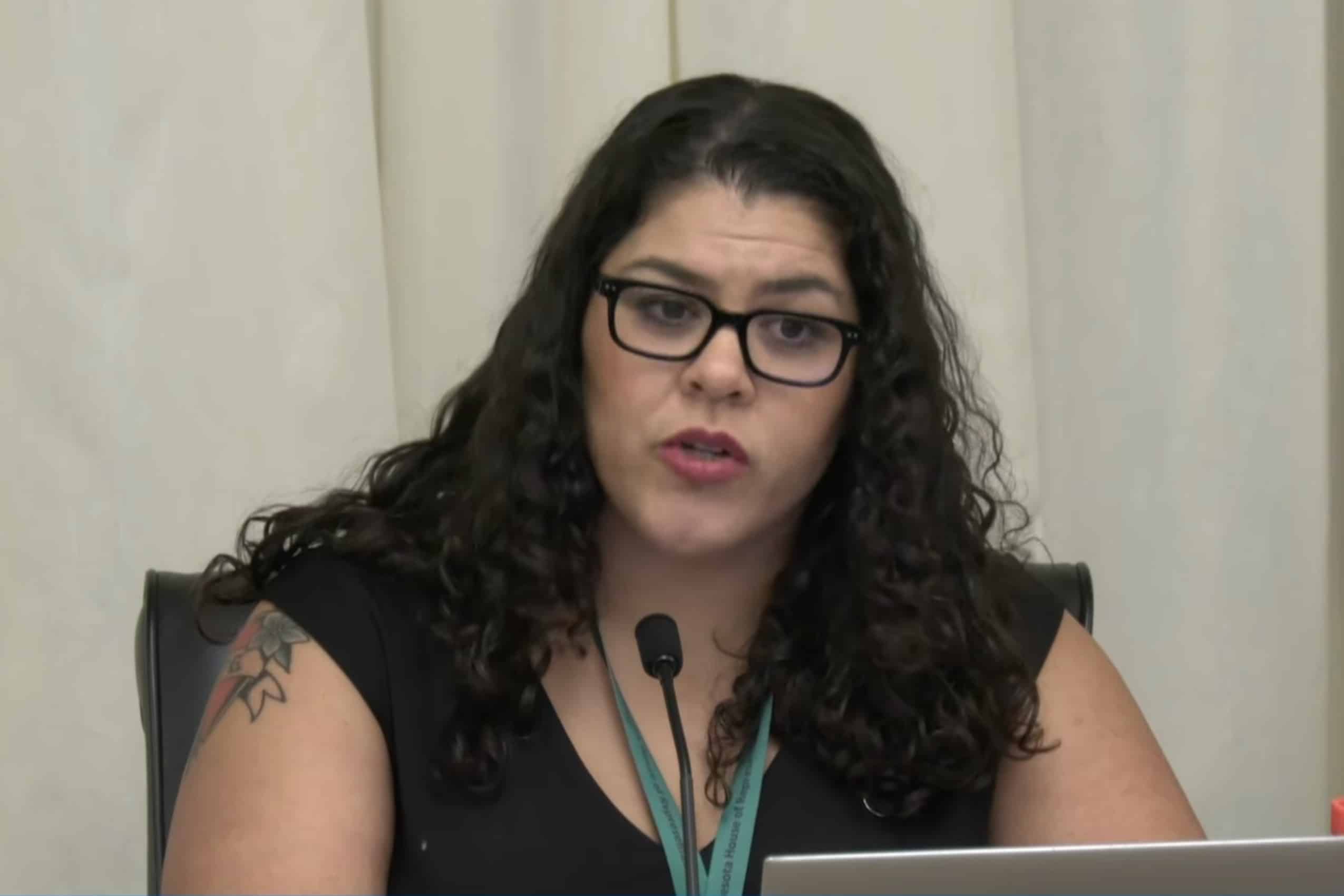
On Tuesday, lawmakers in the House Public Safety Committee heard another ICE-related bill from DFL Rep. Athena Hollins. That bill, HF 3413, would ban local law enforcement from entering into 287(g) agreements with ICE.
Under federal law, state and local law enforcement are allowed to partner with ICE for the purposes of immigration enforcement. Among other things, these 287(g) agreements can give local law enforcement the authority to assist with identifying aliens for ICE.
Touting the program on its website, ICE says the 287(g) program “benefits state and local law enforcement agencies in several ways — but most notably, it helps you keep your community safe from potentially dangerous criminal aliens.”
Alpha News has spoken extensively with Mille Lacs County Sheriff Kyle Burton, a Minnesota sheriff who has such an agreement. Burton previously said this 287(g) partnership helped his agency identify an illegal alien with an order for deportation and turn him over to ICE.
Speaking about HF 3413, Hollins claimed such agreements incentivize “racial profiling and detainment” because of monetary bonuses that are issued under the 287(g) program. The DFL lawmaker also said 287(g) agreements lead to lawsuits and “erode trust” between the public and law enforcement.
Testifying before the Public Safety Committee on Tuesday, Sherburne County Administrator Bruce Messelt warned that the language of HF 3413 is overly broad and could impact federal and local partnerships beyond 287(g) agreements.
For decades, Sherburne County Jail has partnered with federal authorities to house federal detainees who are incarcerated in Minnesota. Among other things, the Sherburne jail works with the U.S. Marshals Service and houses defendants facing federal criminal charges.
Messelt said Sherburne County does not maintain a 287(g) agreement, but HF 3413 could impact the county’s inter-agency agreements. Messelt suggested that HF 3413 be rewritten to be specific to 287(g) agreements if that is its intended purpose.
Kandiyohi County Sheriff Eric Tollefson testified against Hollins’ legislation on behalf of the Minnesota Sheriffs’ Association (MSA). Tollefson said HF 3413 gets rid of local discretion “that I believe is essential to addressing public safety concerns at a local level.”
After lawmakers discussed HF 3413, the Public Safety Committee tried to send the bill to the General Register — the last stop before the full House takes up a bill.
However, that vote failed to gain the support of a majority of committee members. DFLers voted to advance the bill while Republicans voted against advancement. As such, HF 3413 will stay in the Public Safety Committee.
At present, the House is evenly split with 67 Republicans and 67 DFLers. The Public Safety Committee is also comprised of an equal number of Republicans and Democrats.
Given the composition of the House and its committees, all the DFL’s ICE-related legislation will likely meet the same fate as HF 3413.

Luke Sprinkel
Luke Sprinkel previously worked as a Legislative Assistant at the Minnesota House of Representatives. He grew up as a Missionary Kid (MK) living in England, Thailand, Tanzania, and the Middle East. Luke graduated from Regent University in 2018.