



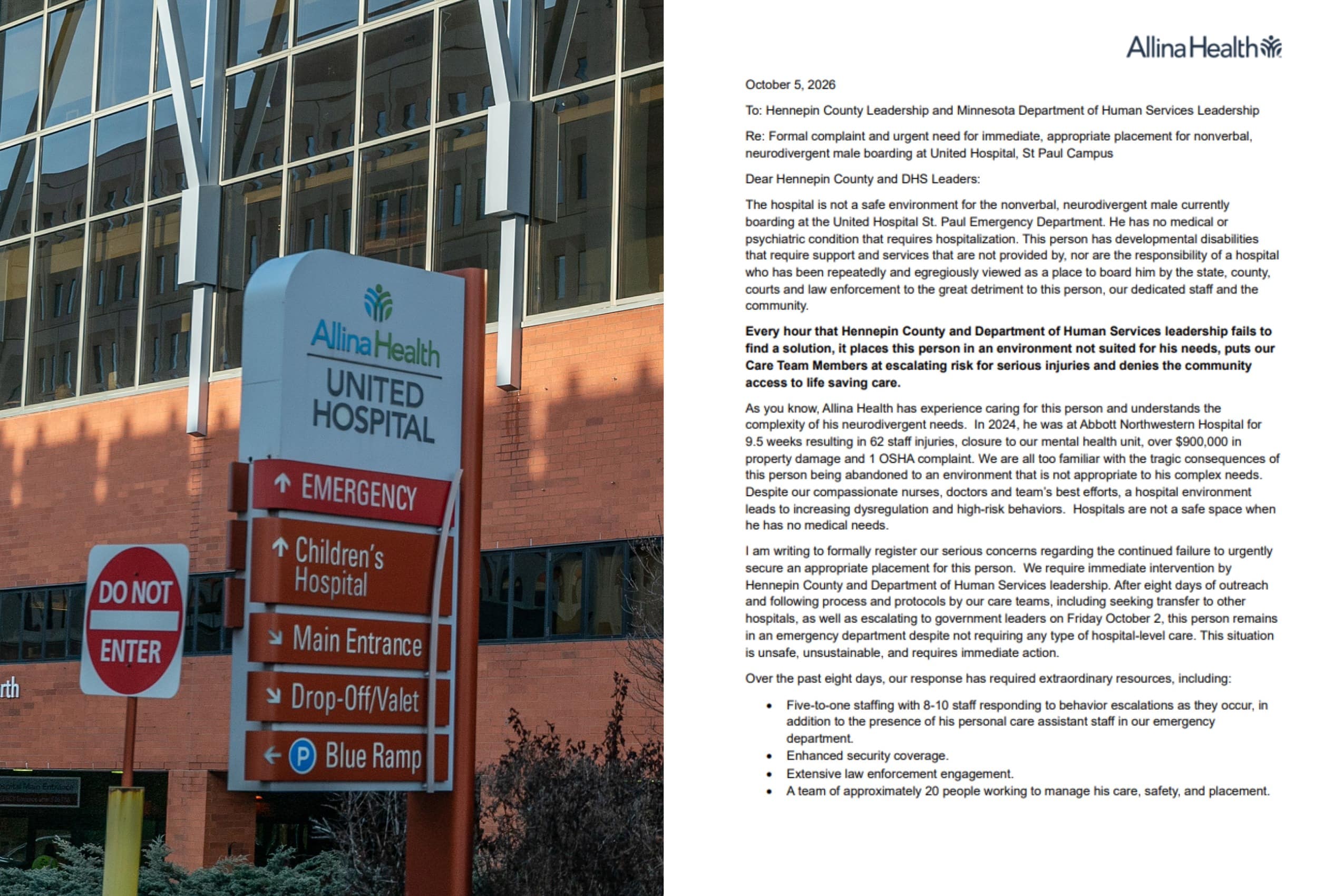
During one man’s 9½-week stay at a Minneapolis hospital in 2024, 62 staff injuries were reported, more than $900,000 in property damage was sustained, a mental health unit was shut down and an OSHA complaint was filed.
But that was hardly the end of the story.
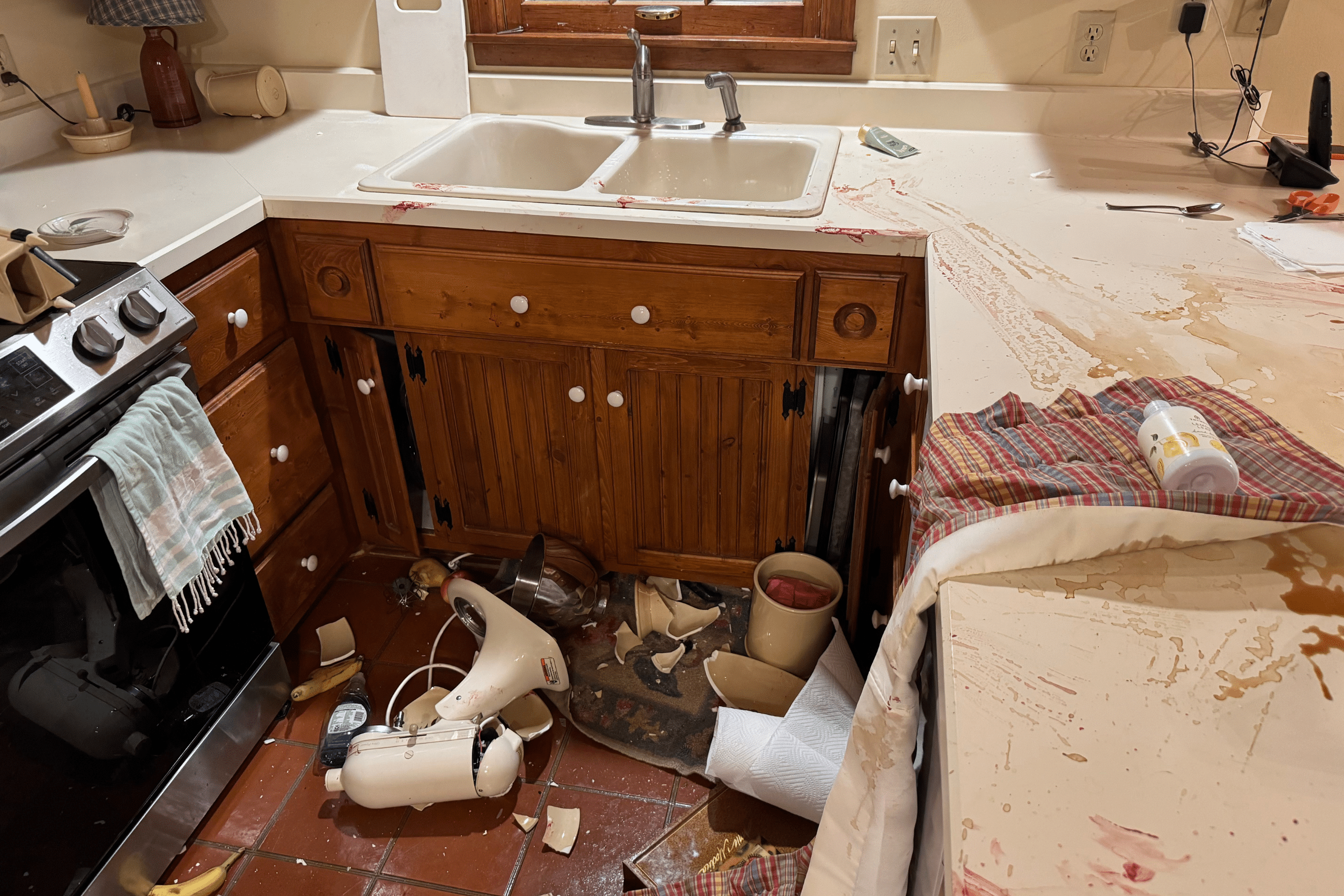
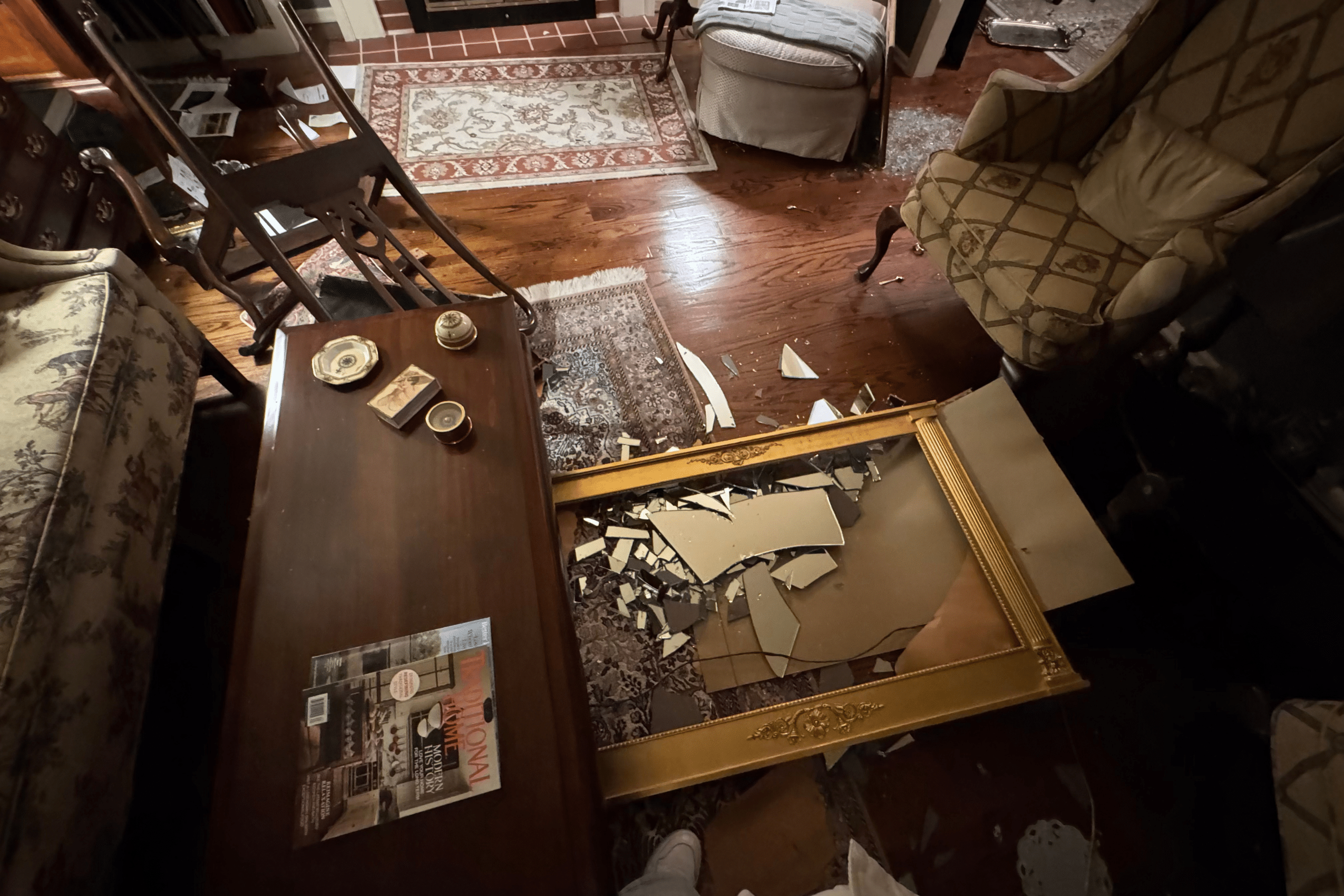
The man later ended up in a Hastings group home, from which he reportedly escaped before breaking into an 89-year-old neighbor’s home, leaving behind a trail of blood, feces and destruction, as Alpha News previously reported.
From there, the crisis spilled into two more Minnesota hospitals, where at least five additional staff injuries were reported, emergency services were disrupted and Allina Health executives threatened legal action against government officials over the struggle to find the man an appropriate place to live.
That’s according to an Oct. 5 letter from Allina Health, obtained by Alpha News, that offers a startling look at how one man’s care became a crisis stretching across multiple facilities and years.
“He has no medical or psychiatric condition that requires hospitalization,” the letter states. “This person has developmental disabilities that require support and services that are not provided by, nor are the responsibility of a hospital … ”
Yet emergency departments have repeatedly found themselves caring for him anyway, with serious consequences for hospital workers, patients and the communities they serve.
As Alpha News previously reported, last month the same man escaped from the Hastings group home where he was living and broke into the home of an 89-year-old neighbor named Glenda. A source confirmed that the man mentioned in Allina’s letter is the same man who was involved in the home invasion.
Glenda, who had lived in her home for 55 years, managed to flee to another neighbor’s residence while the naked intruder wreaked havoc inside, destroying five rooms and leaving behind extensive damage.
Allina’s letter describes the extraordinary manpower required to manage the man’s behavior, noting “five-to-one staffing with 8-10 staff responding to behavior escalations as they occur.”
Five more injuries and an ER closed to ambulances
Following the Hastings home invasion, the man was transported to United Hospital’s Hastings emergency department, according to the letter.
Over the next eight days, Allina reported five additional staff injuries, some resulting in missed work, along with further property damage.
According to the letter, the hospital implemented five-to-one staffing, enhanced security and extensive law enforcement involvement.
On Oct. 3, the Hastings emergency department stopped accepting ambulances at 5 a.m and did not resume until 9:30 p.m., the letter says.
For more than 16 hours, the emergency department was unable to accept patients arriving by ambulance because of the safety concerns surrounding the man.
Allina said the situation had become so dangerous that some employees were unwilling to report for duty because they feared for their safety, so they transferred him to United Hospital’s St. Paul campus.
But the problem followed him. At United Hospital in St. Paul, accommodating the man required taking six mental health emergency department beds out of service, leaving them unavailable to other patients, the letter says.
Allina described United’s emergency department as one of Minnesota’s busiest, particularly for patients experiencing mental health emergencies.
“Moving this crisis between hospitals does not create an appropriate care setting for this person,” the letter states. “It extends the consequences of the county and state’s unresolved placement problem to another community and another care team.”
Allina maintained that the man had no medical or psychiatric condition requiring hospitalization and needed specialized services instead.
62 injuries and $900,000 in damage in just 9½ weeks
The man’s history with Minnesota hospitals stretches back at least two years.
According to Allina Health, he spent more than nine weeks at Abbott Northwestern Hospital in Minneapolis in 2024.
During that stay, the hospital reported 62 staff injuries, more than $900,000 in property damage, the closure of its mental health unit and an Occupational Safety and Health Administration (OSHA) complaint, the letter says.
That’s an average of more than six reported staff injuries per week.
“Allina Health has experience caring for this person and understands the complexity of his neurodivergent needs,” the letter states. “Despite our compassionate nurses, doctors and team’s best efforts, a hospital environment leads to increasing dysregulation and high-risk behaviors.”
Allina’s ultimatum to Minnesota officials
By Oct. 5, Allina Health’s frustration had reached the highest levels of the organization.
In its letter to Hennepin County and Minnesota Department of Human Services (DHS) leadership, the hospital detailed eight days of attempts to secure an appropriate placement and said it escalated its concerns to government leaders.
“Every hour that Hennepin County and Department of Human Services leadership fails to find a solution, it places this person in an environment not suited for his needs, puts our Care Team Members at escalating risk for serious injuries and denies the community access to life saving care,” the letter says.
“This person is well known to both Hennepin County and DHS and it is unacceptable that there are no contingency plans in place for an individual with such a serious history of violence and specific needs for support,” it continues.
“If this person is not transferred immediately so that we can reopen our mental health ED suite, on behalf of our patients, care team and community Allina Health will take legal action to address this continued impasse,” it concludes.
The correspondence, sent by Allina Health CEO Lisa Shannon, was copied to Gov. Tim Walz’s office and Attorney General Keith Ellison’s office.
DHS responds
In response to Alpha News, DHS declined to discuss the individual case, citing privacy concerns.
DHS said it is committed to working with partners to provide safe, “person-centered” care for individuals with complex needs.
The agency also pointed to the Americans with Disabilities Act and the U.S. Supreme Court’s 1999 Olmstead decision, which affirmed the right of people with disabilities to receive care in appropriate community-based settings.
However, DHS did not directly address the reported staff injuries, more than $900,000 in property damage or Allina’s threat of legal action. Nor did it say whether a suitable placement had been secured.
Alpha News also contacted Allina Health and Gov. Walz’s office seeking comment on the reported injuries, the man’s current placement and the state’s involvement in resolving the situation. Neither had responded by publication time.

Jenna Gloeb
Jenna Gloeb is an Edward R. Murrow Award-winning journalist, media producer, public speaker, and screenwriter. Most recently, she worked as a reporter and on-air host for CCX Media. Jenna is a Minnesota native and resides in the Twin Cities with her husband, son, daughter, and two dogs.