




In a letter to Republican lawmakers, the director of Hennepin County’s housing stability department said he expected that half of the county’s 2024 homeless shelter funds would be used on people who have “newly arrived to the United States.”
The letter, which was sent by Director David Hewitt in August of 2024, responded to several questions posed by State Rep. Kristin Robbins and then-State Rep. Anne Neu Brindley.
Among other things, the pair of Republicans inquired about the kinds of services Hennepin County was providing to illegal immigrants. Specifically, the GOP state legislators asked if Hennepin County was paying to house illegal immigrants.
Hewitt responded, noting that the county does not track the immigration status of those who receive county services, and thus “it is not possible to accurately calculate the amount of spending on populations that might fall within any definition of ‘undocumented immigrants.'” Despite this, he confirmed Hennepin spent $22 million in 2023 as part of the county’s “shelter-all” program which provides shelter to homeless families.
“We have roughly estimated that 30% of the families served in shelter during 2023 were newly arrived to the United States, suggesting an annualized cost of roughly ~$6.6 million to serve this specific population within the overall homeless system,” said the director.
Hewitt also said the county estimated that total spending on shelters for homeless families would increase to $27.5 million in 2024.
“We have roughly estimated that 50% of the families served in shelter during 2024 will have newly arrived to the United States, suggesting an annualized cost of ~$13.75 million to serve this specific population within the overall homeless system,” said Hewitt.
Robbins, now a candidate for governor, also submitted a data request which asked for the exact definition of the phrase “new arrivals” as used by the county. However, the county said it does not have an exact definition but the term is used “generally to refer to people who recently came to the United States from another country.”
Robbins’ data request yielded several contracts between Hennepin County and various vendors that provided services and shelter to homeless families.
Hennepin County paid over $15 million to use a Holiday Inn as a homeless shelter
One of the contracts uncovered by Robbins was between Hennepin County and a company called MSP Operations LLC. The contract term ran from Nov. 1, 2022 to Dec. 31, 2024. That agreement paid $9.3 million to continually use 171 rooms at the Bloomington Holiday as a homeless shelter.
Another contract, between Hennepin County and Primus Incorporated, ran from Oct. 1, 2023 to Dec. 31, 2024. That agreement paid Primus Incorporated over $6 million to staff and operate the very same Holiday Inn as a shelter for the homeless.
The Primus contract notes that funding came from “MN DHS grant and Property Tax” and the hotel is “leased or owned by Hennepin County through separate agreements.”
Alpha News also reviewed a contract between Hennepin County and Hospitality Globe, Inc. which runs from Oct. 1, 2024 through Sept. 30, 2026.
That agreement pays Hospitality Globe over $247,000 per month to use of 121 rooms at the Brooklyn Park La Quinta Inn and Suites as a homeless shelter. Across the life of the contract, Hospitality Globe will be paid over $5.6 million.
Alpha News previously visited both hotels in March of 2024 as part of an investigation into migrants being sheltered at Hennepin County hotels.
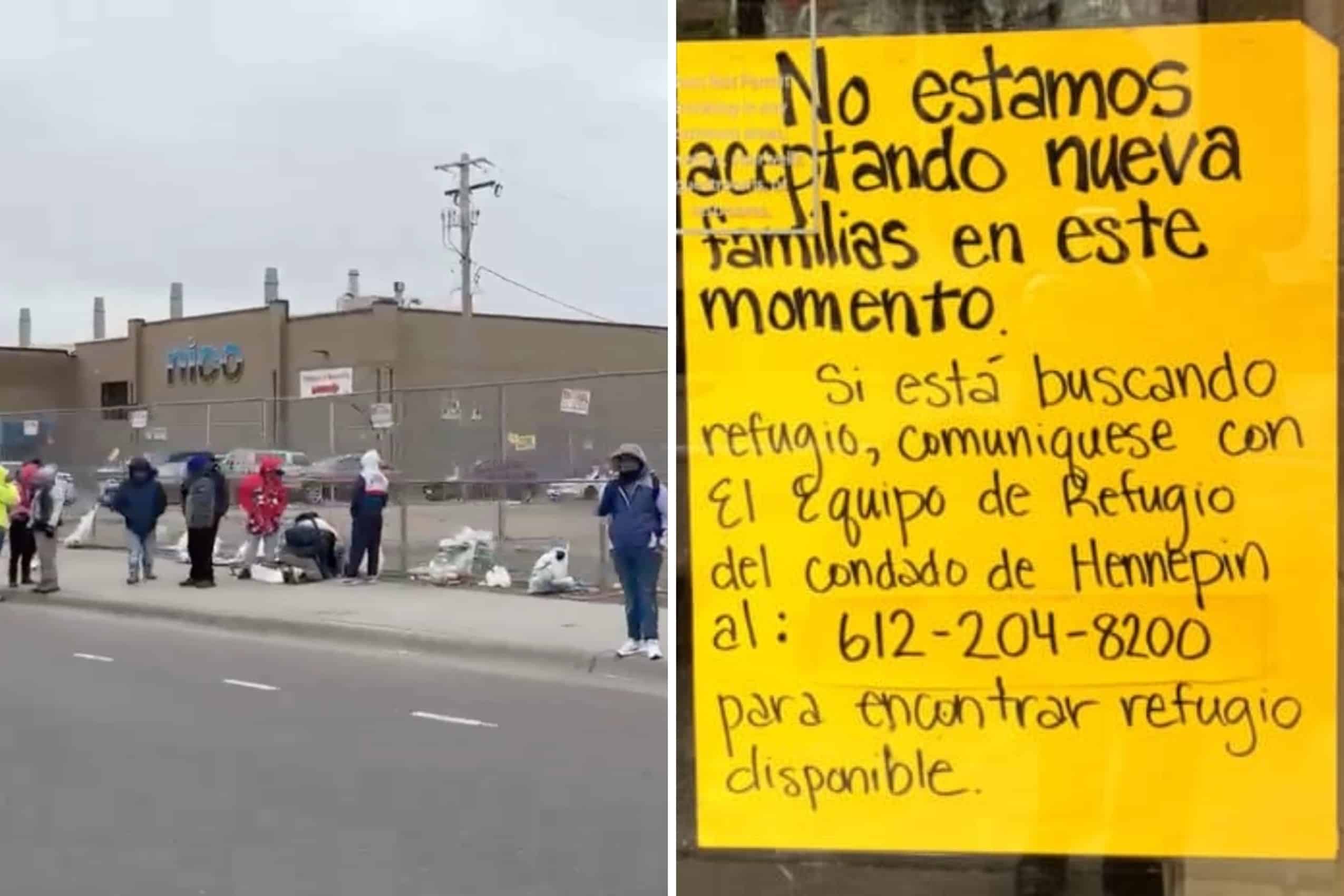
At the time, employees at the Holiday Inn confirmed the building was being run by Primus and was a homeless shelter. The company refused to answer any questions for that story. However, a Spanish sign on the building said the shelter was not accepting new families and encouraged interested parties to contact Hennepin County to find available shelter.
When Alpha News visited the La Quinta Inn and Suites, the manager confirmed Hennepin County was paying for migrants to stay at the hotel. According to the manager, the hotel had been renting out 40 to 50 rooms for the last six months on the government’s dime. The manager could not speak to the legal status of those staying at the hotel.
“The documents we received through my data request clearly show Hennepin County is spending an exorbitant amount of taxpayer dollars on housing and providing services for illegal immigrants,” said Robbins in a statement to Alpha News.
“Our state is facing a $6 billion deficit and property taxes in Hennepin County continue to increase because rising crime and the devastation from the riots has driven out so many businesses. The decline in commercial and industrial property tax receipts has shifted more of the tax burden to homeowners — Minnesotans can’t afford this,” added Robbins.
Hennepin County responds
In a statement to Alpha News, Hennepin County said it is “committed to ensuring that no child sleeps outside in our community.”
“We are proud to have made the investments necessary to avoid having children sleeping on the streets or in other places not fit for human habitation, decreasing the likelihood of health emergencies and trauma. From 2022 to 2023 we did see larger numbers of families newly arrived to the United States who were in need of shelter. We do not believe those children should sleep outside either. This trajectory changed at the start of 2024. At this time, the vast majority of families in emergency shelter are U.S. citizens who are struggling with low incomes and high costs of housing,” the county said.
“It is also important to note that emergency shelter is not housing. Families stay in emergency shelter only until they find another alternative to sleeping outside. Each month since January 2024, we typically have seen more families leaving shelter for housing than new families coming in. That has allowed us to reduce the total system capacity by more than 50%, reducing costs to taxpayers while maintaining our commitment to shelter children,” the statement concluded.

Anthony Gockowski
Anthony Gockowski is Editor-in-Chief of Alpha News. He previously worked as an editor for The Minnesota Sun and Campus Reform, and wrote for the Daily Caller.

Liz Collin
Liz Collin is a multi-Emmy-Award-winning investigative reporter, news anchor, and producer who cares about Minnesota. She is the producer of The Fall of Minneapolis and Minnesota v We the People documentary films, and author of the Amazon best-selling book, They’re Lying: The Media, the Left, and The Death of George Floyd. Her work has prompted important state laws. Yet perhaps most of all, Liz has been giving a voice to the truth—and helping others tell their stories—for more than 20 years.