



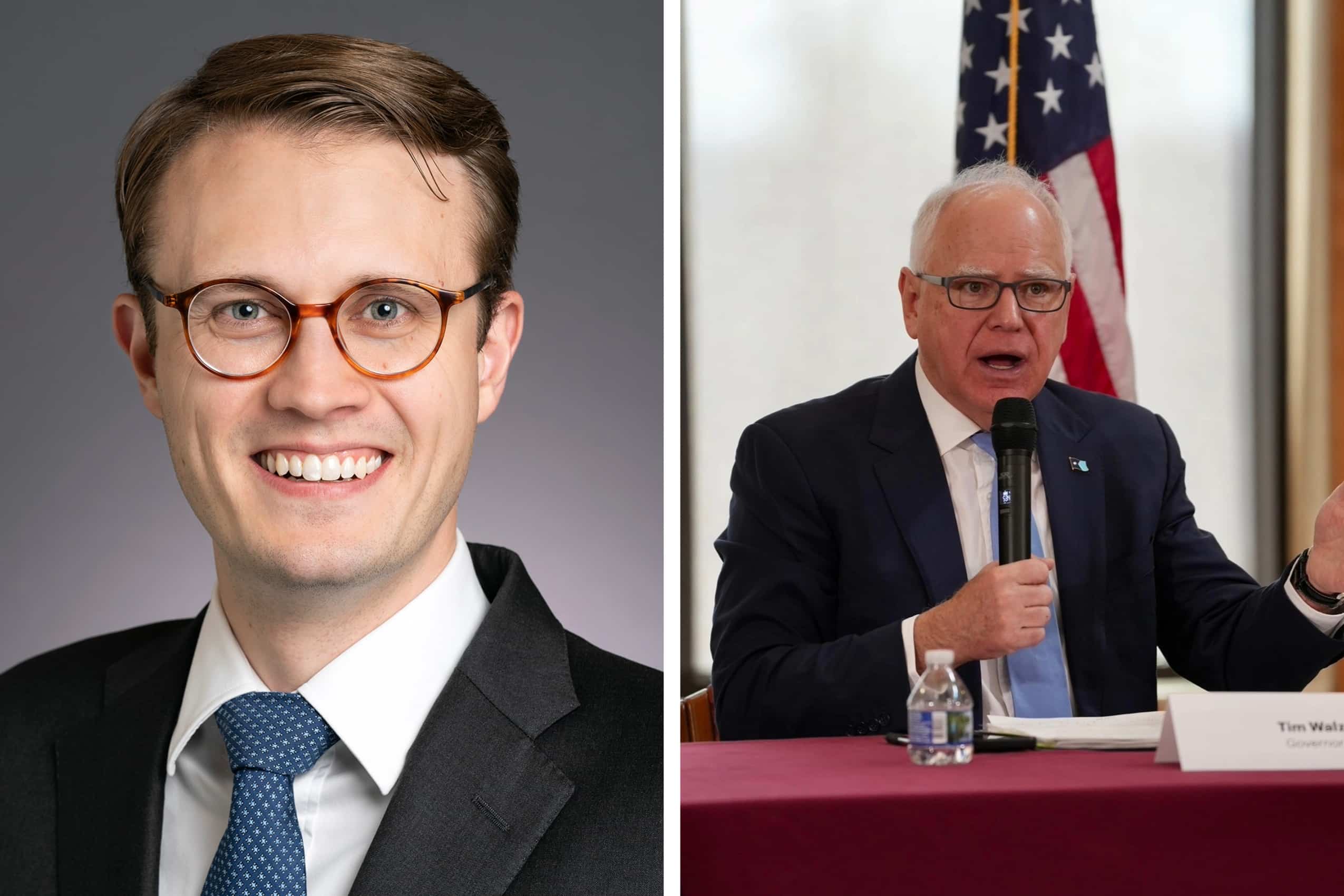
Gov. Tim Walz announced a proposal Tuesday that his office touted as a “major structural overhaul” of Minnesota’s human services system in an effort to fight fraud.
Some Republicans in the Minnesota Legislature, however, believe the proposal is “yet another attempt to paper over the state’s fraud problem.”
Walz’s office said the proposal is focused on streamlining “Minnesota’s service delivery model, moving away from the complex, layered administration managed by a patchwork of counties, Managed Care Organizations, and state agencies to a single, centralized entity.”
Specifically, Walz wants to shift the Medicaid eligibility determination process for health care and long-term services from counties to the state.
Currently, about 45 percent of Medicaid spending and nearly 80 percent of basic care services are administered through eight Managed Care Organizations (MCOs), Walz’s office said.
Under his proposal, Minnesota would transition away from the MCO model and establish “a single statewide Administrative Service Organization (ASO) responsible for administrative duties such as claims processing, financial transactions, and provider services.”
Another element of the proposal calls for funding for a “comprehensive study examining how human services programs are administered across Minnesota.”
Sen. Jordan Rasmusson, R-Fergus Falls, criticized the Walz administration for “proposing new studies instead of focusing on accountability and action.”
“The Department of Human Services has not done the basics to protect taxpayers, hold employees accountable, or provide services to people who need them,” said Rasmusson, the Republican lead on the Senate Human Services Committee.
“DHS is years behind performing site visits, decades behind on technology, and is barely able to meet legislative deadlines,” he continued. “Governor Walz has had press conference after press conference announcing supposed reforms, but Minnesotans are still staring at this administration’s failures to protect taxpayers and the Minnesotans who rely on these services.”
The governor’s proposal even faced pushback from one member of his own party, Sen. John Hoffman, chair of the Senate Human Services Committee, who said he was “disappointed to learn about this proposal just last night without a thorough conversation with the committee that has primary jurisdiction over Minnesota’s human services system.”
“Major structural changes to a system that serves hundreds of thousands of Minnesotans require thoughtful collaboration between the executive branch and the Legislature,” said Hoffman, a Democrat from Champlin.
“Moving forward, I hope the administration will engage directly with the Legislature so we can work together to improve outcomes, strengthen accountability, and protect the people who depend on Minnesota’s human services programs.”
Walz responded to Hoffman’s criticism during a press conference Tuesday, saying Hoffman “didn’t just find out about it.”
“The executive branch is responsible for carrying these out and to be very candid, we’re telling you that the way some of these things are structured are antiquated and we need to work together,” Walz said. “Yeah, we’re going to need legislative buy-in, and I know there’s people over there that are serious about it.”
Walz’s announcement comes amid sustained national scrutiny of Minnesota’s fraud crisis, which reached a boiling point earlier this year and forced Walz to abandon his bid for a third term. The federal government announced last month that nearly $260 million in Medicaid funds for Minnesota will be withheld pending investigation due to fraud concerns.

Anthony Gockowski
Anthony Gockowski is Editor-in-Chief of Alpha News. He previously worked as an editor for The Minnesota Sun and Campus Reform, and wrote for the Daily Caller.