


Hennepin County’s proposed 2026 budget would spend more than $40 million on “disparity elimination,” a catch-all term for eliminating perceived inequalities that supposedly exist in the county.
Of that $40 million, over 60% of it would be funded via property tax revenue under the current county budget proposal.
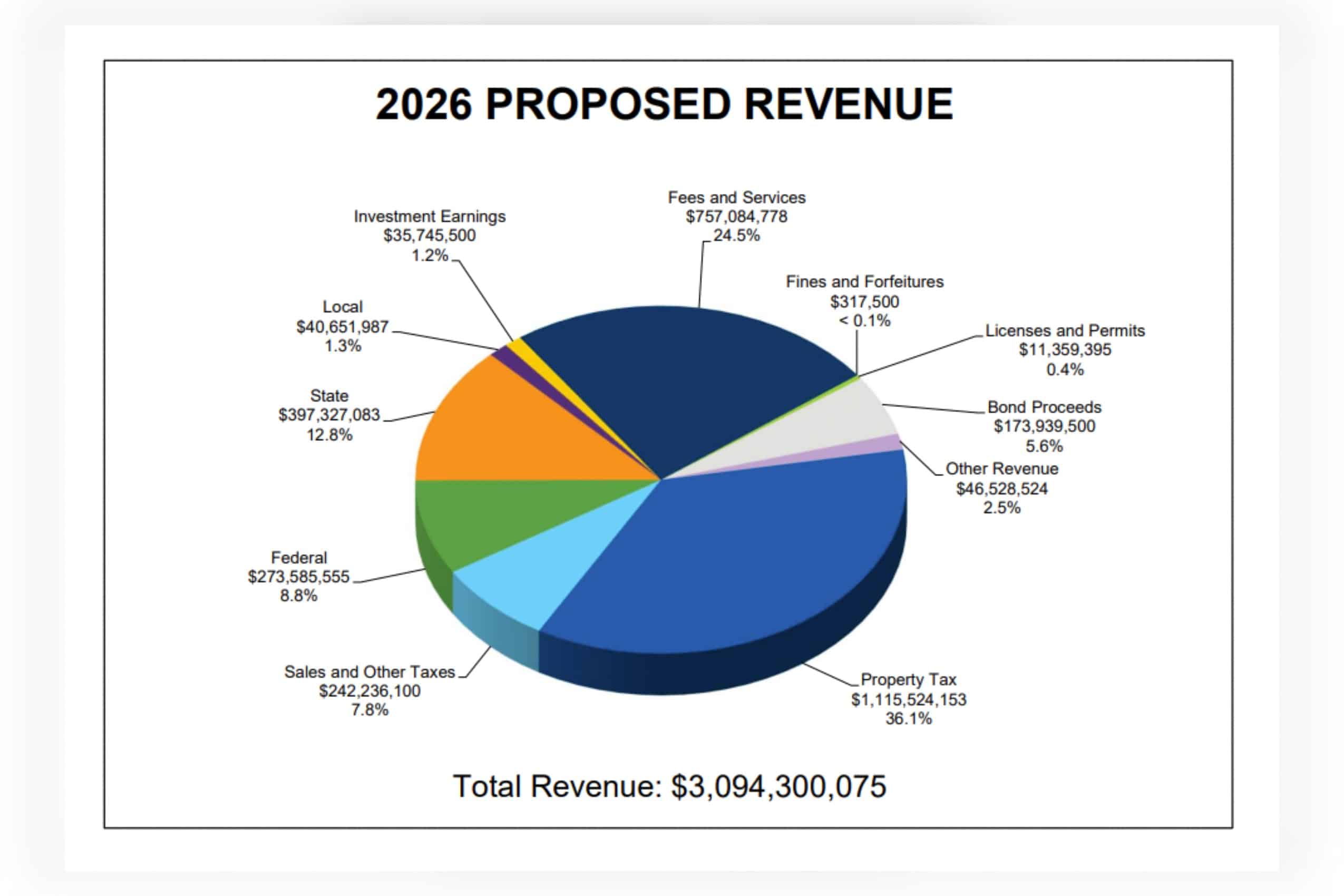
In September, Hennepin County proposed a 2026 budget that would cost $3.09 billion and include a 7.79% increase in property tax revenue. That proposed property tax increase and budget were discussed last night at the county’s “Truth in Taxation” meeting.
A final vote to authorize next year’s budget and tax levy is expected later this month. The budget proposal can be amended up until that final vote.
Within the $3.09 billion proposed budget is more than $40 million of spending on “disparity elimination.” But what exactly is disparity elimination?
In short, Hennepin County believes that “inequities in education, employment, health, housing, income, justice and transportation are starkest between residents of color and their White counterparts.”
The county’s website notes that “since 2013, Hennepin County has put an emphasis on disparity reduction in all our communities as we acknowledge that racial disparities exist.”
In 2017, then-Hennepin County Administrator David Hough charged the various county departments to do their work “from a commitment to reduce disparities among the residents we serve in the ways and places we have influence.”
Examples of this work in recent years include “adopting a Climate Action Plan,” “declaring racism a public health crisis,” funding an “anti-racism initiative,” “requiring advancing racial equity training for all staff,” and “using purchasing power to drive economic development in disadvantaged communities.”
Last year, Hennepin County spent more than $50 million on disparity elimination. Hennepin County’s 2026 budget proposal includes more than $40 million of spending on disparity elimination.
While the county is proposing a $10 million cut to disparity elimination, the $40 million figure still represents roughly 1.3% of the county’s total 2026 budget. Of the $40 million sum, roughly $26 million of it would come from property taxes under the current proposal.