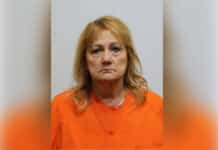


An Itasca County judge has denied 8th Congressional District DFL Chair Cynthia “Cyndy” Martin’s attempt to throw out the criminal vehicular homicide charge against her stemming from a July 2024 hit-and-run that left a teenager dead.
In an order issued Oct. 8, District Judge Heidi Chandler ruled there is enough evidence for Martin to face trial.
“There is probable cause that a crime was committed, and that Defendant committed it,” Chandler wrote. “It is reasonable to require Defendant to stand trial.”
Chandler also rejected Martin’s arguments that the State Patrol violated her constitutional rights by expanding its investigation into a DWI and impaired driving investigation, calling the expansion lawful and justified under Minnesota law.
“Based on all the circumstances and the inferences and deductions by [Trooper Rachel] McCabe, there was reasonable, articulable suspicion to expand the investigation,” the judge wrote.
The fatal night
Prosecutors say Martin struck and killed Carter Haithcock, 19, of Goodland, on Highway 169 near Nashwauk on the night of July 3, 2024, while driving home from parades in Gilbert and Aurora.

According to the order, investigators found blood and vehicle fragments at the scene that matched Martin’s vehicle.
They also reviewed surveillance footage from the Nashwauk Sinclair gas station on 169. The footage captured a dark-colored SUV, believed to be Martin’s, with a single headlight pulling over to the side of the southbound lane near the crash site and remaining stopped for about 25 seconds before driving away.
Alpha News previously reported that a State Patrol examination of Martin’s SUV revealed a nonfunctional passenger side headlight, damage to the right front of the vehicle and cracks in the windshield. A piece of fabric recovered from the hood “was consistent with the sweatshirt worn by [Haithcock],” the criminal complaint said.
Martin called 911 the next morning to report she “may have been involved in the accident near Nashwauk,” according to the charges. She told troopers she thought she had hit “an owl or a turkey” and “did not stop” but “continued home,” the charges state.
The Midwest Medical Examiner’s Office found the victim died from “extensive blunt force injury, including fracture at the base of the skull with transection of the cervical spine,” according to court records.
Trooper testimony and prescription drug use
Trooper McCabe, a certified drug-recognition expert, testified that Martin admitted taking hydrocodone earlier that day for knee pain but showed no obvious signs of impairment. Still, McCabe said Martin’s mood swings, the damaged windshield, and the way her vehicle was parked led her to believe further testing was warranted.
Chandler summarized those facts in her order: “McCabe testified about the extensively damaged vehicle parked crooked in Defendant’s driveway,” and about Martin’s “dramatic mood swings” and the “inconsistency between the damage to Defendant’s vehicle and Defendant’s statement she hit a bird.”
Martin’s attorneys argued that McCabe did not have reasonable suspicion to expand the investigation into impaired driving. But Chandler ruled that the trooper’s observations — combined with Martin’s admitted use of hydrocodone — justified the DWI investigation.
“Although Defendant argues there were no physical indicia of intoxication,” Chandler wrote, “no bright-line rule requires an officer to observe one of the physical indicia of intoxication to establish either probable cause or the lower standard of reasonable, articulable suspicion.”
Probable cause upheld
The defense also argued the state must prove Martin knew she had hit a person or another vehicle.
The judge disagreed, writing that Minnesota law “imposes two distinct duties” on drivers involved in a collision: to stop and “reasonably investigate what was struck,” and to remain at the scene if they know or have reason to know the collision caused injury or death.
“This Court disagrees with Defendant’s position that the State must prove the Defendant had knowledge she had been in an accident with a person or another vehicle,” Chandler wrote. She added that whether Martin’s investigation was “reasonable” is a question of fact for the jury, not for dismissal at this stage.
“There is sufficient evidence that Defendant knew or should have known the collision resulted in injury to or death of another,” the order said, citing the “height of Decedent and the extent of the damage to Defendant’s vehicle.”
Martin is scheduled for a remote plea hearing on Nov. 5. If convicted of criminal vehicular homicide, she faces up to 10 years in prison and a $20,000 fine.

Jenna Gloeb
Jenna Gloeb is an Edward R. Murrow Award-winning journalist, media producer, public speaker, and screenwriter. Most recently, she worked as a reporter and on-air host for CCX Media. Jenna is a Minnesota native and resides in the Twin Cities with her husband, son, daughter, and two dogs.