




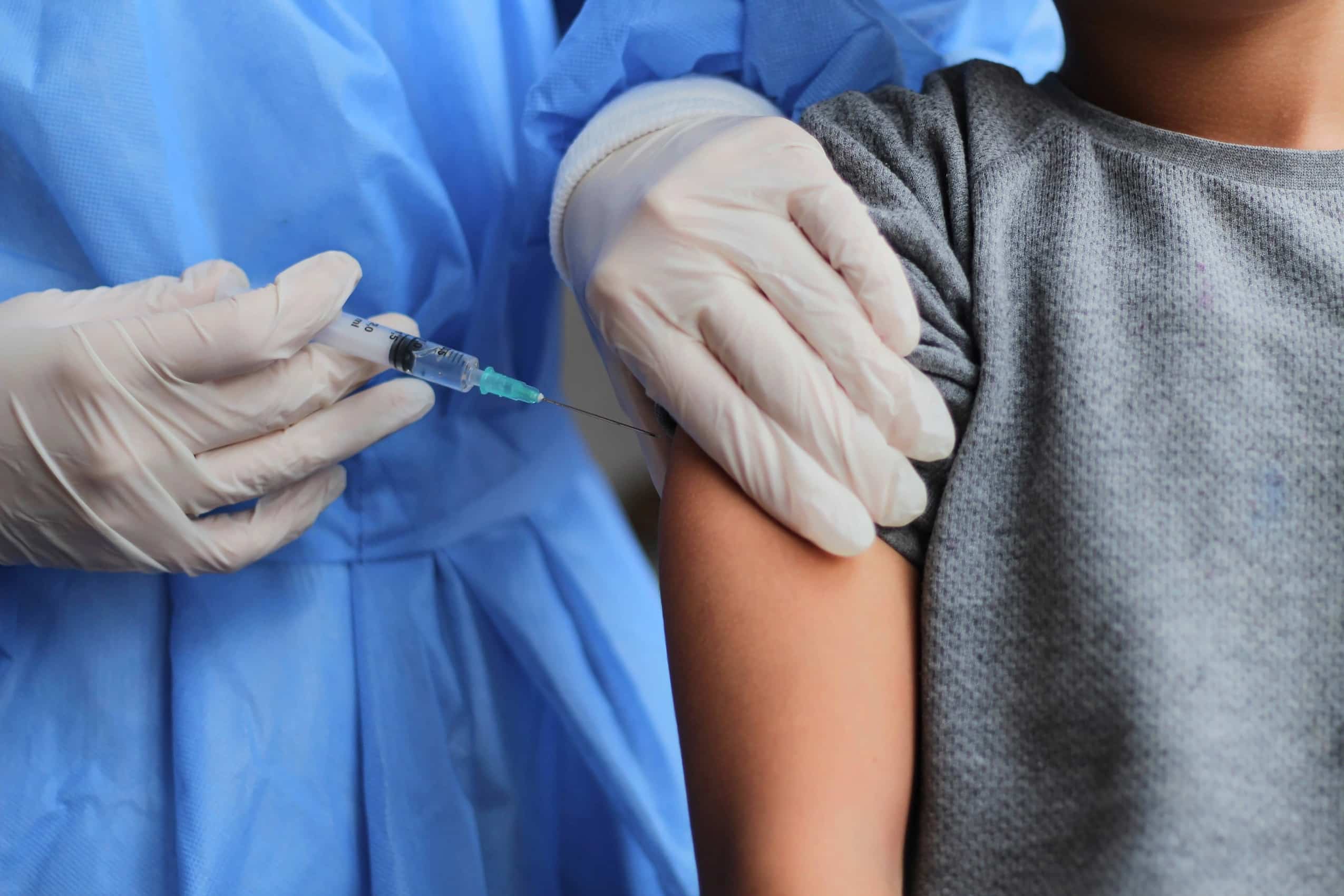
The Minnesota Department of Health (MDH) is rejecting the federal government’s new recommendations for childhood vaccination. Instead, MDH says it will “now align all of its immunization guidance with professional medical association recommendations.”
Last week, the Center for Disease Control and Prevention (CDC) said it is changing the recommended childhood vaccine schedule pursuant to a study of vaccine practices used by other “peer, developed nations.”
The study, commissioned by President Donald Trump, examined the vaccine practices of 20 nations that included Japan, Denmark, Canada, France, the U.K., and other countries. In a memo, Trump said America’s childhood vaccine recommendations should be updated if the study finds other nations have superior childhood vaccine practices.
Last Monday, the federal agency which oversees the CDC, the U.S. Department of Health and Human Services (HSS), announced that childhood vaccine recommendations would change as a result of the completed study.
In 2024, the CDC recommended that all children get vaccinated against 18 diseases. Now, the new CDC vaccine schedule recommends that all children receive vaccinations for 11 diseases: chickenpox, diphtheria, haemophilus influenzae type B, HPV, measles, mumps, rubella, polio, pertussis, tetanus, and pneumococcal disease.
The CDC recommended additional vaccines for children only if they were in “certain high-risk groups.” The COVID-19 vaccine was placed on a list that neither recommended nor discouraged its use.
Regarding the peer nation study, HHS said “many peer nations that recommend fewer routine vaccines achieve strong child health outcomes and maintain high vaccination rates through public trust and education rather than mandates.”
“For example, in 2024, the U.S. recommended more childhood vaccines than any peer nation, and more than twice as many doses as some European nations,” HHS said. “At the lower end is Denmark, which immunizes children against 10 diseases compared to a total number of 18 diseases for which protection was provided in 2024 in the U.S.”
In response to the CDC’s changes, MDH announced it will break with the CDC and align its vaccine recommendations with guidance published by professional medical associations.
“This change at the federal level does not reflect the best available science,” said MDH Commissioner Dr. Brooke Cunningham. “Medical association immunization schedules are evidence-based, reflect current clinical practice and are developed through established professional review processes.”
As such, MDH will follow the vaccine schedules of the American Academy of Pediatrics (AAP), the American Academy of Family Physicians (AAFP), and the American College of Obstetricians and Gynecologists (ACOG).
For childhood vaccines, MDH will align with the AAP’s vaccine recommendations. The AAP vaccine schedule recommends that all children receive vaccinations against 18 diseases. The AAP recommends that all children get the COVID-19 vaccine at 6 months of age.
Alpha News reached out to HHS for this story but did not hear back.

Luke Sprinkel
Luke Sprinkel previously worked as a Legislative Assistant at the Minnesota House of Representatives. He grew up as a Missionary Kid (MK) living in England, Thailand, Tanzania, and the Middle East. Luke graduated from Regent University in 2018.