

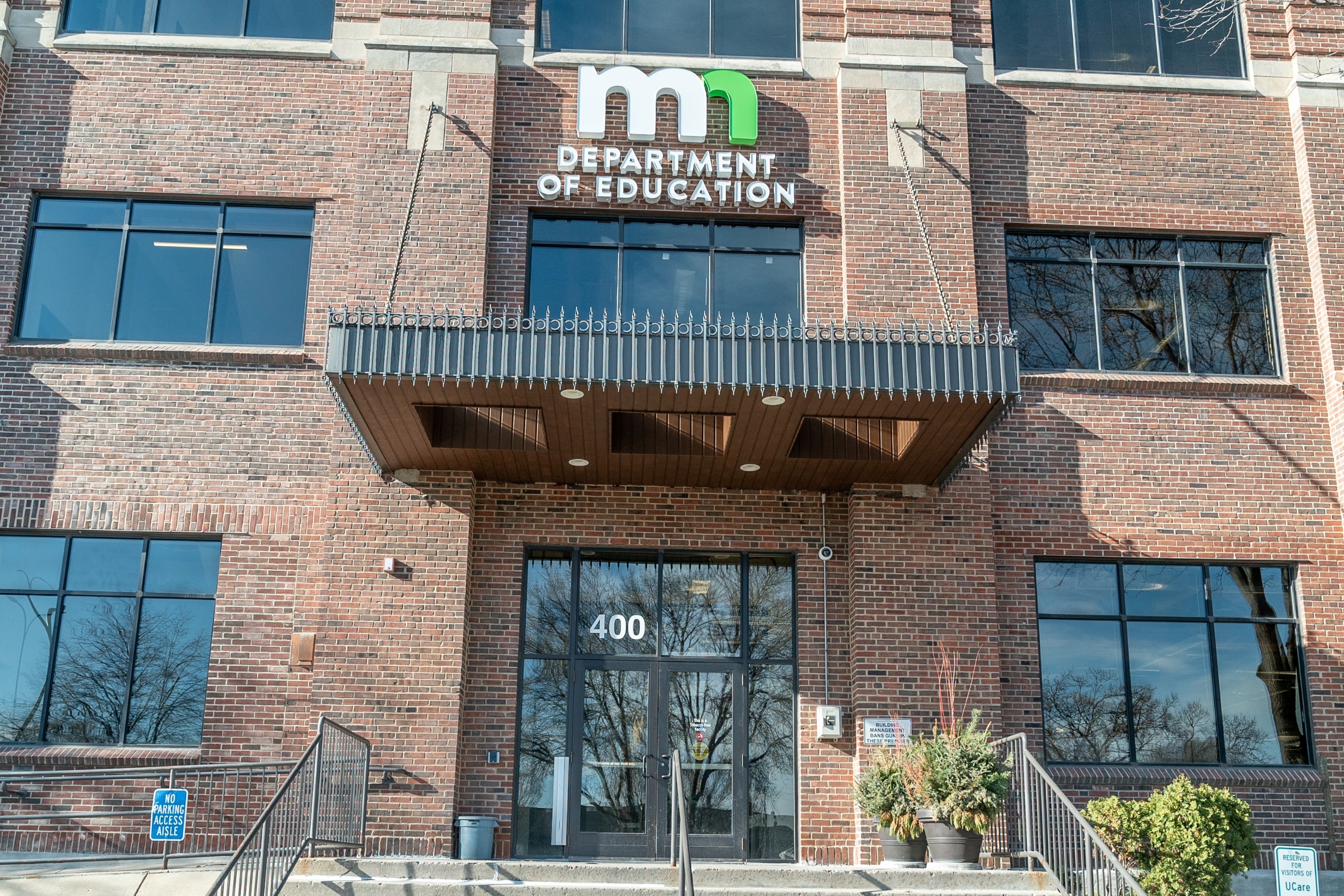
More than half of students across Minnesota’s public schools are still not meeting grade-level standards in math and reading, according to the latest standardized test scores released by the state’s Department of Education.
On Friday morning the Minnesota Department of Education (MDE) officially uploaded the 2024-2025 statewide assessment and accountability results to its “Minnesota Report Card” database.
The department said test results from the 2024-2025 academic year show that student performance “remained steady in reading and mathematics.”
What that means is just 45.2 percent of students are meeting grade-level standards in math, and just 49.6 percent of students are meeting grade-level standards in reading.
Willie Jett, Gov. Tim Walz’s commissioner of education, said the data released Friday “reflect a moment in time, while the work happening in our classrooms every day is building the foundation for long-term student success.”
“We are deeply grateful to Minnesota’s educators, who continue to show up for students with skill, commitment, and care,” Jett said in a statement.
While the number of students who tested proficient has remained essentially flat for three consecutive years, those figures are well below 2017 levels, when nearly 60 percent of students tested at grade-level proficiency in reading and 57 percent testing at grade-level proficiency in math.
Proficiency rates vary from school to school
Along with its statewide summary on Friday, MDE released district-specific and school-specific proficiency data that is searchable by the public. A sample from among some of the state’s largest school districts shows proficiency levels vary dramatically even from building to building in the same district.
In southwest Minneapolis, for example, 74 percent of students at Armatage Elementary tested at grade-level proficiency in math and 77 percent in reading. At Jenny Lind Elementary, on the city’s north side, just 9 percent tested proficient in math and 12 percent in reading.
In the state’s largest school district, Anoka-Hennepin, just 24 percent of students at Anoka High School tested proficient in math, while 47 percent of students at Andover High School were grade-level proficient in math.
Ranking legislators in education committees react
The Walz administration on Friday pointed to a 2023 “READ Act” the governor signed into law to provide more “evidence-based reading instruction” to teachers as a sign of hope that reading scores will turn around.
But Republican legislative leaders expressed disappointment that the state hasn’t seen anything close to improvement in the number of children who are proficient in key areas of learning.
Republicans specifically said Gov. Walz and his appointed leadership at MDE aren’t doing enough to help teachers and school district leaders turn those scores around.
“Minnesota students are continuing to struggle with meeting benchmarks in reading and math and we’ve seen little change in the years since the COVID shutdowns,” said Sen. Julia Coleman, R-Waconia, who serves as the GOP lead on the Senate Education Policy Committee. “Instead of prioritizing students, the Walz administration has continued to inject politics into schools and create more mandates that draw resources away from the classroom.”
“It’s time we commit to putting students first, giving schools the resources to support their students without burdensome mandates, and focus on proven strategies to improve reading and math,” Coleman continued. “Our children deserve to graduate with an education that prepares them for success in life and we simply aren’t doing enough.”
Rep. Peggy Bennett, R-Albert Lea, called on her colleagues and the governor to “refocus our schools on core academics, like reading and math, along with common sense discipline policies that give educators the tools they need to create a productive learning environment for students to learn.” Bennett co-chairs the House Education Policy Committee and is a retired schoolteacher.
Alpha News reached out to Democratic leaders in the House and Senate for comment, but has not yet received a reply from either caucus.

Hank Long
Hank Long is a journalism and communications professional whose writing career includes coverage of the Minnesota legislature, city and county governments and the commercial real estate industry. Hank received his undergraduate degree at the University of Minnesota, where he studied journalism, and his law degree at the University of St. Thomas. The Minnesota native lives in the Twin Cities with his wife and four children. His dream is to be around when the Vikings win the Super Bowl.