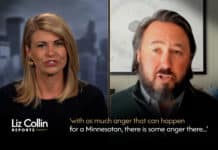

Crosslake Mayor Jackson Purfeerst released a video and letter signed by 98 Minnesota mayors Monday morning urging state leaders to “course-correct” and “stop taxing our families, seniors, and businesses out of Minnesota.”
“What makes this moment historic is that a letter of this nature has never been done before,” said Purfeerst. “This coalition of 98 mayors represents roughly 541,000 Minnesotans from both metro communities and Greater Minnesota. That measure of agreement is extraordinarily rare and should not be taken lightly.”
After the release of a similar letter by eight Minnesota mayors on Dec. 1, momentum and support has increased significantly.
“Over the past several weeks, mayors across Minnesota have been having the same difficult conversations about budgets, public safety, staffing and rising property taxes,” said Purfeerst. “Those shared concerns led me to write this letter.”
The letter was addressed to Minnesota state representatives, senators and Gov. Tim Walz. They wrote “to express deep concern—and growing frustration—about the fiscal direction of the state and its increasing impact on our cities and the residents we serve.
“Minnesotans watched an historic $18 billion surplus disappear in a single biennium, only to now face an updated projected $2.9 billion–$3 billion deficit in the 2028–29 biennium. As mayors, we see firsthand how these decisions ripple outward. Fraud, unchecked spending, and inconsistent fiscal management in St. Paul have trickled down to our cities—reducing our capacity to plan responsibly, maintain infrastructure, hire and retain employees, and sustain core services without overburdening local taxpayers,” the letter says.
Purfeerst thanked the mayors for signing the joint letter. “When cities work together, our collective voice is stronger—and it’s how we ensure the realities facing our communities are heard,” he said.
The letter contains data from a recent Minnesota Chamber of Commerce report, which shows the state slipping in national economic rankings.
“On top of these economic realities, many Minnesota cities are confronting significant property tax levy pressures. Preliminary statewide data, on average, for 2026 shows cities may raise levies by up to 8.7%, with counties up to 8.1%. These increases are not simply local decisions; they stem directly from state policies, mandates, and cost shifts that leave cities with no choice but to pass these burdens onto homeowners and businesses,” the letter states.
“As mayors, we are committed to responsible budgeting, fiscal restraint, and delivering high-quality local services. Yet there is a growing disconnect between state-level fiscal decisions and the strain they place on the cities we lead,” it continues. “When the state expands programs or shifts responsibilities without stable funding, it is our residents — families, seniors, businesses, and workers — who ultimately bear the cost.”
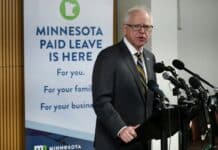
Following Purfeerst’s reading of the letter in his video post, he talked about the upcoming paid medical leave program, which takes effect in January.
The program “will impose a serious and destabilizing burden on cities and businesses across Minnesota,” he said. “The program is not projected to be self-sustaining and instead operates as a new payroll tax on both employers and employees. For small and midsize businesses already operating on thin margins, this added cost is crushing, forcing difficult decisions about hiring, wages, hours and even whether to stay open.”
Purfeerst said cities are already seeing decline and these mayors hope that state leaders and the governor take their message seriously and “engage with local governments as true partners and correct course before further damage is done.”