



Most Americans have never heard of Wa Chong Vang, or of the remarkable people he came from. Yet his story — and theirs — carries a profound lesson for all of us about what it means to belong, to serve, and to preserve the best of who we are.
Wa Chong Vang was the son of General Vang Pao, the legendary commander of Hmong forces who fought alongside American troops during the so-called “Secret War” in Laos. While the Vietnam War dominated U.S. headlines, tens of thousands of Hmong soldiers, trained and supplied by the CIA, waged a parallel struggle against communism in Southeast Asia. They fought, bled, and died for freedom — not only their own, but ours.
When the United States withdrew from the region, the Hmong were left to face brutal retribution. Many fled through the jungles of Laos and across the Mekong River to refugee camps in Thailand. Some of them eventually found new lives in America — in places like Minnesota, Wisconsin, and California — where they rebuilt their communities from scratch.
Among those refugees was Wa Chong Vang. But unlike most who had to start anew as farmers or laborers, he charted an extraordinary course. In 1974, he became the first Hmong ever accepted to the U.S. Military Academy at West Point. Think about that for a moment: a young man from a stateless people, a refugee from a hidden war, earning a place among the future leaders of the United States Army.
That accomplishment alone would make him historic. But what made Vang’s life remarkable was not merely what he achieved — it was what he embodied. He lived out the conviction that freedom is not something you inherit, but something you serve. He carried forward his father’s vision with humility and purpose, mentoring others, building bridges between the Hmong and broader American communities, and proving that loyalty to one’s adopted home is a sacred duty, not an afterthought.
When his father passed away in 2011, Vang quietly assumed the role of cultural custodian — preserving stories of Hmong veterans, recording oral histories, and reminding the younger generation that their heritage was a source of pride, not limitation. His leadership was quiet, patient, and rooted in gratitude for a nation that gave his people refuge and opportunity.
That gratitude — that fierce love of America — is something too easily taken for granted by those of us born here.
The Hmong have no country of their own. They have endured displacement for generations. Yet wherever they settle, they preserve their traditions, raise strong families, and contribute to the communities that welcome them. Their strength lies not in borders or governments, but in values — faith, loyalty, sacrifice, and work.
That’s a model every American should study closely. Because the essence of American identity has never been defined by geography, bloodline, or government mandate. It’s defined by shared virtue — by ideas like liberty under law, personal responsibility, and faith in something greater than oneself.
The Vang family understood this instinctively. They fought for freedom in the jungles of Laos, and when that cause was lost, they carried its torch to new soil. They didn’t ask what America could give them; they asked how they could serve America. In doing so, they demonstrated what real assimilation looks like — not the loss of one’s roots, but the fusion of heritage and principle into something stronger.
In our time, when the very notion of patriotism is too often dismissed as outdated or divisive, stories like Wa Chong Vang’s remind us of what’s truly at stake. America’s strength is not guaranteed. It depends on citizens who believe, as he did, that freedom must be earned and renewed through each generation’s commitment to virtue and sacrifice.
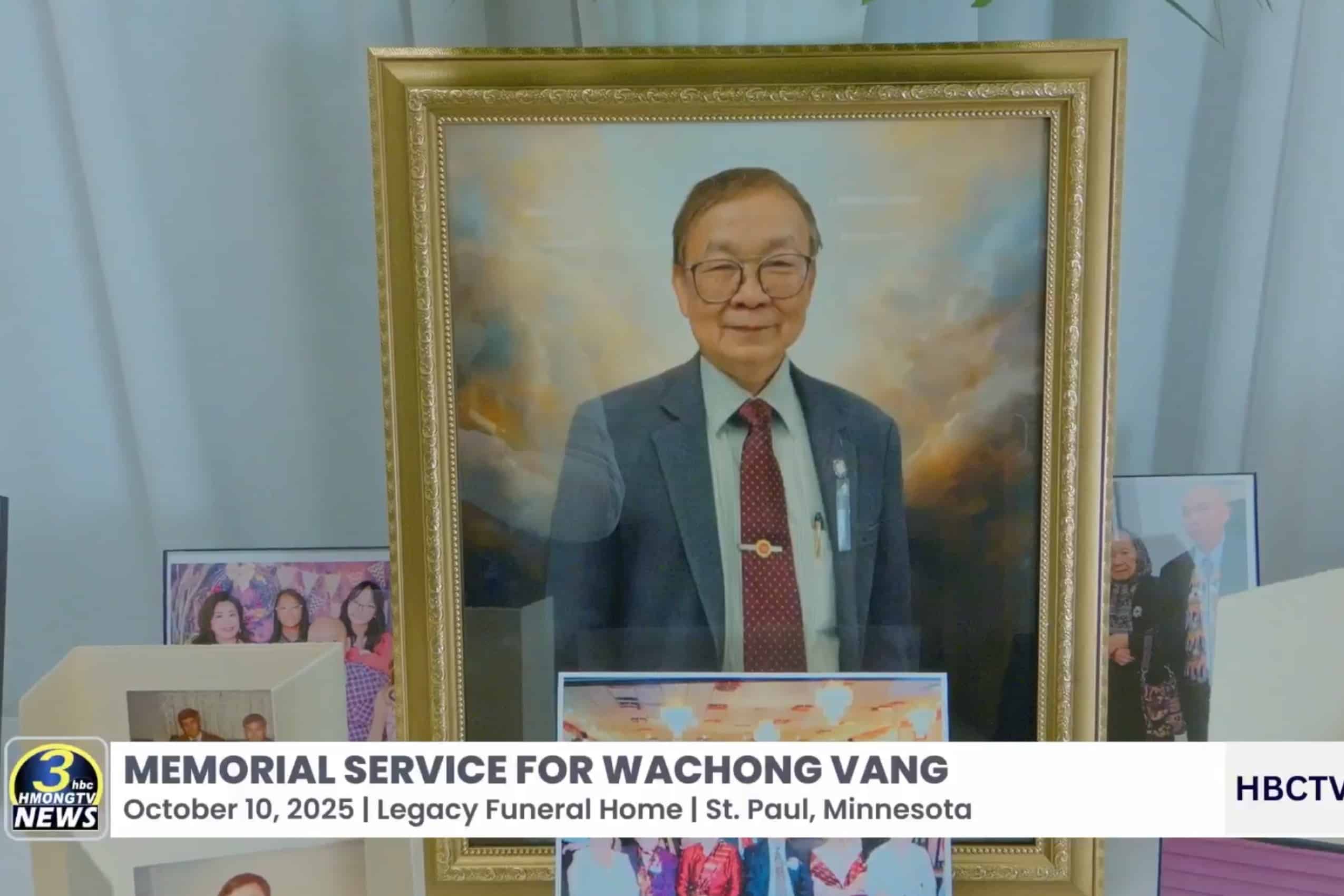
Wa Chong Vang passed away this year, leaving behind a legacy of quiet heroism and civic devotion. He was not a celebrity. He did not seek headlines or public office. Yet his life speaks more eloquently than most about what it means to be an American.
He showed that the greatest patriots are often those who had to fight hardest to call this nation home.
And from a people without a country, he gave us a vision of what it means to truly deserve one.
Rep. Walter Hudson is a Republican from Albertville.
The views and opinions expressed in this commentary are those of the author and do not represent an official position of Alpha News.

Rep. Walter Hudson
Rep. Walter Hudson is a Republican state representative from Albertville.