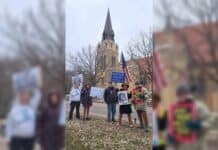



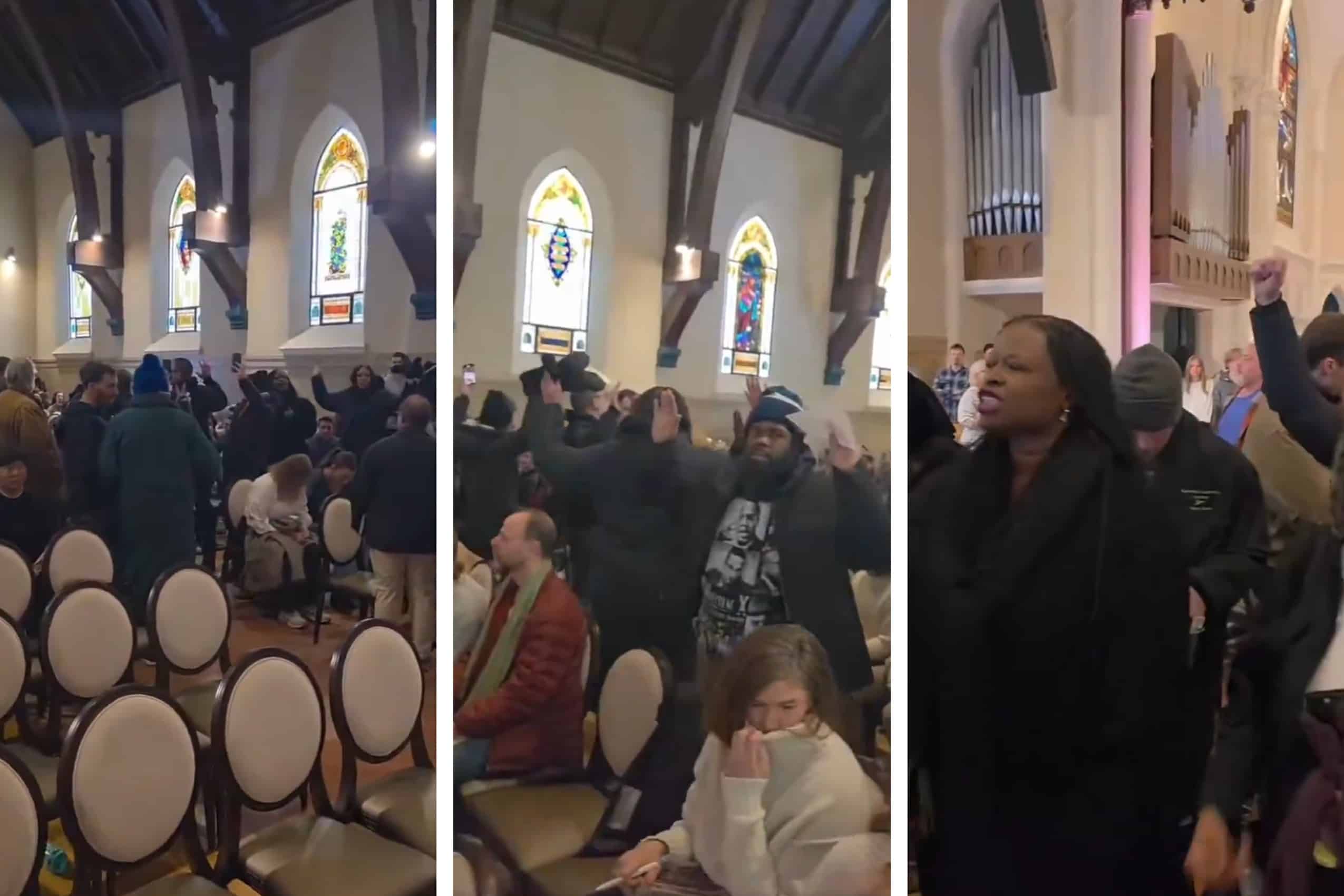
On Sunday, Jan. 18, 2026, parishioners at Cities Church in St. Paul, Minn., gathered for worship expecting peace, prayer, and fellowship. Instead, they were met with disruption and confrontation. Children looked on in confusion and fear as a political protest unfolded inside the sanctuary — during the service itself.
A house of worship is not a venue for political theater. It is a place where people seek unity before God, not division over public controversies. Yet on that Sunday, a group of activists led by Nekima Levy Armstrong, Chauntyll Louisa Allen, and William Kelly — and joined by Don Lemon, the former CNN journalist who was fired from his job for a variety of on-air controversies and allegations of misogyny after 17 years on the air — entered the church during its worship service and interrupted the proceedings. Video later posted online shows protesters angrily confronting congregants inside the sanctuary, replacing worship with political agitation.
This was not a demonstration on a public sidewalk. It was not protesters holding signs outside a building. It was an intrusion into a private religious service. The congregants were prevented from worshipping, and the sanctity of the gathering was disrupted.
The legal implications deserve serious attention. The Freedom of Access to Clinic Entrances (FACE) Act, enacted in 1994, prohibits the use of force, threats, or physical obstruction to interfere with individuals seeking reproductive healthcare services or exercising their right to religious freedom at places of worship. While the FACE Act is widely known and enforced against pro-life activists regarding abortion clinic access, the same statute explicitly protects houses of worship. Yet violations of this second provision rarely receive comparable attention or prosecution.
The videos from Cities Church show protesters linking a church staff member to Immigration and Customs Enforcement and used that allegation as justification for their actions. Even if activists disagree with a church employee’s outside employment, that disagreement does not justify disrupting a worship service. Constitutional protections do not yield to political grievances.
Some participants attempted to justify their actions by citing scripture, referencing Jesus overturning tables at the temple. However, Jesus confronted money changers in the temple courts, not worshipers during a religious service. He was addressing commercial exploitation of sacred space, not engaging in political protest during worship. This represents a fundamental misuse of scripture to justify a violation of federal law.
The targeting of this particular church also warrants examination. What would the response have been if this group had disrupted worship at a local mosque, synagogue, or any other house of worship?
I commend the lead pastor for his calm demeanor and attempts to de-escalate the situation. More importantly, I call on legal authorities to thoroughly investigate this incident, determine whether federal and state laws were violated, and prosecute accordingly if warranted. The FACE Act cannot be selectively applied. If it protects access to abortion clinics, it must also protect Americans’ right to worship without intimidation or disruption.
Religious liberty is not contingent on politics. It is a constitutional guarantee. And equal justice under the law demands that it be defended consistently.
Rev. Dale Witherington is the Chief Steward of Restore Minnesota and the author of the book “Courageous Christianity: Living a Life of Faith in a World that Desperately Needs Jesus.”
The views and opinions expressed in this commentary are those of the author and do not represent an official position of Alpha News.