



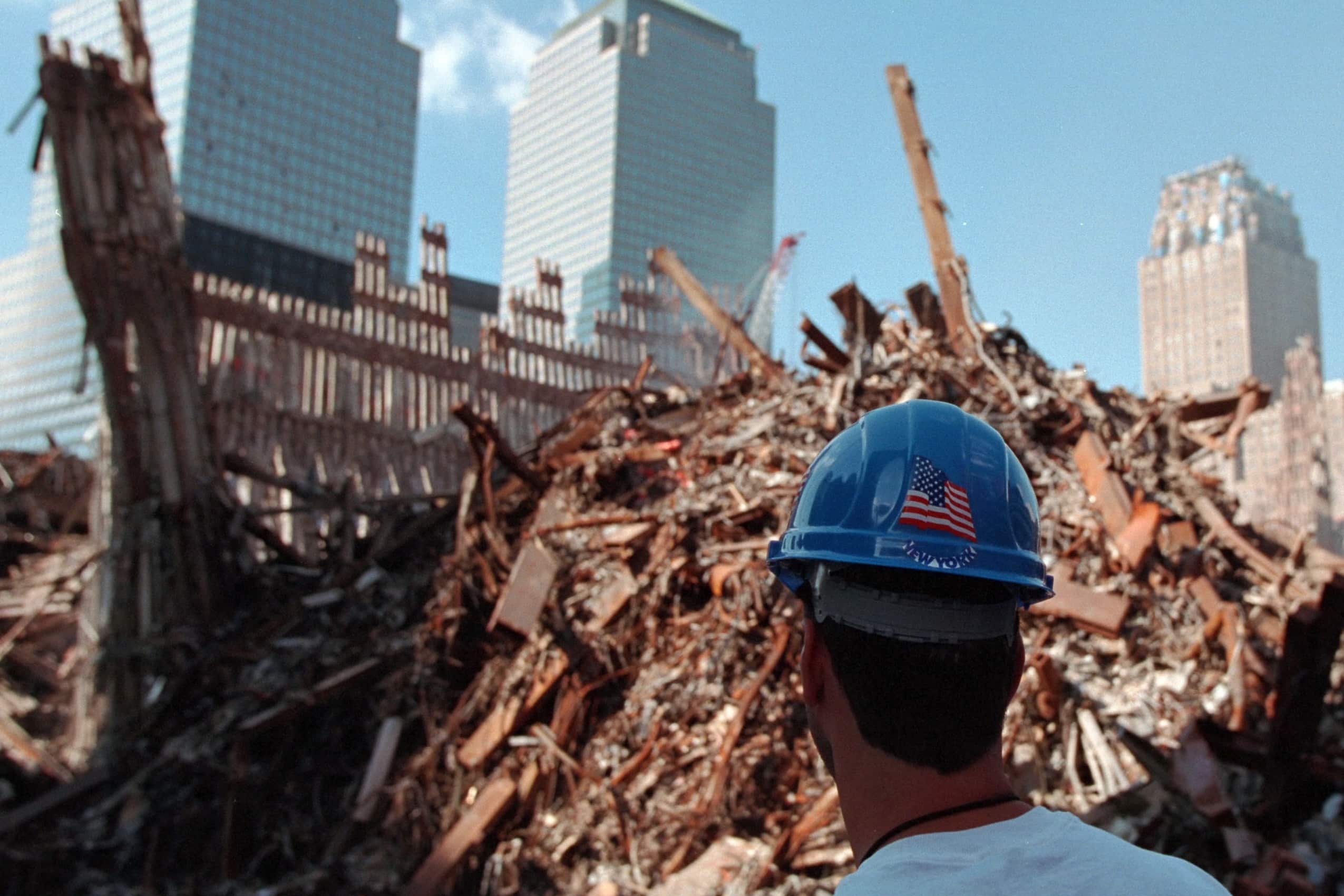
On Sept. 11, 2001, I was starting my second semester at Columbia University. I had transferred from a state school in Minnesota at the start of the year, and was embarking on my own little slice of life New York adventure.
The aftermath of Sept. 11 was my first real-world collision with moral relativism. I honestly don’t know if I had ever thought consciously about it before then. But I encountered it everywhere in the months and years afterwards.
But before the relativism came cowardice.
Days after the attack, I was sitting on the steps at Columbia, talking to a sophomore I knew. We were ruminating over what had happened and what may happen, and he said something that jarred me: “If there’s a draft, I’m moving to Canada.”
This gave me a pause that’s hard to put into words. Let me try to illustrate with my internal monologue.
“You f–ing coward. They killed 3,000 people eight miles from here. You’re a 19-year-old man, born at the top of the richest country on earth, given everything in the world by America, and when not just your country but your city is attacked, your first instinct is to run away??”
The intensity of my disgust goes far beyond these words, but it’s the best I can do on paper. I could not believe the absolute gall of this person, this privileged, fighting-age man, whose first thought when there was a mass murder in his city was to run away and save his own skin. This was a certain kind of person at Columbia, and it was a major eye-opener to discover that they exist.
As odious as that sentiment was, the more common feeling I encountered was one of resigned relativism, perhaps mixed with or used as an excuse for cowardice. For example, someone once asked me at a student party, “What do you expect when you build towers to the sky…? Someone’s going to try to knock them down.” As if we brought it on ourselves, with our own Babylonian hubris. In one of my classes that semester, another student said that he was “really disturbed by all the flag-waving” that had been happening since the attack.
Well. That’s certainly one thing to be angry about. I can think of a few thousand others, still buried a few miles south of here. But OK.
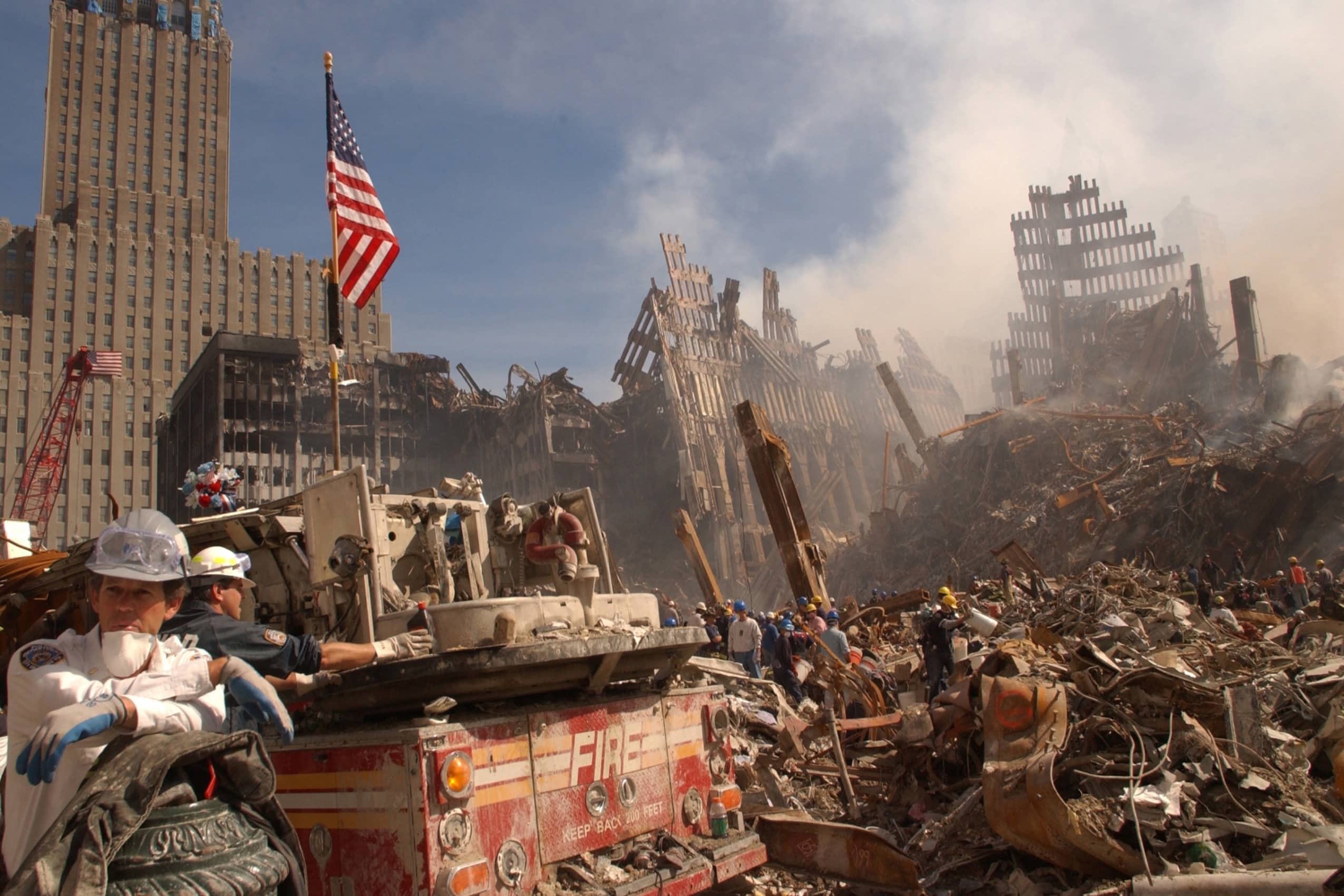
My response was, “Well, if it’s good enough for the firefighters who are still digging through the rubble, and the servicemembers who are going to go fight these guys, maybe it’s good enough for a Columbia student.” Not much response to that, of course. Certainly not a reconsidering. I soon learned that Columbia students, like other New York intellectuals, were too smart for simple-minded concepts like patriotism.
The reflexive aversion to loving and defending your country was not the only thing that surprised me. In addition to the lofty, generalized relativism I encountered, there was also a specific kind. Islam and Islamic societies were topics that had probably never crossed my mind before Sept. 11. Now they were at the forefront.
These were early days, before people spent all day online, before the real institution of all knowledge on the internet, and before I had read books like Infidel or Islam and the Future of Tolerance. But I did the best I could, reading articles about Islam, Saudi Arabia, other countries in the region, and talking to people about it constantly.
To my great shock, when I engaged other students in conversations about oppressive Islamic theocracies, I did not hear condemnation, or anger, or judgment of any kind. It was more, “Well that’s just how they are.” I would reply, “Yes. That is how they are. And it is messed up. Problematic, you might say.”
Where was that second step, the critique? Why was that not part of their analysis? Where was their moral investigation of these types of societies generally, and specifically how they tend to create barbarism and terrorists?
The answer is: there really was none. In conversation after conversation, there was just no moral calculus applied to tyrannical Islamic societies. By New Yorkers. In the aftermath of Sept. 11.
Illustrative is a conversation I had with a friend who was a Barnard student. I was being a typical Ivy League nerd, having a Socratic dialogue about the topic in a bar, finding out how she felt about the Islamic societies that breed terrorists, and what she thought we should do about them. I was expressing my hostility towards such cultures, and she was indicating that she really didn’t want to judge them.
By now I’d had many such conversations, could predict where they were going from the initial salvo, and had some responses mapped out for the things people typically say.
My first question was, “Can we say that America is a better society than Saudi Arabia?” “No.” Of course not.
I knew that a New York intellectual is instinctively going to think “racism” when faced with that question. So I had a follow-up.
“Can we say that America in 2002 is a better society than Germany in 1938?”
“No.”
As on the college steps, I was actually stumped, completely frozen by this response. I tend to think very fast, and my mind was racing with the necessary conclusions that must come from an axiom like this. What this means, what a person must hold in their heart to say something like this, what their view of the world must be. And it is terrifying when you think through the moral consequences of this philosophy for even a moment.
As months wore on, I started to draw some bleak conclusions about my fellow students, and about educated, intellectual New Yorkers. My first response to my city being attacked was rage, first hot, then cold, but always instantly resurfaced whenever I paused to think about the attack, whenever I walked certain streets downtown, or whenever I saw a mass of desperate “Have you seen me?” posters covering a pillar or a wall in a subway station. On the day we were attacked, I could not have fathomed that I would be living in a Bizarro World where I felt virtually alone in my rage, almost that I had to hide it or be ashamed of it, because it would out me as some sort of wide-eyed, open-jawed anachronism to my classmates and neighbors.
This is what it was like to be a New Yorker after 9/11. Or, rather, a New Yorker who wanted to defend New York.
A popular political joke these days is, “What radicalized you?”
This. This radicalized me.
When I talk to normal people in the rest of America about coastal elites, relativism, and intellectual snobbery, I often tell these stories, and I end with this: however depraved, nihilistic, and relativistic you think these people are, they are far worse than that. You have no idea. Only by seeing their immediate, instinctive reaction mere miles from where the World Trade Center collapsed, in the city they call home, can you see the fruits of their philosophy in full bloom.
Many other things contributed to my rightward shift in those years, including a burgeoning interest in economics, and a deeper study and understanding of world history. But far and away, the deepest, the most abrupt, and the most jarring reason my politics changed was witnessing the instincts of the educated elites in the wake of atrocity firsthand.
I am a 9/11 Republican. And I will never forget why.

Shane Hachey
Shane Hachey is a journalist and blogger based in the Twin Cities. He covers national politics, race, and local issues. Prior to that, he studied history at Columbia and law at Harvard Law School, and he was an Army Military Policeman for five years stationed in Germany, Yugoslavia, and Fort Hood, Texas.