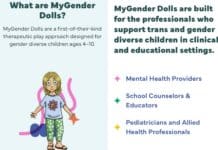





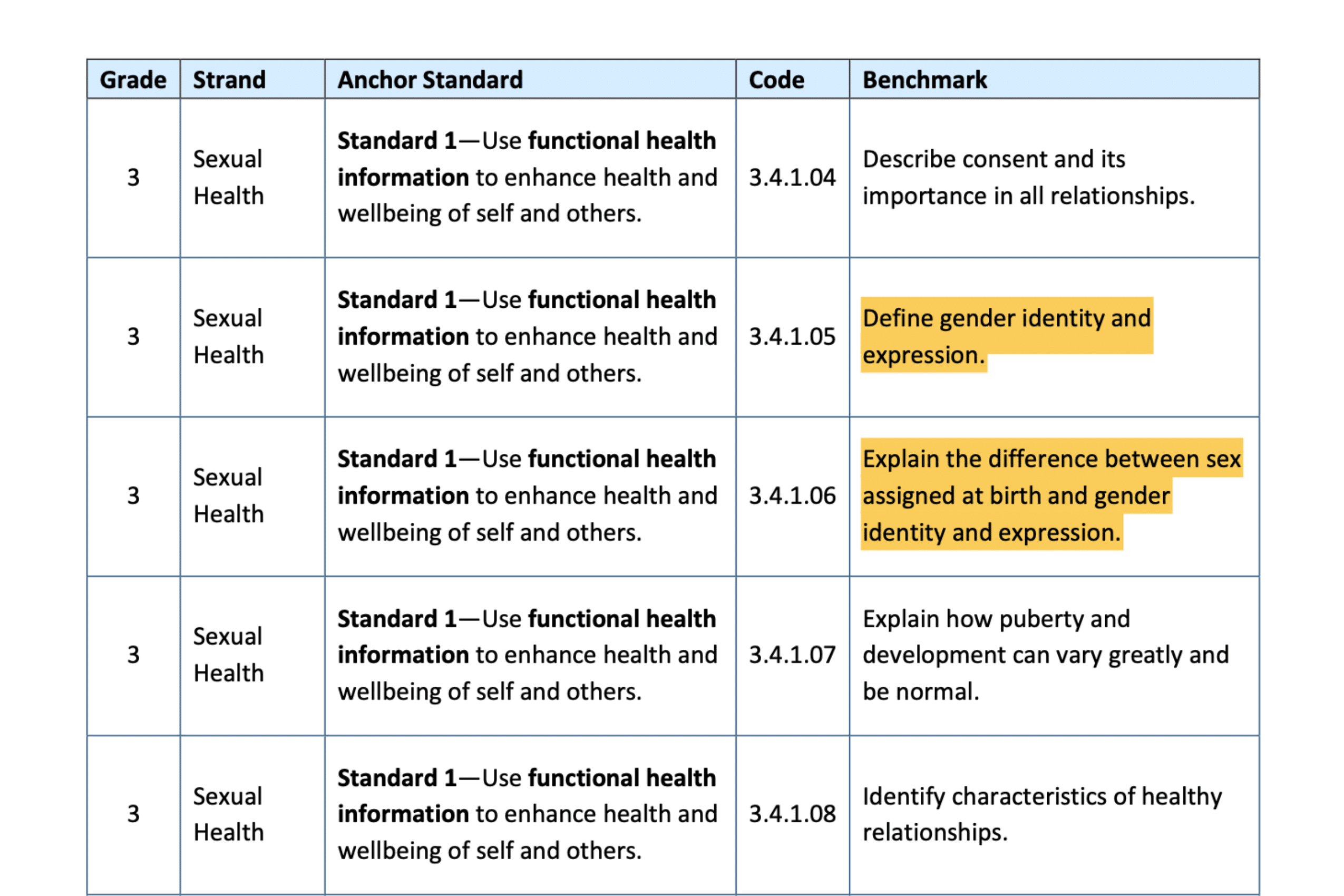
Minnesota elementary school students may soon be expected to “define sexual orientation” and “gender identity and expression” if proposed academic standards are approved.
The draft of new health-related academic standards is making waves across the state ahead of the July 18 deadline—the last day when parents and the public can comment on the proposed standards and provide feedback to the Minnesota Department of Education.
Even with the looming deadline, parents and teachers seem reluctant to speak out.
However, one courageous teacher spoke to Liz Collin on her Liz Collin Reports podcast.
“It’s not a lot of time for feedback. They seem to be in a big hurry to get this pushed through,” said “Sam”—a licensed teacher and longtime K-12 health educator in Minnesota.
Sam asked Collin not to use her real name or reveal her identity because she could potentially lose her job for publicly “pushing back” against the proposed standards.
Third graders must describe reproductive body parts—in a ‘gender-neutral way’
The standards would require elementary students to “Describe internal and external reproductive body parts using medically accurate terms in a gender-neutral way,” among other benchmarks.

Sam explained, “I think it is way beyond the scope of their ability to understand. These are kids who struggle with naming body parts in their technical scientific names at all. And that is also part of the standard.”
Among several changes recently reported by Alpha News, Sam pointed out how third-grade students will likely not be able to meet these proposed standards and expectations, especially since much older students struggle to do so.
“When I was teaching and assisting teaching health last year, and as I have for the last 20 years, high-school students have a problem memorizing all of the biological mechanical parts involved in reproduction. And we’re expecting third graders to do it now. It’s way too complicated and it’s not necessary,” she said.
The standards would also require third graders to “explain the difference between sex assigned at birth and gender identity and expression.”
“We are expecting kids to understand things that a lot of adults can’t wrap their minds around,” Sam commented.
‘You never address children by gender’
Sam also talked about what school administrators expect regarding gender and sexuality among kindergarteners and elementary students.
She spoke about teaching a kindergarten class while being observed by a school administrator. Sam said she passed out workbooks to the class and thought the lesson went well.
The next day, however, “I was dressed down rather significantly and criticized for separating the workbooks, boys on one table and girls on the other,” she said.
Sam recalled how the administrator reprimanded her: “We do not separate by gender. We are not to address the children as boys and girls, they are to be addressed as students or friends, but you never address children by gender.
What elementary students think about ‘genderless bathrooms’
Sam also spoke about how the standards don’t seem to reflect how elementary school students act among themselves.
While teaching elementary students about civics and how bills become laws, Sam asked students to create a bill about a topic of their choice to present to the school administrators. She said, “nearly every group from these fifth-grade classrooms, their bills centered around making the unisex bathrooms into gendered bathrooms.”
“The kids hated it—especially the fourth and fifth-grade students … because they didn’t like having to share their bathrooms with the other gender,” Sam explained of the school’s unisex bathrooms.
She told Collin how “they wanted boy bathrooms and girl bathrooms specific. They wanted privacy. They wanted cleanliness. They wanted what we’ve known for years and years.”
She also noted how the proposed standards are too complicated—and do not reflect how elementary students think or what they want for themselves.
As Sam told Collin, “This is what’s normal and this is what children prefer is simplicity. Out of the mouths of babes, that’s what they want.”
Parents and the public can provide feedback to the Minnesota Department of Education before the July 18, 2025 deadline.

Dr. JC Chaix
Dr. JC Chaix is an editor, educator, and an expert in media studies. He wrote and directed the Alpha News documentary "The Fall of Minneapolis" and "Minnesota v We the People."