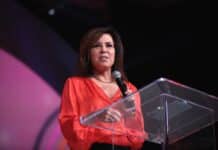

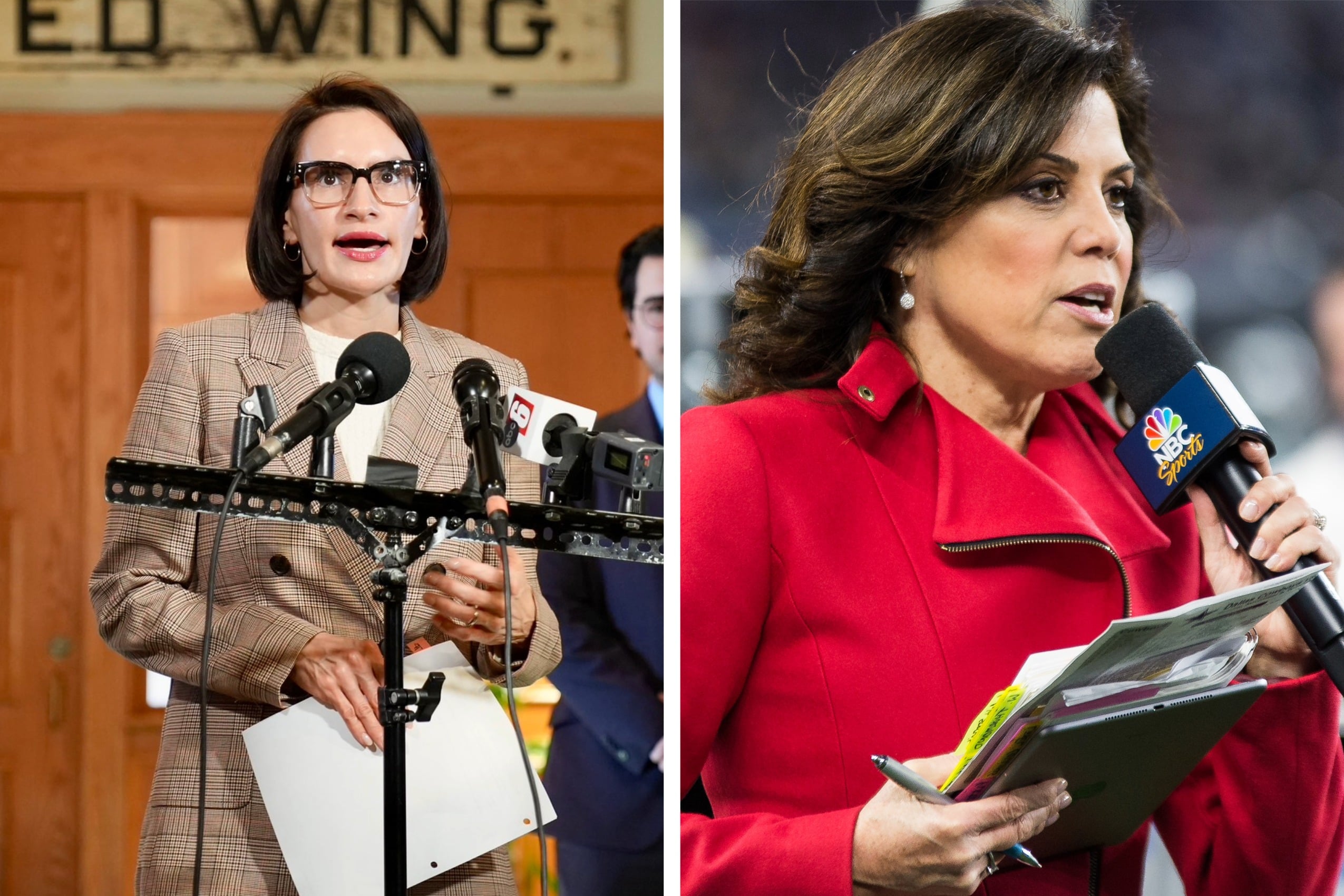
Minnesota Lt. Gov. Peggy Flanagan won the DFL nomination for U.S. Senate Tuesday night. Flanagan bested Rep. Angie Craig in a close, and often bitter, race for the DFL nomination.
“I am truly honored and humbled to be Minnesota’s Democratic nominee for U.S. Senate,” Flanagan said in a statement after her win. “Thank you, Minnesota – for everything.”
Flanagan launched her campaign for U.S. Senate in February of 2025 after DFL Sen. Tina Smith announced she would not seek reelection. Smith, along with other left-wing figures such as Bernie Sanders, Ilhan Omar and Keith Ellison, endorsed Flanagan’s campaign.
Flanagan has served as Gov. Tim Walz’s lieutenant governor since 2019. Prior to that, she was a member of the Minnesota Legislature.
In her campaign for the DFL nomination, Flanagan positioned herself squarely to the left of Craig by campaigning in support of Medicare for All, universal child care, a national paid family and medical leave law, and the abolishment of ICE.
During the primary, Flanagan often attacked Craig for voting in favor of the Laken Riley Act, a law which gave ICE broader authority to take custody of illegal aliens. That vote became a recurring theme in the campaign with Flanagan repeatedly using it against Craig.
Craig eventually said she regretted her vote for the Laken Riley Act and routinely attacked the Trump administration and ICE in an apparent attempt to appeal to the DFL’s anti-ICE voter base and compensate for Flanagan’s attacks.
Craig, who has served in Congress since 2019, refused to support many of the far-left proposals backed by Flanagan. Throughout the campaign, Craig argued that she was more electable than Flanagan and was the best candidate to keep the seat in DFL hands.
The four-term congresswoman also went on the offensive against Flanagan, accusing the lieutenant governor of benefiting from campaign contributions made by a company that builds ICE detention facilities. Flanagan denied that accusation.
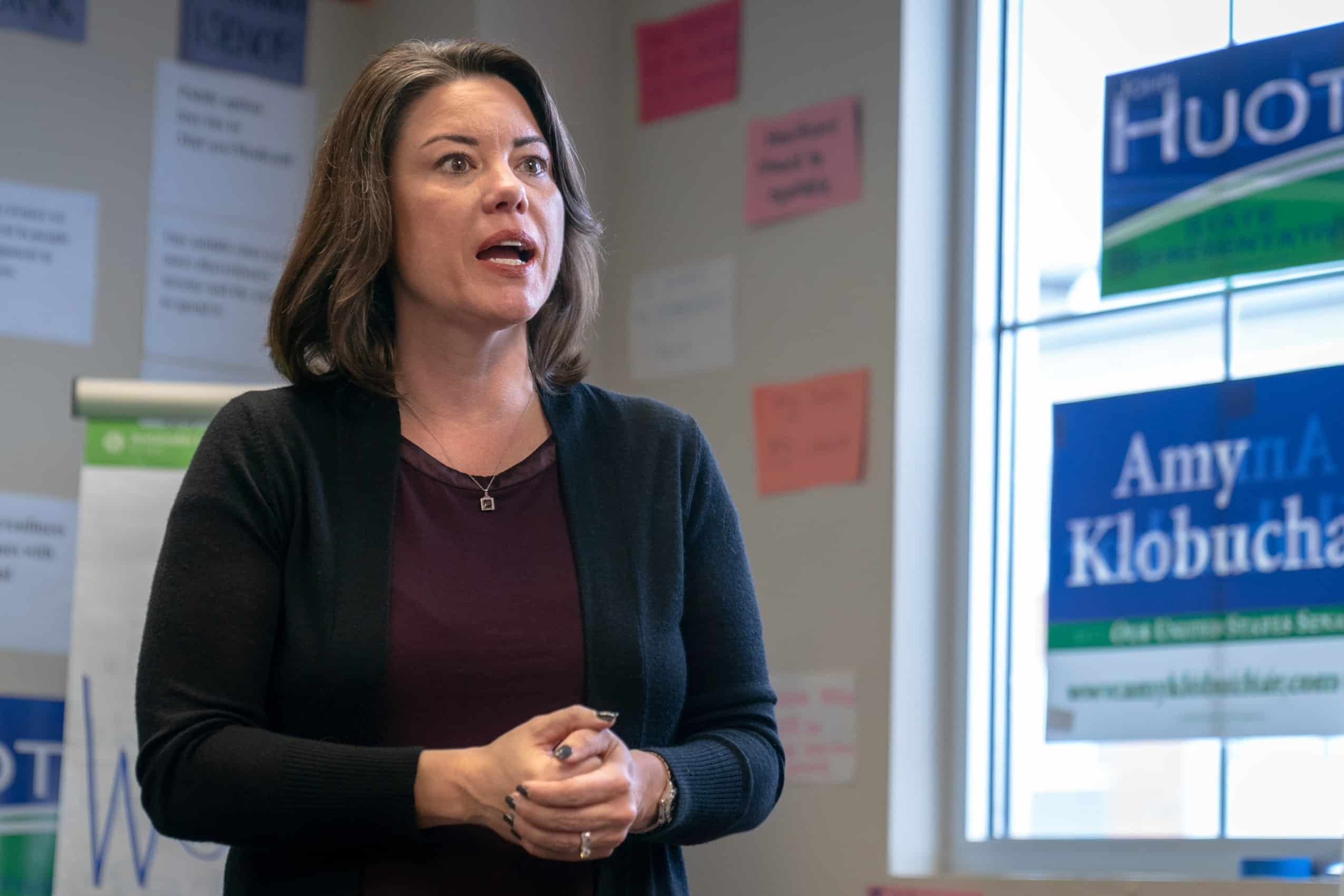
Additionally, Craig repeatedly tied Flanagan to the ongoing fraud saga that has engulfed the Walz administration. Craig argued that fraud would be a top issue in the general election and the GOP would successfully use the fraud issue against Flanagan in the general election.
Polling between Flanagan and Craig showed a statistical tie emerging in the last few weeks of the primary. Ultimately, though, Flanagan’s far-left, anti-ICE agenda appealed more to DFL primary voters than Craig’s candidacy.
In her concession speech, Craig urged voters to support Flanagan’s candidacy.
Now, Flanagan will face Republican Michele Tafoya in the fall general election. Tafoya, a former national sportscaster, won the GOP nomination for the U.S. Senate against retired Navy SEAL Adam Schwarze, who was endorsed by the Republican Party of Minnesota.
Tafoya had been polling far ahead of Schwarze and the other GOP candidates throughout the primary contest. Her victory, along with Lisa Demuth’s win in the Republican gubernatorial primary, marked the first time in years that a statewide Republican candidate failed to win their party’s endorsement but went on to win the primary.
Despite Minnesota’s leftward lean, the fall general election between Flanagan and Tafoya could prove to be a close contest. The DFL has faced constant criticism due to fraud, and Tafoya is the most well-known Senate candidate fielded by the GOP in years.
Additionally, campaign finance records show Tafoya’s campaign had over $1.3 million in cash on hand as of July 30. Meanwhile, Flanagan’s campaign had just over $1 million.
“This isn’t about red versus blue,” Tafoya said in a statement after her primary win. “It’s common sense versus crazy. We will not reelect politicians who let criminals steal billions and treat accountability as optional. We deserve better, and it’s time we demand better.”
Minnesota’s general election is set for Tuesday, Nov. 3.
Luke Sprinkel
Luke Sprinkel previously worked as a Legislative Assistant at the Minnesota House of Representatives. He grew up as a Missionary Kid (MK) living in England, Thailand, Tanzania, and the Middle East. Luke graduated from Regent University in 2018.