


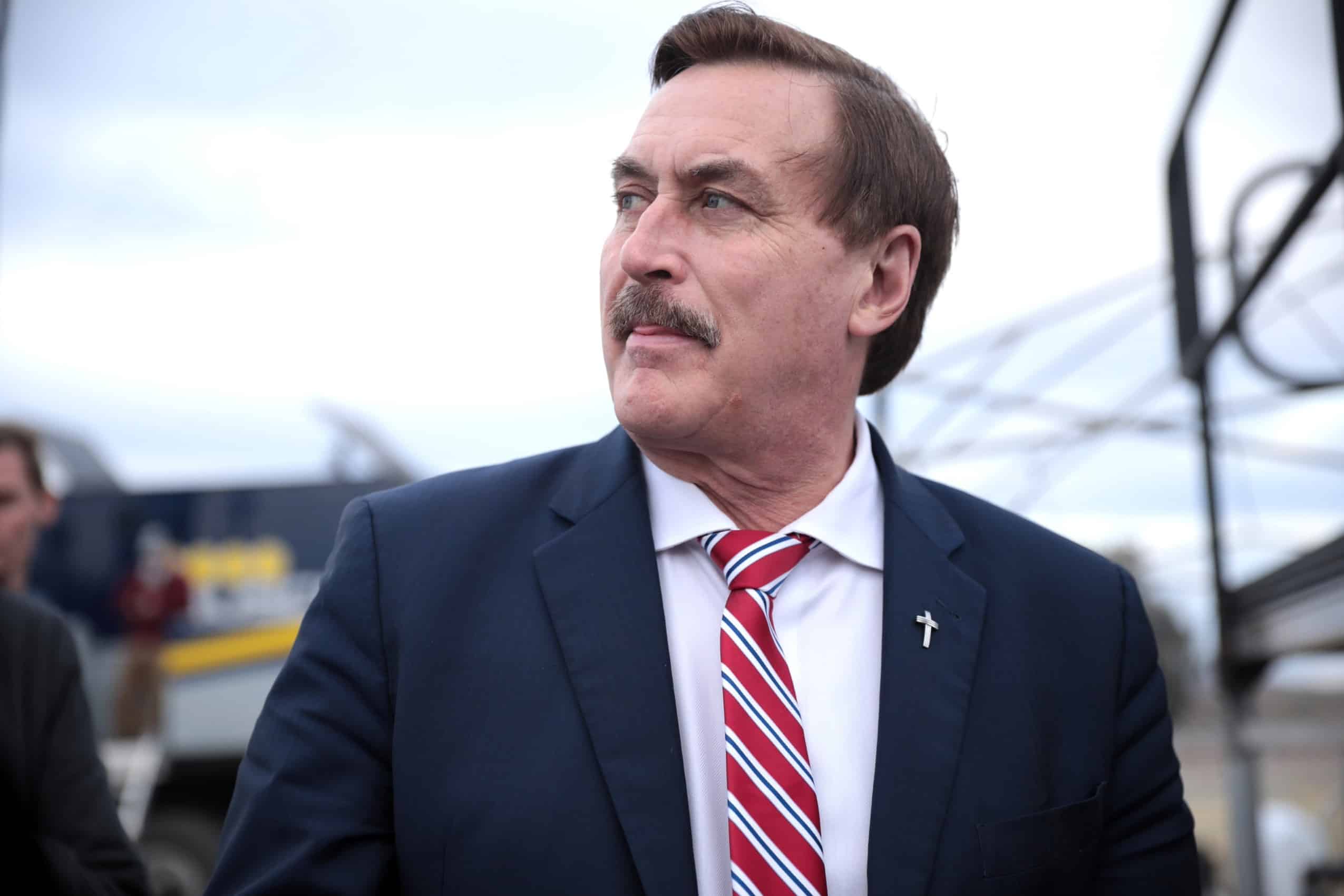
One of the most prominent immigration think tanks in the United States is calling out Mike Lindell’s recent proposal to provide permanent work visas to illegal aliens.
Lindell, a Republican candidate for governor of Minnesota, has proposed the creation of a six-month deportation moratorium during which illegal aliens can apply for a conditional work visa. That visa would not expire and allow illegal aliens to work in the United States.
Under Lindell’s proposal, illegal aliens guilty of gross misdemeanors and felonies would not be eligible for the conditional work visas. The MyPillow mogul has said all illegal aliens who get the work visas would be fingerprinted during the process.
Lindell, who has acknowledged he could not implement the plan as Minnesota governor, has come under heavy criticism from Republicans across the country in recent days because of his plan. Many Republicans have described the plan as “amnesty.”
Now, the Center for Immigration Studies (CIS) is echoing that sentiment.
“This proposal is an amnesty. It’s an amnesty for a population of undetermined size. It has all of the deficiencies of any amnesty, and it threatens to have a huge impact on the working population in the United States,” CIS resident fellow Andrew Arthur said of Lindell’s plan.
CIS was founded in 1985 and provides policymakers with information on the impacts of legal and illegal immigration. Arthur, who previously served as an immigration judge, spoke to Alpha News about Lindell’s plan and its downstream effects.
“Proposals like this surface from time to time,” Arthur said. “They all have more or less the same features, that it would be everybody regardless of when they got here, or some population of people who arrived before date certain.”
He described the plan as “a massive amnesty” that would “drive down wages for workers at the lowest end of the economic spectrum. It would put them in direct competition with American workers, and by that I mean not just U.S. citizens but lawful immigrants [and] green card holders.”
Lindell, who has said he is not in favor of amnesty and will never be in favor of amnesty, previously explained that his plan would generate increased tax revenue as a result of illegal aliens working legitimately and paying taxes.
Arthur acknowledged that more tax dollars would be collected under the plan. However, he said “the question then becomes how much more we would pay out in means-tested public benefits” such as food stamps and Medicaid.
CIS published a report in June which found that “non-citizen households use one or more means-tested programs at substantially higher rates than the U.S.-born in virtually every state.”
Earlier this month, the Lindell campaign published, and then removed, a document which summarized Lindell’s plan. That document says “the unauthorized workforce” has a higher labor market participation rate than native-born workers — 66.6% compared to 61.8%.
Arthur quoted from that document and explained that “we want to have the labor market participation rate be higher than 70%,” but “part of the reason why the labor participation rate, the LPR, is so low is because most of those workers have lost all hope.”
“Most of those American workers have lost hope because they are in direct competition with foreign nationals who are willing to work at a lower wage, who have a more limited skill set, the same limited skill set that those people who have dropped out of the labor market have,” Arthur explained.
He added that the reason low-wage workers leave the workforce is because those workers can get more money from public benefits than from working. Arthur also said giving illegal aliens work authorization gives those individuals “greater incentive” to stay in the country.
“The labor impact, the fiscal impact, and the impact it would have on our ability to secure the border, those are really the three main [impacts], but they’re the three biggest ones,” Arthur said of Lindell’s plan. “There are plenty of downstream effects and things like that.”
Luke Sprinkel
Luke Sprinkel previously worked as a Legislative Assistant at the Minnesota House of Representatives. He grew up as a Missionary Kid (MK) living in England, Thailand, Tanzania, and the Middle East. Luke graduated from Regent University in 2018.