



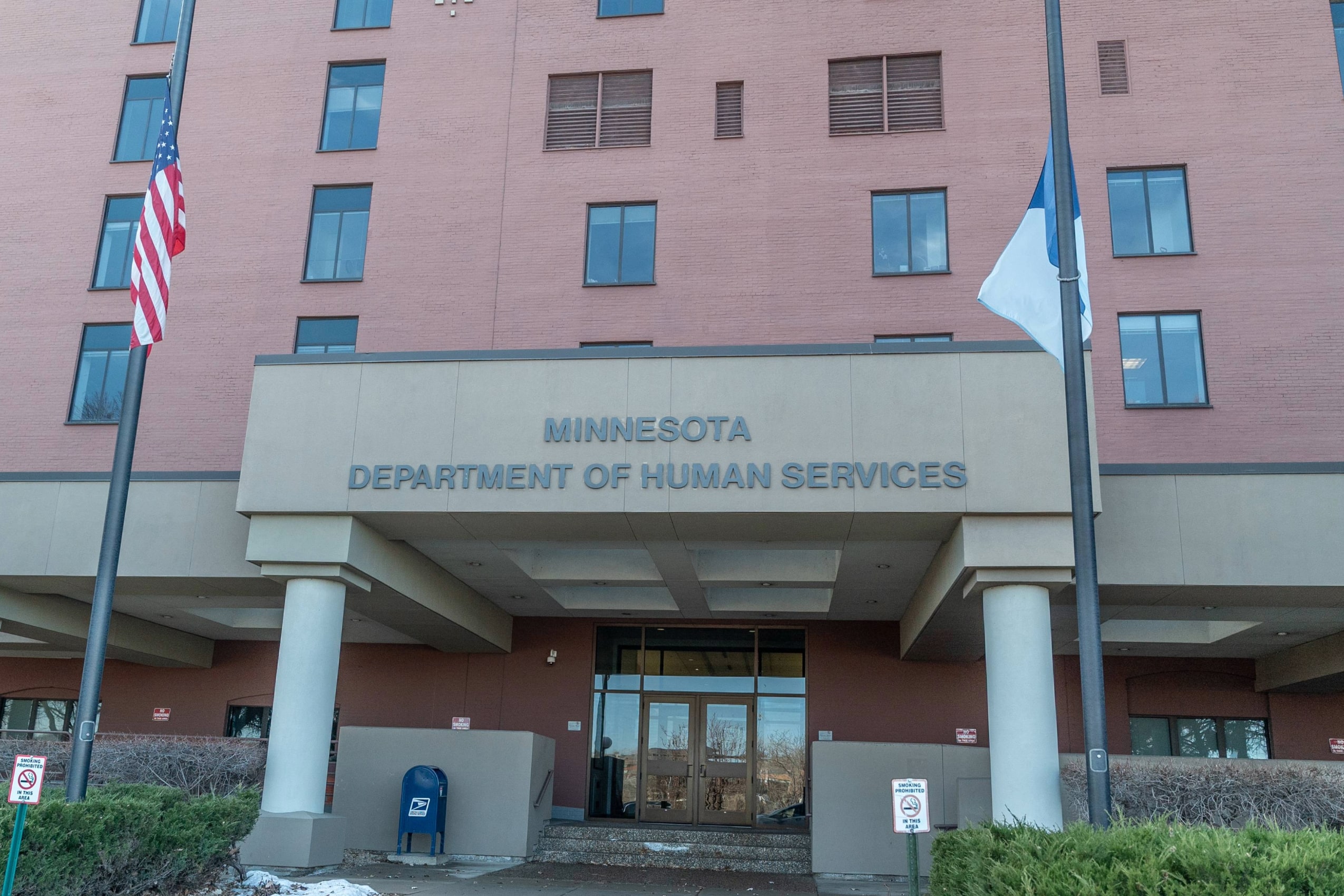
Minnesota’s Department of Human Services (DHS) is putting a two-year moratorium on new licenses for home and community-based services — the bureaucracy’s version of calling a timeout in a game that’s already spiraling out of control.
In an internal memo dated Dec. 3 and obtained by Alpha News, DHS is slamming the brakes on one of the state’s fastest-growing sectors: home and community-based services (HCBS).
JUST IN: 2-year ban on DHS’ Home and Community-Based Services (HCBS)
“…average annual number of active licenses rose by 55.3%, and new license applications grew by 283.3%
“As of mid-November, there are 2,549 active licenses and 2,314 pending applications”
INTERNAL MEMO ⬇️ pic.twitter.com/nfmSyxSbXu
— Liz Collin (@lizcollin) December 3, 2025
What is a 245D license?
To open a home and community-based services business in Minnesota, you must have a 245D license.
These businesses are meant to provide services such as daily living support, independent living skills training, behavior support, adult foster care, and in-home supervision.
Over the past few years, the number of license applications has exploded with thousands of new companies seeking to enter the HCBS market — the state’s network of home and community-based disability care providers.
Many of these new providers are said to be Somali-run, according to state workers familiar with the industry who spoke with Alpha News.
The two-year moratorium will begin Jan. 1, 2026, and run through Dec. 31, 2027. Under the freeze, the agency will stop accepting new applications for 245D licenses, stop adding new service lines to currently licensed providers, and cancel all submitted applications currently in the queue.
The memo says the moratorium is needed because the number of 245D providers is exploding far faster than the number of Minnesotans actually receiving HCBS waiver services — waiver participation grew just 24.7% while new 245D license applications skyrocketed 283.3%.
DHS admits the agency cannot keep up
The memo acknowledges that DHS “is not funded at a level to process the growing backlog of license applications while also meeting federal waiver plan commitments to review every 245D licensed provider at least once every three years.”
Even after hiring additional licensors in 2023, annual review workload has nearly doubled — “from 204 reviews in 2022 to 404 reviews so far in 2025.”
To comply with federal requirements, DHS says it “would need to conduct at least 847 reviews per year” for the next two years.
Under the moratorium, the only new licenses that can move forward are those granted an exception by a “county, Tribal nation or managed care organization” that can prove a specific local service need.
Who is flooding the system?
DHS did not disclose demographic or ownership breakdowns of the surge — including how many of the pending applications are from Somali-owned or Somali-run 245D companies.
Alpha News asked DHS how many Somali-owned or Somali-run providers are represented in the 2,314 pending applications. A spokesperson responded: “DHS does not collect racial or demographic information about license holders or applicants.”

Jenna Gloeb
Jenna Gloeb is an Edward R. Murrow Award-winning journalist, media producer, public speaker, and screenwriter. Most recently, she worked as a reporter and on-air host for CCX Media. Jenna is a Minnesota native and resides in the Twin Cities with her husband, son, daughter, and two dogs.