

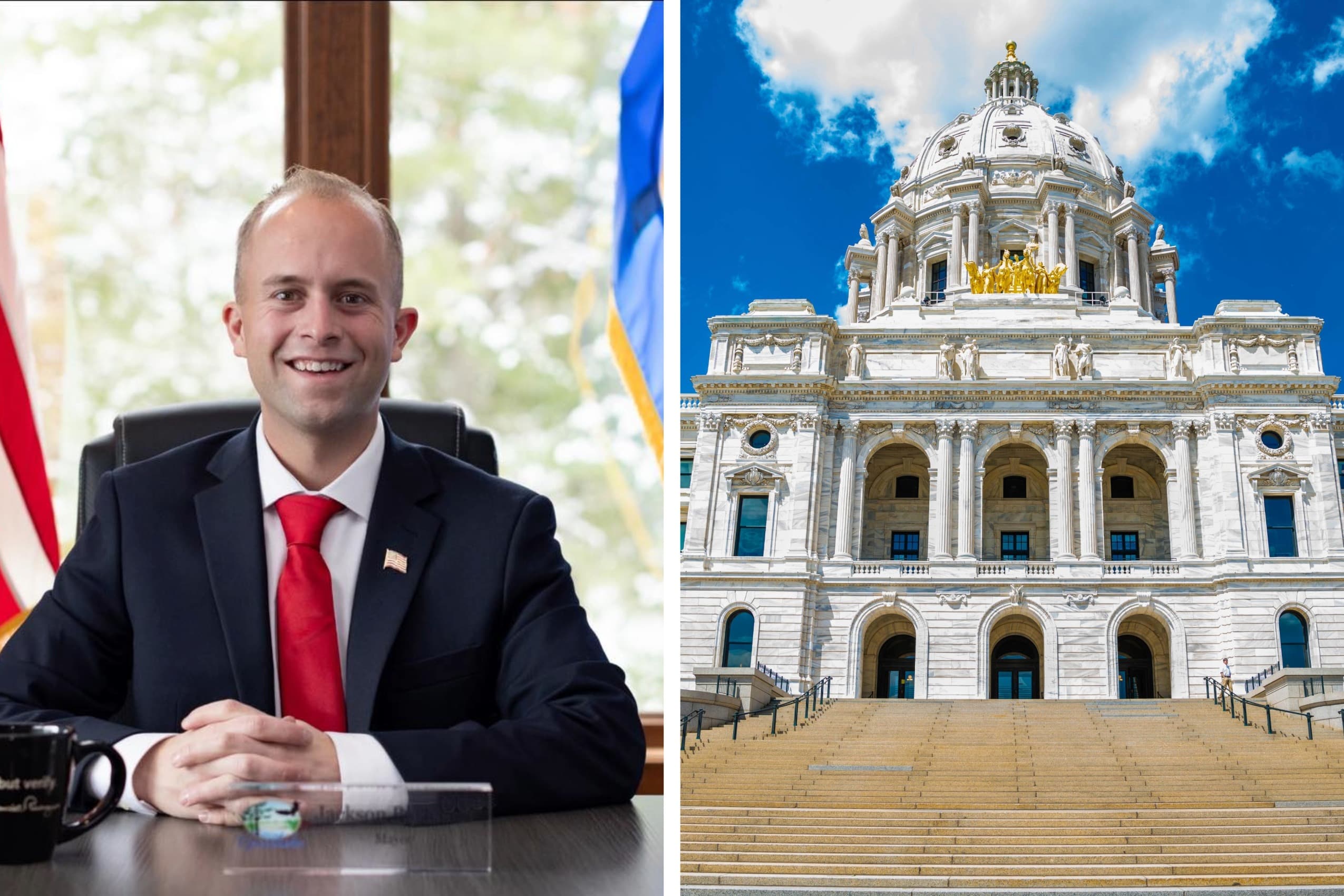
On Dec. 1, eight mayors representing communities throughout the Brainerd Lakes Area wrote “with deep concern—and growing frustration—about the fiscal direction of our state and the increasing impact it is having on cities across our region.”
Those mayors included Jackson Purfeerst of Crosslake, Diane Cash of Crosby, Tracy Jones of Emily, Gary Staples of Fifty Lakes, Todd Roggenkamp of Breezy Point, Jennifer Carnahan of Nisswa, Tyler Gardner of Pequot Lakes and Kevin Larson of Manhattan Beach.
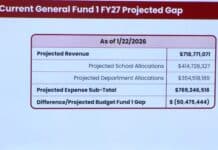
The letter, addressed to Minnesota state representatives and senators, pointed out what most Minnesotans are wondering about — watching “an historic $18 billion surplus disappear in a single biennium, only to now face a projected $6 billion deficit.”
“For taxpayers, local governments, and businesses here in the Brainerd Lakes Area, this is more than disappointing — it is alarming. Fraud, unchecked spending, and inconsistent fiscal management in St. Paul are beginning to trickle down to our cities, placing strain on local budgets and making responsible, long-term planning more difficult,” the group of mayors said.
The letter went on to share statistics from a Nov. 16 report from the Minnesota Chamber of Commerce, which showed Minnesota’s economy is slipping in national rankings, “raising serious concerns about the future competitiveness of the state our communities depend on.”
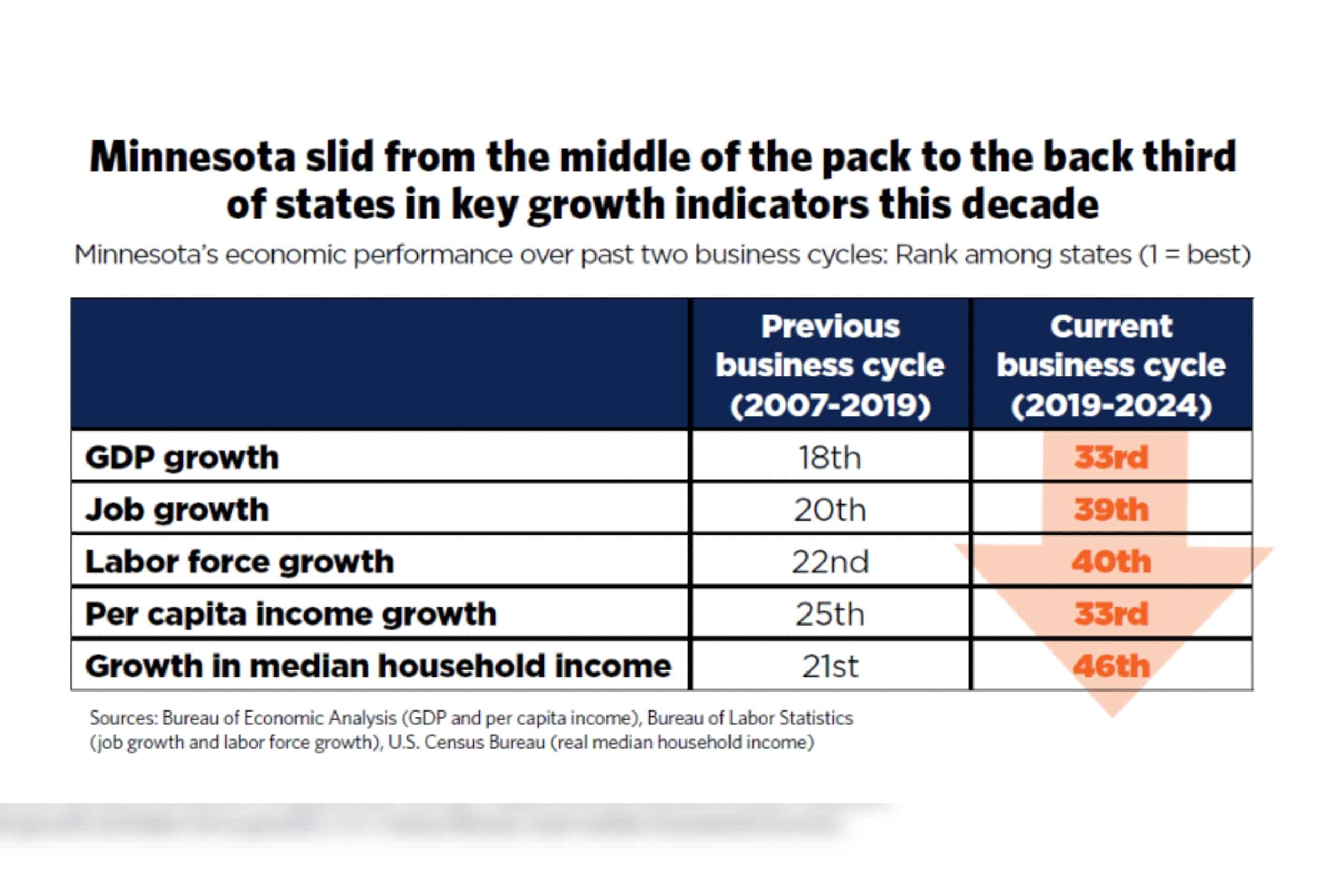
In addition to the statistics in the chart, Minnesota ranks 44th in tech job growth and 44th in overall tax competitiveness. Making matters worse: Minnesota lost nearly 48,000 residents to other states from 2020–2024.
“Between fraud, the rising tax burden, and policies that hinder economic growth, we are witnessing a troubling drift away from the foundational principles Minnesotans expect: responsible, transparent state budgeting; a pro-jobs, pro-business climate; taxpayer protection; support for local government stability; and long-term fiscal sustainability,” the mayors’ letter continued.
“When these expectations go unmet, the consequences are felt first and most directly in cities like ours,” they added, thanking the legislators who continue to champion fiscal responsibility and policies that support economic growth and stable communities.
“We, as mayors, can only support our communities for so long before the heavy hand of state mandates and financial pressure demands more than our cities can provide,” the letter says.
Unfunded mandates impact city budgets
Unfunded mandates negatively impact city budgets by shifting the financial burden of state and federal requirements to local taxpayers, forcing difficult choices between increasing property taxes and cutting services.
Minnesota Sen. Rob Farnsworth highlighted this issue in a recent op-ed for the Mesabi Tribune, noting that “spending in education from kindergarten to high school is projected to be nearly 40% of the state budget in 2026–27, yet many schools are still asking more of local taxpayers to comply with unfunded state mandates.”
“There have been changes to how we administer social service programs, probation programs, and even how we build roads. These changes carried incredible cost for local governments, and they have nowhere else to go but property taxpayers when they have a shortfall,” Farnsworth wrote.
“We simply can’t afford this sort of pass the buck attitude anymore,” he added. “The massive increase in spending and taxes from one-party control has left many Minnesotans feeling the pinch. Every new employee, program, and service carries a cost.”
The Brainerd Lakes Area mayors expressed similar sentiments in their letter, concluding, “Minnesota is worth fighting for. Our residents deserve better than deficits, economic decline, and policies that push families and businesses away … We urge the Legislature to course-correct and to remember that every dollar you manage belongs not to the Capitol, but to the people of Minnesota.”