


With mounting concerns about voter fraud—and billions of dollars in fraud already uncovered in Minnesota—the state refuses to share its voter rolls with the federal government. But newly obtained voter data from Minnesota’s largest county raises plenty of questions.
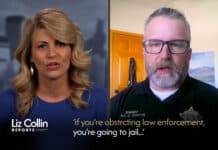
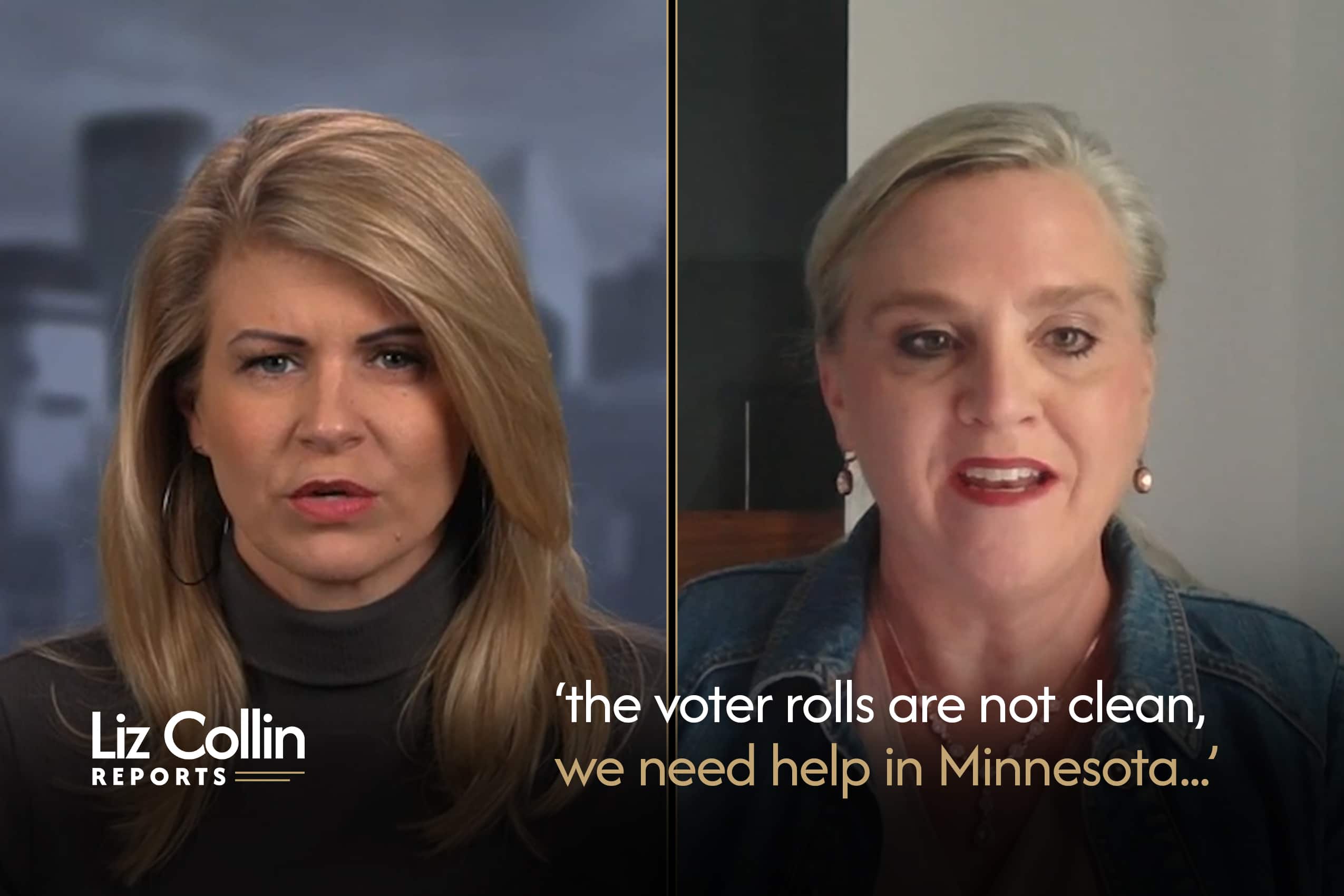
Rep. Pam Altendorf, a Republican who represents the Red Wing area and serves as vice chair of the Minnesota House Elections Committee, joined Liz Collin on her podcast to discuss what happened after requesting voter data from Hennepin County.
“This came to fruition after they denied the request from the DOJ and in my position of being the vice chair of the Elections Committee, we feel by state statute that I had access to that information and wanted to just try it out … So I did data requests to four counties,” Rep. Altendorf explained.
She explained how county officials likely told the Secretary of State’s Office and how Secretary of State Steve Simon issued a directive shortly thereafter.
“In that directive, he redefined what we call the master list. The master list is the information of the voters that, you know, we’re holding in the counties and that was redefined. And then it was specifically said to not give me certain information in the active voter list. He told the counties not to do that,” Rep. Altendorf explained.
Hennepin County voter data
Three counties shared limited voter data. However, Altendorf said Hennepin County shared a more complete picture of its voter roll data, which consisted of about 830,000 voter records in Hennepin County.
“To our surprise, Hennepin County … looked at the law and did decide that I was able to receive that information … and we do have a lot of concerns just looking from a very surface level,” Rep. Altendorf said.
Although Rep. Altendorf did not share the actual data or provide any access to it, she shared some of the “high-level takeaways” of her initial analysis with Alpha News.
Top level summary of just a few things I’ve found on the Hennepin County Voter List:
▶️7779 – Challenged Voters
▶️2992 – Voters with Missing Data
▶️79 – Voters Check ID status
▶️503 – Voters that are 100 YO or OVER
▶️21.6% – Voters in one precinct in Ilhan Omar’s District are… https://t.co/FgPDxII5Zh pic.twitter.com/EDoJ2oq5ox— Rep. Pam Altendorf (@PamAltendorf) February 10, 2026
“In one Minneapolis precinct, it’s P6 of Ward 2. There were so many challenged voters that it equates to 21.6% of the voters, just in this one precinct, are challenged,” Rep. Altendorf explained.
She added, “That is significantly higher than the state average or in any other precinct that we’re seeing.” Ward 2 in Minneapolis is represented by Democratic Socialist Robin Wonsley.
She also identified other concerns regarding accurate information in the voter roll data in her analysis.
“Again, this is just one county in Minnesota. In Hennepin County, we had 2,992 voters that have missing information,” she said.
“By state and federal law, information that has to be provided—important things like names, addresses, birth dates, those kinds of things—are missing from not just a couple, not just a handful, but thousands of voters,” Rep. Altendorf explained.
She also said that according to the Hennepin County voter roll data she received, there are 503 people over the age of 100 and other voters with a birth year of 1900. Voters who registered before 1983 were not required to provide their date of birth—and the year 1900 was used as a placeholder.
The Secretary of State’s Office has acknowledged this issue in the past, telling Alpha News that:
“Minnesota state law did not require voters who registered before 1983 to provide their date of birth. When the state moved to a digital voter registration system, the birth year of 1900 was added as a placeholder. Over the years, the majority of those who were grandfathered into the digital system with the 1900 birthdate have been updated. However, if a voter has not changed their address or name since they registered and consistently voted, they would not have an updated birthdate recorded.”
‘We need to fix that’
Altendorf said that after viewing the voter rolls, she believes that “we definitely need some help here in Minnesota because the rolls are not clean or what anyone would consider reliable or accurate.”
“There are so many people that are questioning our elections and now we have rock solid proof that our voter rolls are very problematic and we need to fix that. And it doesn’t matter if you’re a Democrat or Republican, all of us need to make sure that it’s one vote per one legal person here in Minnesota to have fair elections,” she said.
As for receiving the voter roll data from Hennepin County for her analysis, Rep. Altendorf said, “we are grateful because this gives us a very, very good glimpse of our voter rolls and the problems that are happening at our county level and at the Secretary of State level.”
Alpha News reached out to the Secretary of State’s Office for comment on Altendorf’s analysis. While they did not dispute her findings, a spokesperson said the Statewide Voter Registration System is updated daily.
Alpha News also reached out to Hennepin County for comment on her findings. A spokesperson told us Hennepin County Elections administers elections in accordance with Minnesota law and guidance from the Minnesota Secretary of State.
The spokesperson described a challenge as a “routine safeguard” to “flag eligibility questions.”
The statement went on to say that “challenges indicate that election judges are verifying eligibility in real time.”
According to the spokesperson, address verification is a routine reason a voter record may be flagged as challenged, “including when a registration confirmation postcard is returned as undeliverable.”
“This is common in areas with highly mobile populations — such as neighborhoods closely connected to a university community, where students and renters may move between the time they registered to vote and when the registration postcard is sent,” the spokesperson said, referring to the University of Minnesota.
This combined with some polling places changing ahead of the 2025 election in that precinct could be contributing to the large number of challenged voter registrations, according to the spokesperson.
“Polling place changes often result in an increase of challenged statuses, and the percentage of challenged records follows this trend, as [Ward 2-Precinct 6] was slightly higher than previous years,” a county elections spokesperson said.
“All voters that have been challenged will need to work with election judges to resolve the challenge prior to being issued a ballot. Individuals who do not meet eligibility requirements under a challenge are not allowed to vote, in accordance with Minnesota law,” they added. “Hennepin County Elections remains confident in the integrity of its processes and will continue to follow review and audit procedures under state law.”

Liz Collin
Liz Collin is a multi-Emmy-Award-winning investigative reporter, news anchor, and producer who cares about Minnesota. She is the producer of The Fall of Minneapolis and Minnesota v We the People documentary films, and author of the Amazon best-selling book, They’re Lying: The Media, the Left, and The Death of George Floyd. Her work has prompted important state laws. Yet perhaps most of all, Liz has been giving a voice to the truth—and helping others tell their stories—for more than 20 years.

Dr. JC Chaix
Dr. JC Chaix is an editor, educator, and an expert in media studies. He wrote and directed the Alpha News documentary "The Fall of Minneapolis" and "Minnesota v We the People."