



A new state law in Minnesota making the operation of a prediction market a crime has gained the attention of the federal government, which is suing to block the state measure.
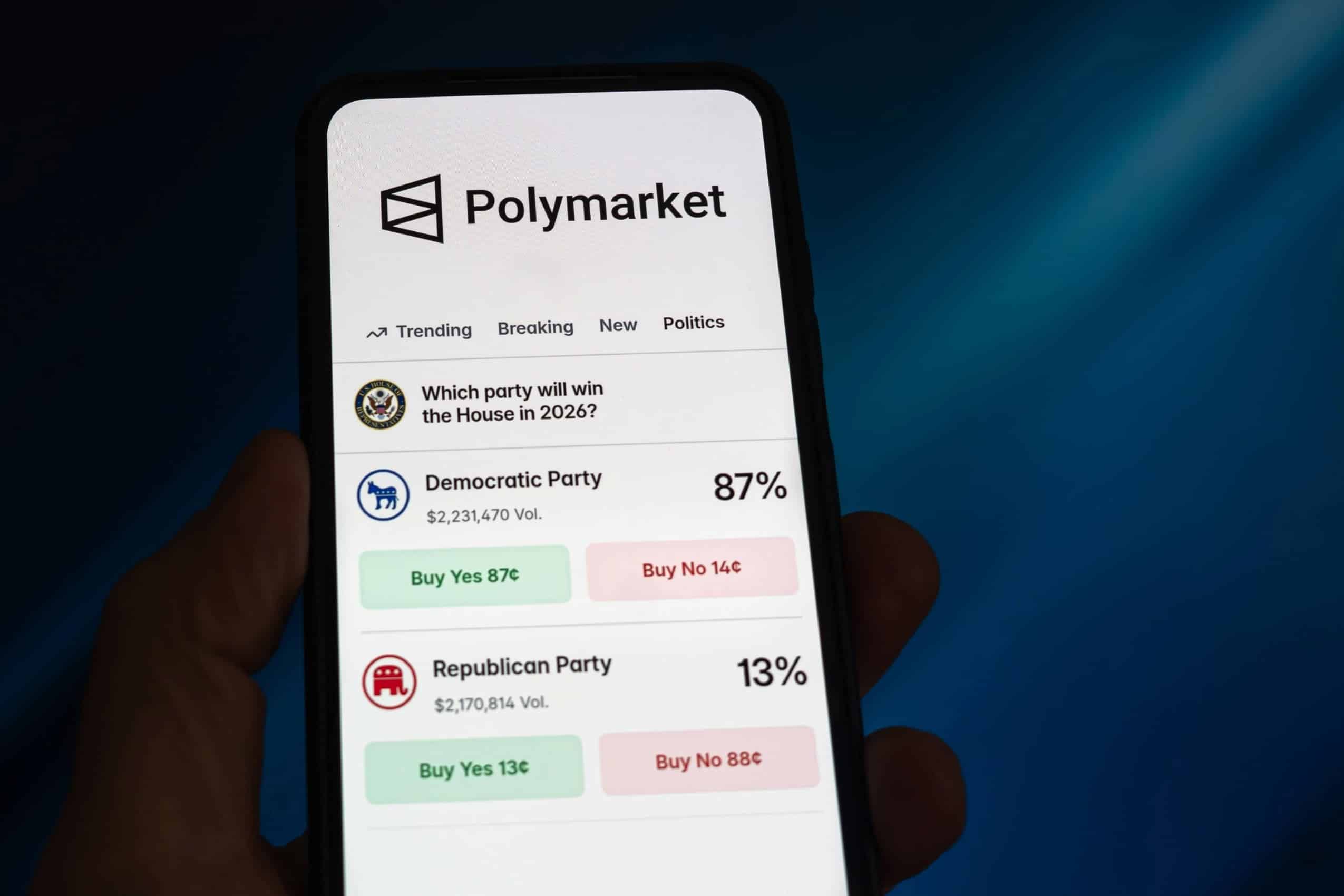
The law makes Minnesota the first state in the nation to issue an outright ban on prediction markets such as Polymarket and Kalshi, which allow users to buy and sell “event contracts” that outline predicted outcomes of real-world events.
The online platforms have attracted millions of bettors wagering on everything from political and economic events to sports outcomes and occurrences involving celebrities.
“This Minnesota law turns lawful operators and participants in prediction markets into felons overnight,” U.S. Commodity Futures Trading Commission (CFTC) Chairman Michael S. Selig said in a May 19 statement on the lawsuit.
The CFTC regulates derivatives markets.
Signed into law by Minnesota Gov. Tim Walz on May 18, the law criminalizes operating, facilitating, advertising, or assisting event contract platforms. The CFTC argues that regulation of platforms hosting “swaps,” a type of derivative contract, falls under its federal jurisdiction.
Exceptions are outlined in the law for “activities that are not bets,” such as insurance contracts, bingo, private social bets, and platforms that are already regulated in the state, including the Minnesota Lottery.
The CFTC expressed concern over the ban, as it would include the criminalizing of weather- and crop-related event contracts for hedging by farmers and others in a state that is “one of the largest agricultural producers in the United States.”
“Minnesota farmers have relied on critical hedging products on weather and crop-related events for decades to mitigate their risks,” Selig said. “Governor Walz chose to put special interests first and American farmers and innovators last.”
“The new legislation represents the most aggressive move by a state to shut down CFTC-regulated markets and undermine the federal regulatory regime set up by Congress more than 50 years ago,” the agency said in a press release.
Minnesota Attorney General Keith Ellison said his office is reviewing the lawsuit and will respond in court. He said he was concerned about the harms prediction markets pose to Minnesotans.
“Prediction markets are designed to be addictive and prey especially on young people and low-income folks,” he said. “They help the ultra-rich get richer and the rest of us get poorer.”
The Epoch Times reached out to Walz’s office for comment but received no response.
A Polymarket spokesperson said in a statement that the CFTC’s case demonstrated how Minnesota’s law “runs counter to the federal government’s established framework for regulating prediction markets.”
Kalshi spokesperson Elisabeth Diana said, “Outside of this ban being unenforceable, it’s also a terrible idea for the citizens of Minnesota because it reduces competition and drives activity offshore.”
The state law is set to go into effect on Aug. 1.
Legal challenges
The federal regulator is currently involved in multiple lawsuits involving prediction market operators.
The CFTC is also suing Arizona, Connecticut, and Illinois for using their state gambling laws to criminalize the operation of prediction markets that trade “event contracts” on CFTC-registered designated contract markets such as Kalshi, Robinhood Derivatives, and Crypto.com/NADEX (North American Derivatives Exchange) platforms.
It argues that Congress decided that a “patchwork” of state laws could increase fraud and manipulation risks in prediction markets and that they are preempted by federal law.
State officials argued that CFTC-regulated entities were bypassing state consumer protections for activities such as state sports betting, where state licensing is required. They also expressed concerns over a lack of age restrictions and addiction.
The CFTC has also sued New York over its decision to apply state gambling laws against CFTC-registered contract markets.
“As I’ve said before, the CFTC will not allow overzealous state governments to undermine the agency’s longstanding authority over these markets,” Selig said in April.
The agency recently won a court order blocking Arizona from pursuing a criminal case against New York-based Kalshi. The agency has also filed amicus briefs arguing its case of exclusive federal jurisdiction under the Commodity Exchange Act in the U.S. Court of Appeals for the Sixth Circuit, the U.S. Court of Appeals for the Ninth Circuit, and the Supreme Judicial Court of Massachusetts.
Nevada is the only state to have secured a court-enforced, in-effect ban against Kalshi for allegedly running an illegal, unlicensed wagering operation that allows adults under the age of 21 to gamble.
Massachusetts’s highest court is considering whether to uphold a currently paused injunction in that state that would bar Kalshi from offering sports event contracts.
Shared concerns
Concerns have been raised about insider trading, foreign influence, and election-related betting in the prediction markets, including by CFTC officials.
Earlier this month, the U.S. Senate passed a law formally banning its members and their staff from placing bets on markets, including Polymarket and Kalshi, as a guardrail against insider trading. The move was pushed by Sen. Bernie Moreno (R-Ohio) and won bipartisan support.
Senate Minority Leader Chuck Schumer (D-N.Y.) urged the House to do the same.
“Speaker Johnson should immediately do the same thing in the House,” he said.
Polymarket expressed its support for the initiative to codify such guardrails into law.
“We’re in full support of this,” it said in a post on X. ”Our Rulebook & Terms of Service already prohibit such conduct, but codifying this into law is a step forward for the industry.”
Tarek Mansour, the cofounder of Kalshi, echoed the sentiment.
“Kalshi already proactively blocks members of Congress and enforces against insider trading,” he said on X. “This is a great step to increase trust in our markets by making it an industry standard.”
House Speaker Mike Johnson said his chamber is also considering a bill but needs more time to draft the details. Lawmakers are considering details such as banning public officials from placing bets using confidential information.
Current House ethics rules make no explicit mention of requiring disclosures of bets on prediction markets.
In March, the White House reminded its staff not to trade or place bets related to the U.S. war in Iran, including on prediction markets, in line with government ethics guidelines regarding nonpublic information. The warning aimed to prevent any misuse of confidential information, the White House told The Epoch Times at the time.
California Gov. Gavin Newsom issued an executive order to the same effect.
Selig told the House Agriculture Committee in April that his agency would investigate insider trading in prediction markets.
“I want to be crystal clear. … We will find you, and the full force of the law will come to bear,” he said.
He said that the CFTC was currently investigating “hundreds, if not thousands,” of reports of alleged insider trading guided by artificial intelligence and surveillance.
In a recent April enforcement, the CFTC and Justice Department charged a U.S. Army soldier, Gannon Ken Van Dyke, for allegedly placing a $32,000 bet on Polymarket using his knowledge of classified information regarding Venezuelan leader Nicolás Maduro. He participated in the planning and execution of the U.S. mission to capture Maduro and made $400,000 on the bet.
Emel Akan, Jacki Thrapp, Zachary Stieber, and Reuters contributed to this report.
This article was originally published by The Epoch Times.