



State lawmakers in the Commerce Committee of the Minnesota House of Representatives discussed legislation that would require age verification before an individual accesses a pornographic website in Minnesota.
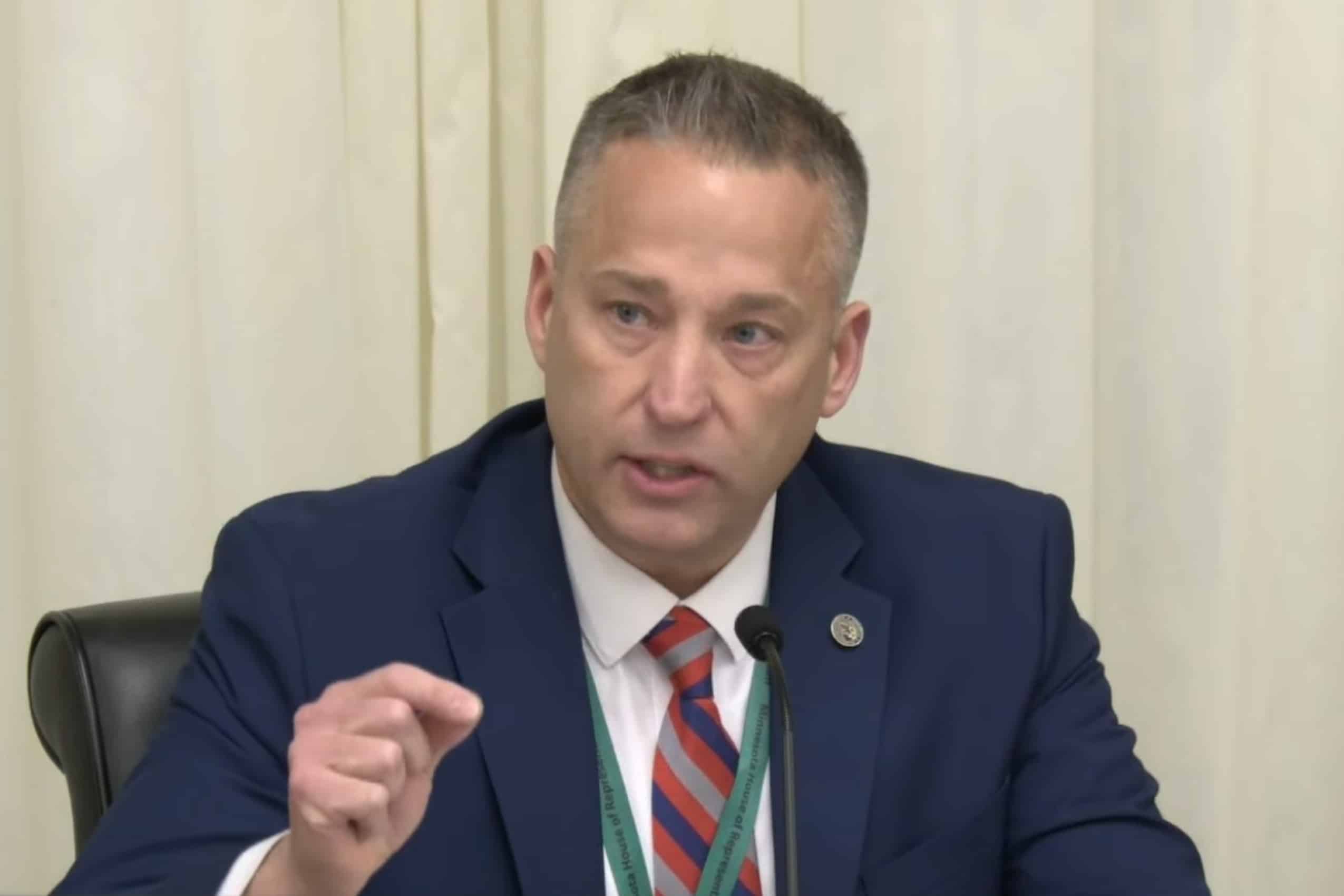
That bill, HF 1434, is authored by State Rep. Ben Bakeberg. While introducing his bill at a Thursday committee meeting, Bakeberg said the intent of his legislation is to protect kids from being exposed to, or accessing, pornography.
“In the past, if a young person wanted to purchase pornographic magazines or movies, a cashier would check their identification and stop the purchase if the person wasn’t an adult,” Bakeberg said. “The simple goal of HF 1434 is to bring that same level of protection in the physical world to the digital world where most of this material is consumed today.”
HF 1434 would require age verification on websites where one-third or more of the material is “harmful to minors” by appealing to “the prurient interest.” The bill contains a detailed list of various sex acts and topics that would qualify as “material harmful to minors.”
In short, any websites that deal primarily in depicting sex acts would be subject to the law.
Under Bakeberg’s legislation, data collected to verify ages would be deleted within 24 hours and not sold to any entities. Further, the law would not hold internet service providers liable for violations of the law. The proposed law is focused on policing the websites themselves.
According to Bakeberg, 25 states have passed similar laws and the U.S. Supreme Court has ruled that state legislatures have authority to regulate these issues.
“The bottom line goal of this bill is to protect children,” he said.
During the hearing, multiple testifiers spoke about the bill; all of them supported the legislation. Among the testifiers was Rebecca Delahunt with the Minnesota Family Council.
“In the age of digital porn, unintentional exposure to this content is a common occurrence,” Delahunt said. “A demographically representative survey of 13 to 17-year-olds conducted by Common Sense Media found that 58% of teens in the U.S. have accidentally seen porn.”
Delahunt noted that the average age of first exposure to porn is 12 years old.
“This product was initially not designed for youth or kids, but the industry has not self-regulated to ensure that minors are not their customers online,” Delahunt said, urging legislators to support HF 1434.
A representative with the Age Verification Providers Association also spoke about the bill.
That testifier, Iain Corby, said there are multiple options that websites have to verify ages such as official documentation and technology that can recognize the age of an individual based on their face or how their fingers move.
Renee Carlson, an attorney with True North Legal, testified in support of the bill, saying the U.S. Supreme Court has upheld a similar law in Texas. Carlson explained that the Supreme Court ruled that states have an interest in protecting children from harmful material.
“Protecting children’s innocence should not be a controversial public policy decision, it’s just common sense,” Carlson said.
Democrats at the committee hearing said they want to protect kids and they agree with the underlying purpose of Bakeberg’s bill. However, DFLers were concerned that the language of the bill itself was too broad.
State Rep. Erin Koegel said she was concerned that things like ancient Roman artwork would get wrapped up in the definition of “material harmful to minors.” The DFL state lawmaker asked who would be the judge of those things.
Corby said a court would be the responsible party for making the judgements Koegel was asking about.
Meanwhile, State Rep. Leigh Finke, a transgender lawmaker who identifies as a woman, said “there is an underlying goal in this bill that I agree with.” Finke noted that HF 1434 contained a list of things he did not want children to be able to access.
However, Finke expressed concerns that the bill would be used against LGBT people, saying some might define “prurient interest” as including “the very existence of transgender kids.”
Finke said attorneys general in states with age verification laws are “almost jubilant” about using those laws to ban “young people from accessing content that could be educational if they are queer.”
Finke said he wanted to make sure the bill did not prohibit “content that is designed for people under 18 to educate them about themselves, their lives, their community.”
Bakeberg told lawmakers “the goal of the bill is to protect kids from going to dedicated [porn] sites. We have that one-third threshold to make sure that we’re catching the sites that we need to be addressing.”
Ultimately, no vote was taken on HF 1434, but the bill was laid over for possible inclusion in a future omnibus bill. Any bill that passes in the House will need bipartisan support as the House is split with 67 Republicans and 67 Democrats.
Luke Sprinkel contributed to this report.

Hayley Feland
Hayley Feland previously worked as a journalist with The Minnesota Sun, The Wisconsin Daily Star, and The College Fix. She is a Minnesota native with a passion for politics and journalism.