Social studies standards in Minnesota have undergone a controversial change. While that change has not yet taken full effect, one of Minnesota’s most widely-used sixth-grade social studies textbooks is being adjusted to match those standards.
Every 10 years, social studies standards for K-12 public schools are reviewed and updated by the Minnesota Department of Education (MDE). In 2020, MDE began revising the social studies standards and introduced a new category: “ethnic studies.”
The updated standards, which will be fully implemented in the 2026-27 school year, have been the subject of strong criticism from Republican legislators and parents.
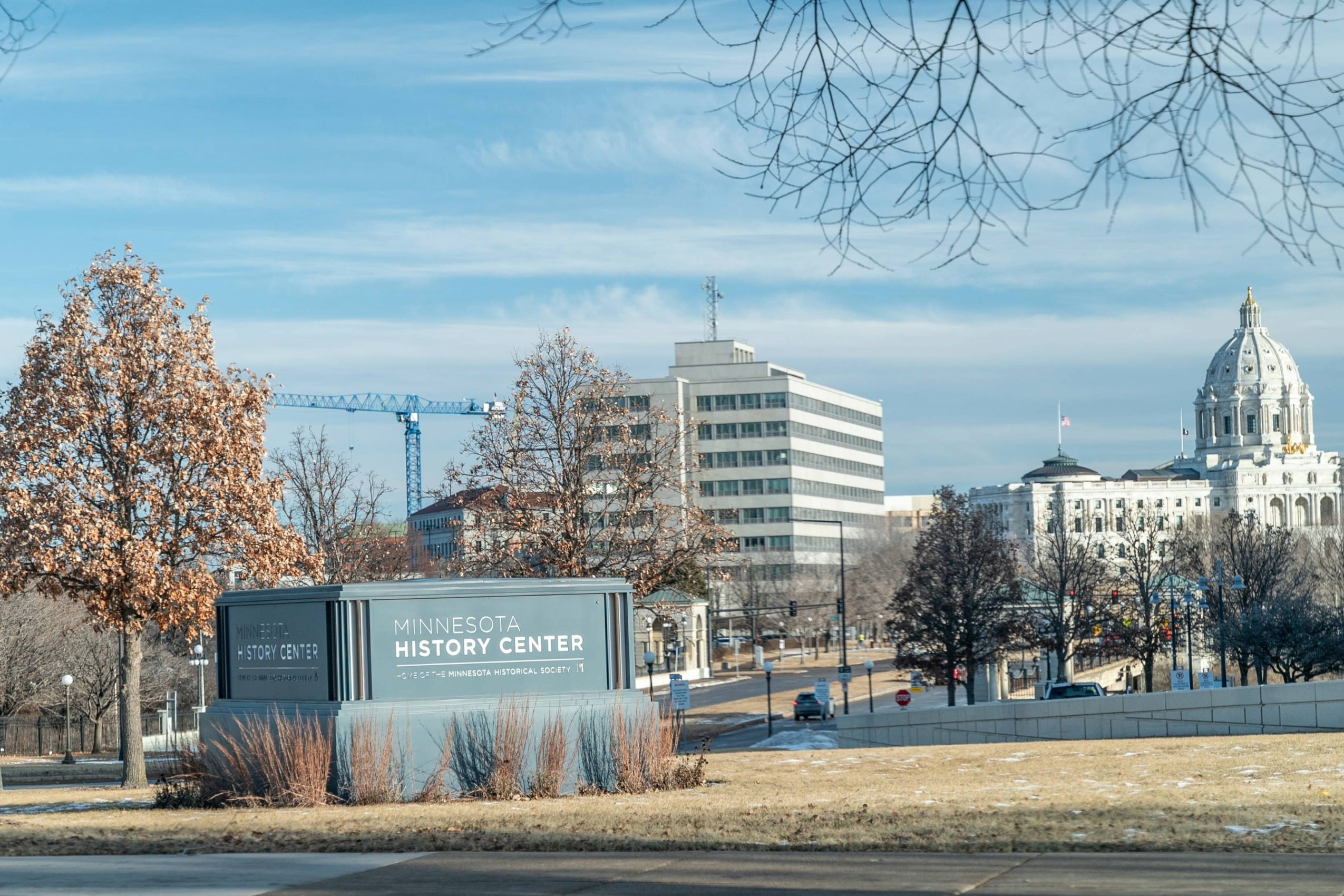
Now, the Minnesota Historical Society (MHS) is revising its self-published sixth grade social studies curriculum to correspond with the new statewide standards. That curriculum, called “Northern Lights: The Stories of Minnesota’s Past,” is used by schools throughout the state.
According to MHS, the upcoming third edition of Northern Lights “will address all required benchmarks for history, civics, geography, economics, and ethnic studies” that are in the new statewide standards.
MHS estimates that “approximately 50% of the content will be new or heavily revised.” As such, the historical society has published a draft of its proposed curriculum changes and described how the in-development curriculum aligns with the new standards.
A document about the proposed changes shows that every chapter of the Northern Lights curriculum would undergo some level of revision. For example, chapter five “includes more narratives from Ojibwe individuals to improve the balance of featured perspectives.”
Chapter 10 of Northern Lights would ask students to “analyze the motivations of people immigrating to Minnesota, the opportunities and obstacles they faced, and the impact of settler-colonialism and immigration on Indigenous people.”
Meanwhile, chapter 16 would expand to “include information on the Gay Liberation and Chicano Rights movements. The coverage of women’s involvement in these movements has also increased.”
References to American Indian topics are repeatedly featured in the proposed changes to the curriculum. Additionally, a chapter on Minnesota statehood says “narratives and perspectives explored in this chapter explore the concept of settler-colonialism.”
MHS has also published a document which outlines how its draft curriculum connects to Minnesota’s updated social studies standards. Students using the updated Northern Lights material will be asked to meet benchmarks prescribed by the new social studies standards.
Among other things, those benchmarks, and Northern Lights, will require students to:
- “Locate a democratic principle embodied in the Constitution of the State of Minnesota or in one of Minnesota’s Tribal Nations’ constitutions.”
- “Evaluate how two (or more) different communities address the issues related to climate change in Minnesota.”
- “Describe the varied and diverse interactions of Indigenous people, European/American traders and settler-colonists in the upper Mississippi River region. Examine how settler colonialism conflicted with Dakota and Anishinaabe ways of life.”
- “Understand the diverse and conflicting ways that Dakota, Anishinaabe, European and American peoples understood their relationship to the land, particularly regarding property and ownership.”
- “Examine the impact of slavery and race in Minnesota today.”
A spokesperson for MHS told Alpha News that 92% of all sixth-graders in Minnesota use the current Northern Lights curriculum, and another 6% use an older edition of the curriculum.
The spokesperson also noted that Northern Lights is being updated to match the new social studies standards and “updates are also being made to reflect feedback from educators and a variety of content experts.”
According to MHS, the third edition of Northern Lights will be released in the summer of next year.
Luke Sprinkel
Luke Sprinkel previously worked as a Legislative Assistant at the Minnesota House of Representatives. He grew up as a Missionary Kid (MK) living in England, Thailand, Tanzania, and the Middle East. Luke graduated from Regent University in 2018.