


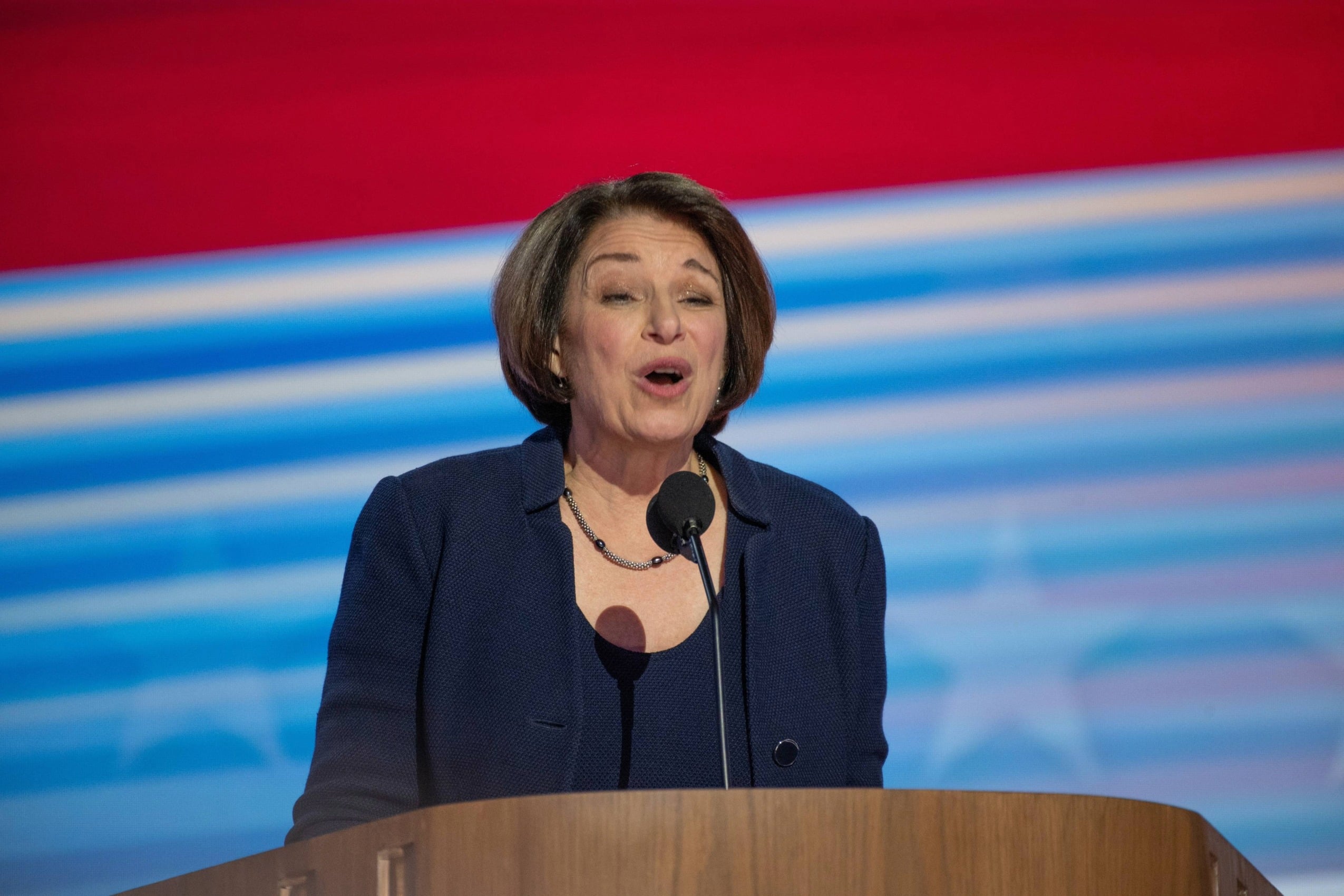
Amy Klobuchar has represented Minnesota in the U.S. Senate for a long time.
First elected in 2006, Klobuchar has consistently won reelection to the Senate by wide margins. She often touts herself as one of the most bipartisan members of that chamber and frequently references the number of bills she has passed into law.
Less discussed about her time in federal office is her support for Somali causes.
More Somalis live in Minnesota than any other state in the nation. Somalis first came to Minnesota in the 1990s as refugees from the Somali civil war; Somalia has remained a war-torn, terror-filled disaster ever since.
At minimum, the Somali community in Minnesota is comprised of tens of thousands of individuals, although the exact number is not known. News outlets have reported that most Somalis in Minnesota are American citizens.
As the Somali community has grown in number, so has their political influence and impact on the state. During her time in the U.S. Senate, Klobuchar has often courted the Somali community.
Klobuchar and remittances
On a routine basis, Somalis living abroad send money to their relatives in Somalia. These transfers, called remittances, make up a significant portion of the country’s GDP. Somalis living in Minnesota have sent unknown millions to Somalia via the remittance process.
During her time as a senator, Klobuchar has tried to ensure that the Somali community in Minnesota can send money to Somalia. In 2012, Keith Ellison reported that Klobuchar was part of a meeting with a U.S. Treasury official to ensure Somali remittances kept flowing.
In 2014, Klobuchar supported legislation designed to streamline remittances and free up federal regulators to look for terrorist activity within the money transferring industry. That legislation was eventually signed into law by President Barack Obama.
Klobuchar also lobbied the Obama Administration to establish a “sustainable, long-term” way for remittances to be transferred via “secure and transparent channels.”
In a 2015 public statement to that end, Klobuchar said “Somali-Americans in Minnesota are a vital financial lifeline for their relatives in Somalia, and we need to ensure a secure, legal and transparent way for them to send remittances.”
However, remittances are controversial. Some, like Klobuchar, have said remittances provide the Somali people with a necessary lifeline, prevent terrorists from getting a further grasp on Somalia, and stave off even worse conditions in the country.
Meanwhile, concerns have long existed that remittances fund terrorists in the region.
Last year, City Journal published a story about remittances that are sent to Somalia from Minnesota. Sources in that story alleged that portions of those remittances are being taken by Al-Shabaab, an Islamic terrorist group linked to al-Qaida.
“Every scrap of economic activity, in the Twin Cities, in America, throughout Western Europe, anywhere Somalis are concentrated, every cent that is sent back to Somalia benefits Al-Shabaab in some way,” said a City Journal source who worked on a federal Joint Terrorism Task Force (JTTF) in Minneapolis.
“For every dollar that is transferred from the Twin Cities back to Somalia, Al-Shabaab is … taking a cut of it,” the City Journal source added.
Temporary Protected Status for Somalia
In 1991, the United States gave Temporary Protected Status (TPS) to Somalia. This meant that Somalis with TPS in Minnesota could not be deported, could not be detained for immigration reasons, and were allowed to live and work in the U.S.
During her time in the Senate, Klobuchar has supported the continued extension of TPS for Somalia. In 2018, Klobuchar co-authored a letter to the Trump Administration which urged for another extension of TPS for Somalia.
“We write to ask that you extend Temporary Protected Status (TPS) for Somalia,” Klobuchar wrote. “Unless the Administration takes action, the protections now in effect for many Somalis living in the United States will expire on September 17, 2018.”
“Somalis have had protected status in the United States since President George H.W. Bush first approved TPS for Somalia in response to its civil war in 1991. That status has been extended 22 times under presidents from both parties,” she added.
Under the Biden Administration, TPS for Somalia was extended again. Klobuchar celebrated that development in a statement.
“I welcome this re-designation of Somalia for TPS, which will allow Somali people in Minnesota and across the United States to continue living, working, and succeeding in our country,” she said. “As an early supporter of the legislation to provide these immigrants with a pathway to citizenship, I will continue to fight for reform to our immigration system.”
Last month, the Trump Administration ended TPS for Somalia. That decision came amid national scrutiny of Somalis in Minnesota who defrauded government programs. Reports at the time indicated only a few hundred Somalis in Minnesota were under TPS.
Foreign aid to Somalia
In 2019, then-presidential candidate Klobuchar addressed the Council on Foreign Relations and discussed her effort to “push back against the Trump administration’s proposed cuts to foreign aid, including for security and economic development in the Horn of Africa.”
Klobuchar was referring to a 2017 joint effort involving herself and GOP Rep. Tom Emmer.
At that time, the pair asked the Trump administration to reconsider cutting $17 billion of foreign aid that would have gone to Somalia and other neighboring nations. Klobuchar and Emmer said the aid was necessary to combat drought and counter the efforts of terrorists.
In 2023, Klobuchar and Minnesota’s Democratic congressional delegation authored a letter which urged the United States Agency for International Development (USAID) to prioritize aid to Somalia.
Citing flooding and torrential rains that were occurring in Somalia at the time, the DFLers lobbied USAID to “keep aid to Somalia at the forefront of your operations.”
On top of those efforts, Klobuchar has praised the reestablishment of a permanent diplomatic relationship between Somalia and the United States, celebrated Somali independence day, and repeatedly praised the Somali community in Minnesota.
Klobuchar pledges to clean up fraud in state government
In recent months, the Somali community in Minnesota has been at the center of national media attention as news of widespread fraud in government programs has come to light.
Minnesota’s fraud saga includes the $250 million Feeding Our Future scheme as well as fraud in state-run, Medicaid-funded programs. The U.S. Attorney’s Office in Minnesota has estimated that fraud in those state-run programs could exceed $9 billion since 2018.
Dozens of people have been charged and convicted in the fraud saga, the overwhelming majority of whom are from the Somali community. Fraud has become a top political issue in Minnesota, and Gov. Tim Walz was all but ushered into an early retirement because of it.
Now, Klobuchar is running for governor and pledging to bring an end to the widespread fraud that has occurred in government programs. Doing so, however, will require her to police a community that she has long supported.

Luke Sprinkel
Luke Sprinkel previously worked as a Legislative Assistant at the Minnesota House of Representatives. He grew up as a Missionary Kid (MK) living in England, Thailand, Tanzania, and the Middle East. Luke graduated from Regent University in 2018.