

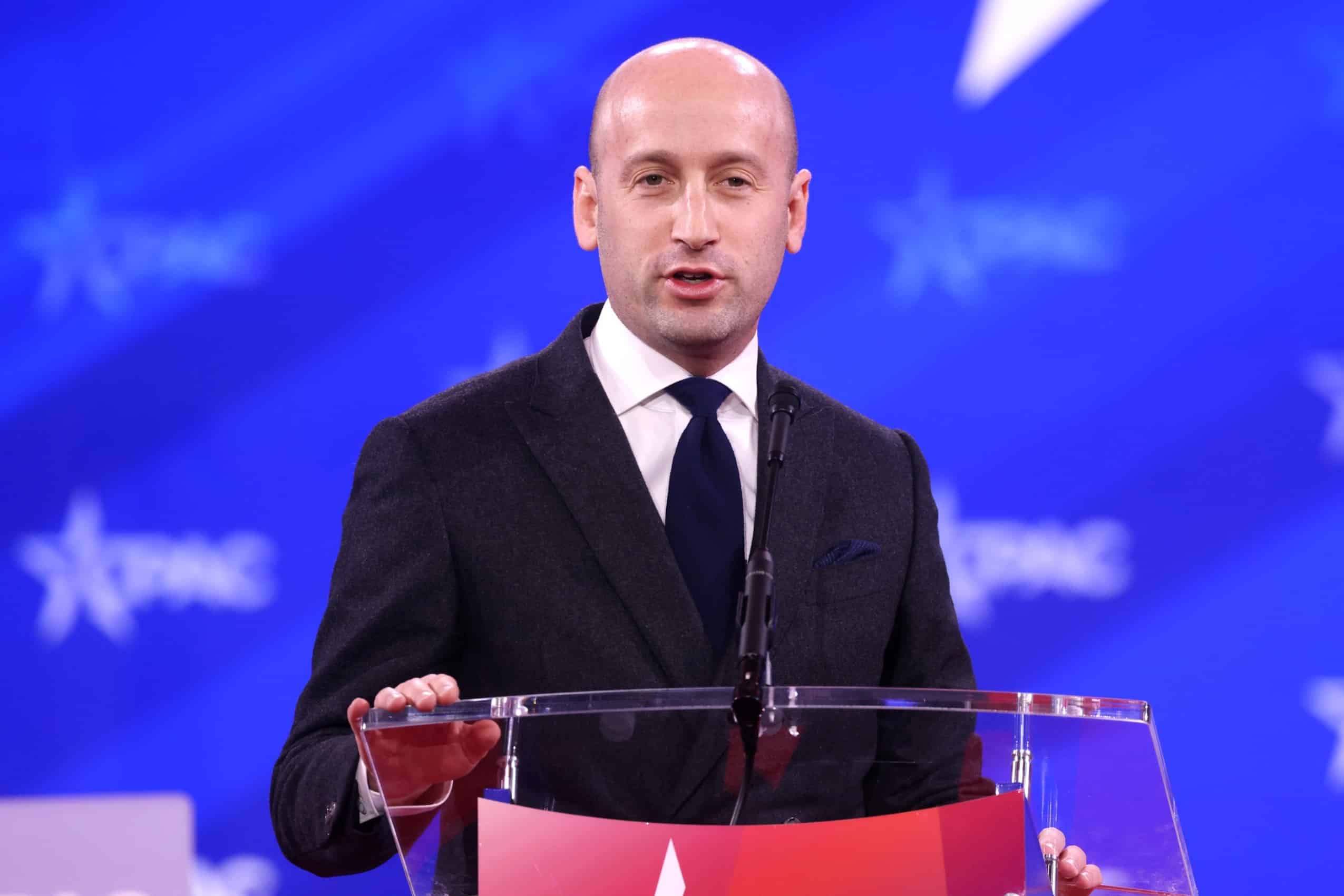
Earlier this month, White House deputy chief of staff Stephen Miller described the Twin Cities as the “central project” of the “refugee industrial complex,” and said President Donald Trump “has blown the lid off of the refugee industrial complex.”
Speaking to Laura Ingraham on Fox News, Miller described how the federal government had previously given out billions of dollars to non-governmental organizations (NGOs) for the purpose of resettling refugees across America.
The deputy chief of staff said NGOs and the federal government worked together to “find the poorest populations from the most dysfunctional places in the world, and then bring them into small-town America.”
“They typically look for areas in rural communities, rural places, or more traditional Midwestern towns that they can completely transform,” Miller said of refugee resettlement.
“So they send [refugees] to small towns in Ohio, to small towns in Maine, and of course we’ve seen their central project has been in Minneapolis and St. Paul, and the Twin Cities in Minnesota,” he continued.
The deputy chief of staff also said the NGOs are paid to bring refugees to America, help refugees get citizenship, and help enroll refugees in all kinds of welfare programs at the expense of Americans. He said NGOs have gotten “massively rich” through this enterprise.
However, Miller noted that the Trump administration has ceased all refugee resettlement except for white Afrikaners being persecuted in South Africa.
In Minnesota, there were six resettlement agencies as of 2023 that had agreements with the U.S. State Department and assisted “assigned persons with refugee status with basic needs and [provided] core services during the first 30-90 days after U.S. arrival,” according to the Minnesota Department of Human Services (DHS).
These six agencies provided refugees with everything from airport welcomes, to early housing, to help applying for Social Security cards, and help applying for welfare benefits, DHS says.
According to the American Immigration Council, 8,318 refugees were resettled in Minnesota between 2018 and 2024. The federal government gave each refugee an initial payment of $2,375, and the resettlement agencies in Minnesota worked with DHS to provide other cash assistance, according to DHS.
One of the Minnesota resettlement agencies is Arrive Ministries, a Richfield-based religious charity that had over $5.3 million of revenue in its last fiscal year.
The organization’s website previously said that “more than half of our funding came from federal contracts, primarily through our Reception & Placement contract,” in 2024.
“With federal funding in flux and the ending of the refugee program, we need to raise $125,000 per month to continue serving the 4,200 refugees who arrived in Minnesota (in partnership with other agencies) over the past two years,” said the website.
In the wake of President Trump’s recent comments about Somalis, Arrive Ministries put out a social media post in which it said: “We stand with the Somali community and all immigrants and refugees in Minnesota. You belong here.”