

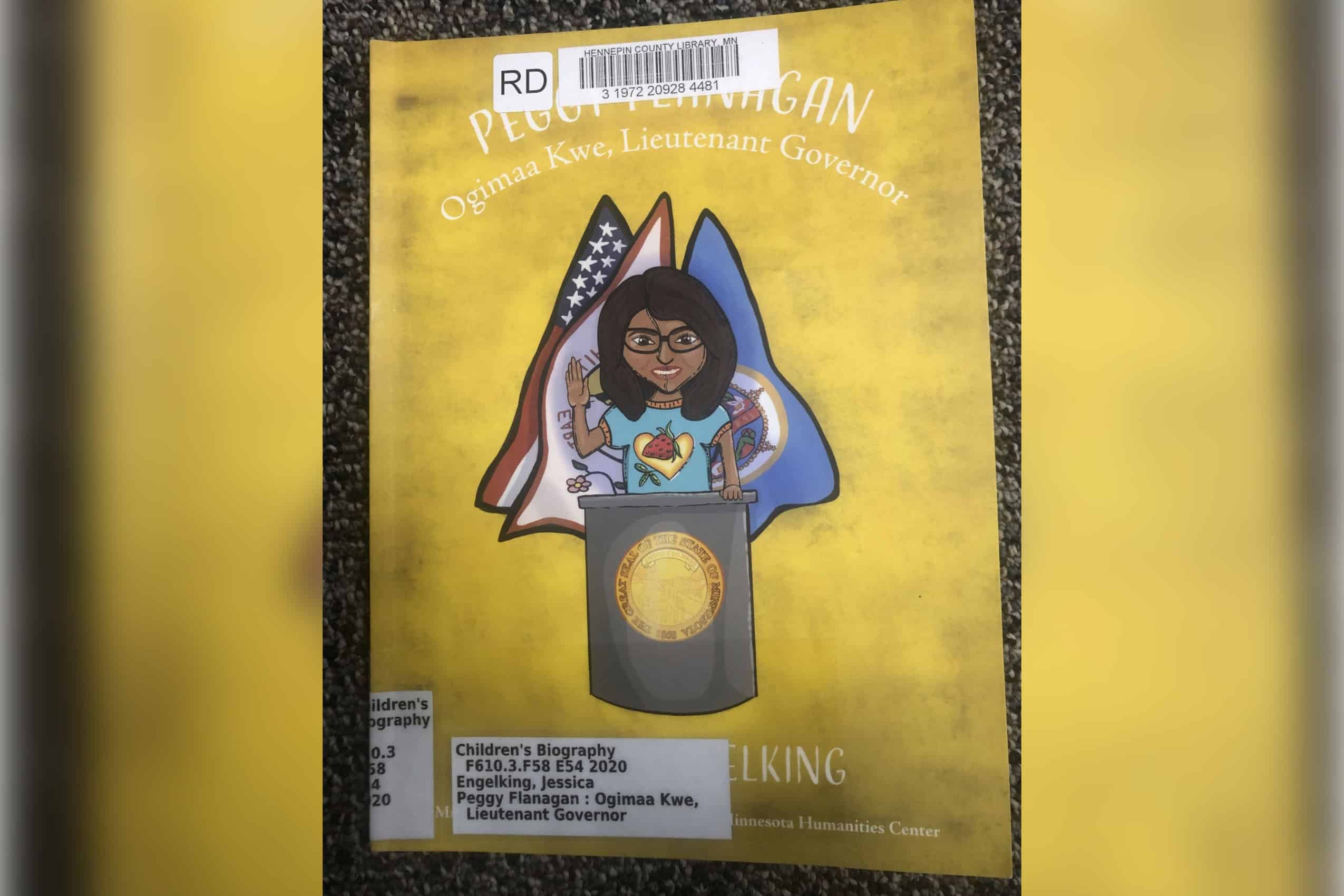
A taxpayer-funded biography of Peggy Flanagan recounts her childhood, her time at college, and her rise to power as Minnesota’s 50th lieutenant governor. On multiple occasions, the book also documents the racism Flanagan allegedly encountered during her life.
Authored by Jessica Engelking, “Peggy Flanagan: Ogimaa Kwe, Lieutenant Governor” recounts Flanagan’s life in a 45-page book for middle-school students. That book, which was published in 2020, is a part of the Minnesota Humanities Center’s Native American Lives book series.
According to the book’s introduction, the goal of the Minnesota Native American Lives Series is to “help Native American children see their cultures represented alongside biographies of other leaders in our larger society.”
The book series also explores how “social barriers based on race, culture, education, and class” affected the individuals profiled in the books. Much of Flanagan’s biography focuses on her experiences as an Ojibwe child in Minnesota schools.
“Peggy doesn’t like the way they are taught about Native Americans,” the book says in the first chapter. “She doesn’t like how the whole class will turn to look at her, because she is the only Native American in the room.”
“Peggy doesn’t like how they are taught that Christopher Columbus discovered America,” the book adds. “She doesn’t think it makes sense to say someone discovered a place when there’s already people living there.”
A later passage describes Flanagan’s “mixed feelings” about Thanksgiving as a child and says, “It doesn’t really seem like people are thankful for Native Americans today. It seems like people just see Natives as sports team mascots or the bad guys in old movies.”
After mentioning that some classes, but not hers, “make fake headdresses to wear” out of “construction paper and staples,” the book says Flanagan feels “like being Native is something you pretend to be, not something you really are.”
A chapter titled “What Are You?” recounts a woman approaching 9-year-old Flanagan in a grocery store and asking about her ethnicity.
“What are you?” the woman asks.
“A person . . . ?” Flanagan replies, before the woman follows up: “No, I mean where are you from?”
After Flanagan tells the woman she is Ojibwe, the book says the interaction was “a sad reminder that she looked different from other kids” and that “people noticed she wasn’t entirely like them.”
Reflecting on the grocery-store encounter, the book says Flanagan believed the woman’s understanding of Native Americans was wrong.
“She probably thought Peggy lived in a teepee or something,” the book states.
The book also recounts Flanagan’s time in high school and says some of her teachers “just don’t see Peggy being Ojibwe as relevant.” It continues, “but Mr. Redman, and a few other teachers of color, understand that it matters.”
The biography also discusses Flanagan’s struggles academically and mentions her graduating high school with a 1.75 GPA.
“It’s not like she does horribly in all her classes,” the book notes. “Peggy does okay in some of them, like Mr. Redman’s. But for the most part, she isn’t interested in her classes. She doesn’t want to be there. She isn’t engaged, so she doesn’t really try.”
The biography says Flanagan encountered a more hostile environment when she attended St. Cloud State University. According to the book, someone put a photocopy of a “Native mascot and some gross language” on the door to Flanagan’s dorm room.
“There’s racism against Natives everywhere, but the environment Peggy found herself in was more aggressively racist than she’d ever experienced,” the book states.
Flanagan later transferred to the University of Minnesota, where the book describes her finding community through Native classmates, professors and Ojibwe studies.
The biography continues into Flanagan’s political career, documenting her work for DFL Sen. Paul Wellstone’s campaign, her election to the Minneapolis School Board, her election to the Minnesota House of Representatives, and her selection as Gov. Tim Walz’s running mate.
The book says Flanagan knew Walz prior to his bid for governor and advised him to pick a running mate “from the Twin Cities area, and to pick a woman, especially an Indigenous woman or woman of color.”
Flanagan was eventually selected as Walz’s lieutenant governor running mate and the pair went on to win the 2018 Minnesota gubernatorial election.
The book also discusses Christianity, noting that Flanagan selected an Ojibwe-language Bible to use during her inauguration. The book said that Bible represented her dual identity as both a Catholic and an Ojibwe.
However, the book says “These two parts of Peggy are seemingly at odds with one another. Christianity has often been used as a justification for taking Native lands and for not allowing Natives to practice their own religious beliefs.”
“But being both Ojibwe and Catholic makes Peggy who she is,” the book adds.
Later, the biography contrasts Flanagan’s political approach with that of her father, Marvin Manypenny. Manypenny was a Native activist who passed away in 2020. The book notes that Flanagan did not know Manypenny growing up, but she got to know him after college.
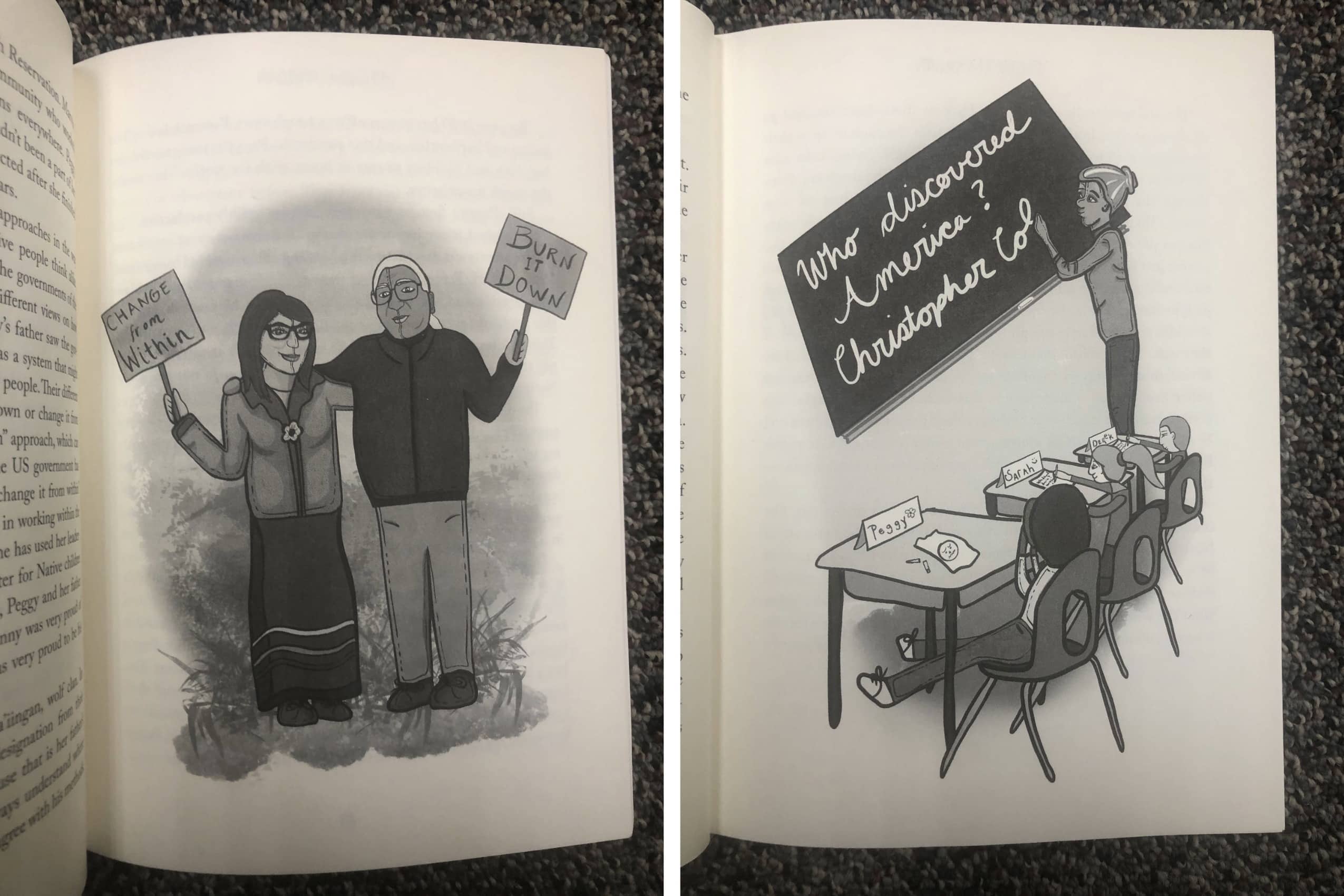
Discussing Manypennys’ political activism, the book says, “Peggy’s father took the ‘burn it down’ approach, which can be understandable, given the terrible ways the US government has treated Native people. Peggy has taken the ‘change it from within’ approach.”
According to the book’s copyright page, “Peggy Flanagan: Ogimaa Kwe, Lieutenant Governor” was “funded with money from the Arts and Cultural Heritage Fund that was created with the vote of the people of Minnesota on November 4, 2008.”
The Arts and Cultural Heritage fund was created after voters approved the so-called “Legacy Amendment” to the state constitution in 2008. The fund has received large sums of taxpayer dollars and pays for projects that preserve Minnesota’s history and cultural heritage.
Alpha News contacted the Minnesota Humanities Center seeking information about how much Arts and Cultural Heritage Fund money was spent on the biography. However, the Minnesota Humanities Center did not provide any answers.
Alpha News reviewed a 2020 copy of “Peggy Flanagan: Ogimaa Kwe, Lieutenant Governor” for this story. A 2026 version of the book credits Flanagan’s husband, former Minnesota Public Radio journalist Tom Weber, as an “Additional Contributor.” Alpha News also contacted Flanagan’s campaign to ask about the extent of her involvement with the book
In the 2020 copy, Flanagan and Weber’s relationship is documented in a chapter titled “Ceremony” which recounts Flanagan and Weber’s September 2019 wedding.
Flanagan is now in the final days of her campaign for U.S. Senate and is facing more scrutiny than ever before. In particular, Flanagan has been questioned about how much responsibility she has for the vast welfare fraud that has occurred in state government programs.
Flanagan faces Republican Michele Tafoya in the November general election.

Symone Harms
Symone Harms is a Media Production and Business Marketing student at Bethel University. She is actively involved in The Royals Investment Fund, The 25, theatre, and other leadership positions. She also cohosts Rooted, a podcast dedicated to being rooted in truth, growing in freedom, and prospering in life. A Minnesota native with a passion for storytelling and digital media, she aspires to a career in broadcasting as a news anchor and reporter.