



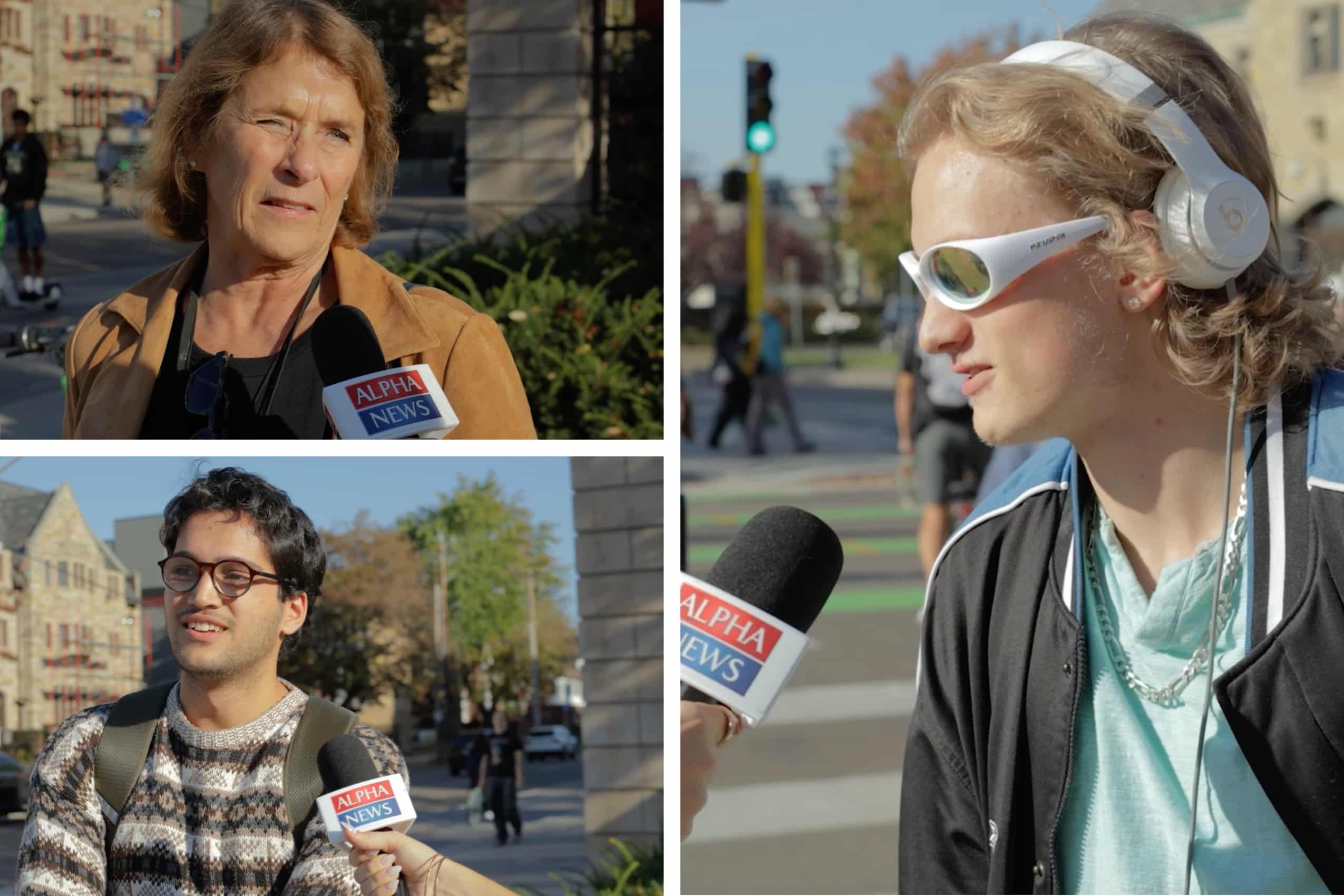
Fraud has been a major issue in Minnesota, and with Election Day now here, Symone Harms with Alpha News asked voters how serious they believe the problem is, how much money they think has been lost, and what they think about Lt. Gov. Peggy Flanagan’s run for U.S. Senate.
Most of the conversations took place at the University of Minnesota, with additional interviews in Maple Grove and Plymouth.
The questions were part of a broader series of Election Day conversations with Minnesota voters. In a separate video, Alpha News asked voters at the same locations about the candidates, the biggest issues facing the state, and whether Minnesota needs a change in leadership.
Responses on the subject of fraud varied widely.
How big of a problem is fraud?
Several responses indicated that fraud is a problem in Minnesota.
“I would say yeah, it’s an issue,” one voter said, adding that he wants to see politicians “willing to tackle this and not avoid it.”
Another simply responded, “Yeah, probably.”
Others were less concerned.
“I think it’s a little overblown,” one respondent said.
Voters react to fraud estimates
When asked to estimate how much money has been lost to fraud in Minnesota, answers ranged from tens of thousands of dollars to several billion.
One respondent guessed $300,000. Another estimated $75,000, while another guessed a couple hundred thousand dollars. Others offered estimates in the millions or billions.
After respondents were told a figure of $9 billion, reactions varied.
One respondent who initially declined to guess said, “I mean, that’s a lot of money, but like there’s also a lot of money that we get from taxes.”
One woman who had initially guessed millions said she was “not happy” after hearing the larger figure.
One respondent took a different view.
“I don’t care nothing about no fraud. I don’t care nothing about government money or being misused,” he said. “Scam all you want to. The government has scammed us historically.”
When asked whether he cared about paying taxes without knowing where the money was going, he said he did not.
“It don’t matter where it’s going because we have to pay it regardless,” he said. “The only thing certain in life is death and taxes.”
Another respondent shifted the discussion to President Donald Trump.
“I mean, like, how much fraud came from the president of the United States?” he asked, adding that he viewed that as “a lot more important.”
After being told the $9 billion figure, he responded, “Well, then they should go to jail, but, like, so should Trump.”
Should Flanagan be promoted to the U.S. Senate?
Respondents were divided when asked whether Flanagan should move from lieutenant governor to the U.S. Senate.
Some answered no. A group of men simply said, “No. No. No.”
Others said they supported her candidacy.
“I agree with a lot of her policies,” one respondent said. When asked to name those policies, she declined to elaborate.
Another voter described Flanagan as “bright” and “honest” and noted that she is “Native American.”
Another said he would “love to see a Native American in power.”
One voter said he supports Flanagan because he agrees with her positions on immigration and ICE.
“I just like the way she votes,” he said. “I agree with a lot of her policies.”
When asked about those policies, he pointed to “her policies on immigration” and “her policies on like ICE and stuff.”
The discussion also turned to Flanagan’s role in the Walz administration as voters considered how responsibility for fraud should factor into the Senate race.
“They didn’t really know it was happening,” one respondent said, referring to the Walz-Flanagan administration. “I think if, like, a Republican governor was in office, it would have been the same thing happening.”
Another said fraud is an issue Republicans have focused on, but argued that it should not be viewed as exclusively a Republican issue.
“I don’t think, um, necessarily that only the GOP can tackle fraud,” he said.
Others raised concerns about Flanagan’s role in the Walz administration while fraud occurred.
One voter said she would “probably not” vote for Flanagan for U.S. Senate after being reminded that Flanagan served in the Walz administration while the fraud occurred.
Another respondent said, “I guess she was complicit in the fact that she was maybe aware of it.”
“Maybe not because she was like, she was part, or like she was in office during the fraud,” she added.
The questions were asked just days before Minnesota’s Nov. 3 general election, when voters will decide the U.S. Senate race and other major statewide offices.

Symone Harms
Symone Harms is a Media Production and Business Marketing student at Bethel University. She is actively involved in The Royals Investment Fund, The 25, theatre, and other leadership positions. She also cohosts Rooted, a podcast dedicated to being rooted in truth, growing in freedom, and prospering in life. A Minnesota native with a passion for storytelling and digital media, she aspires to a career in broadcasting as a news anchor and reporter.