
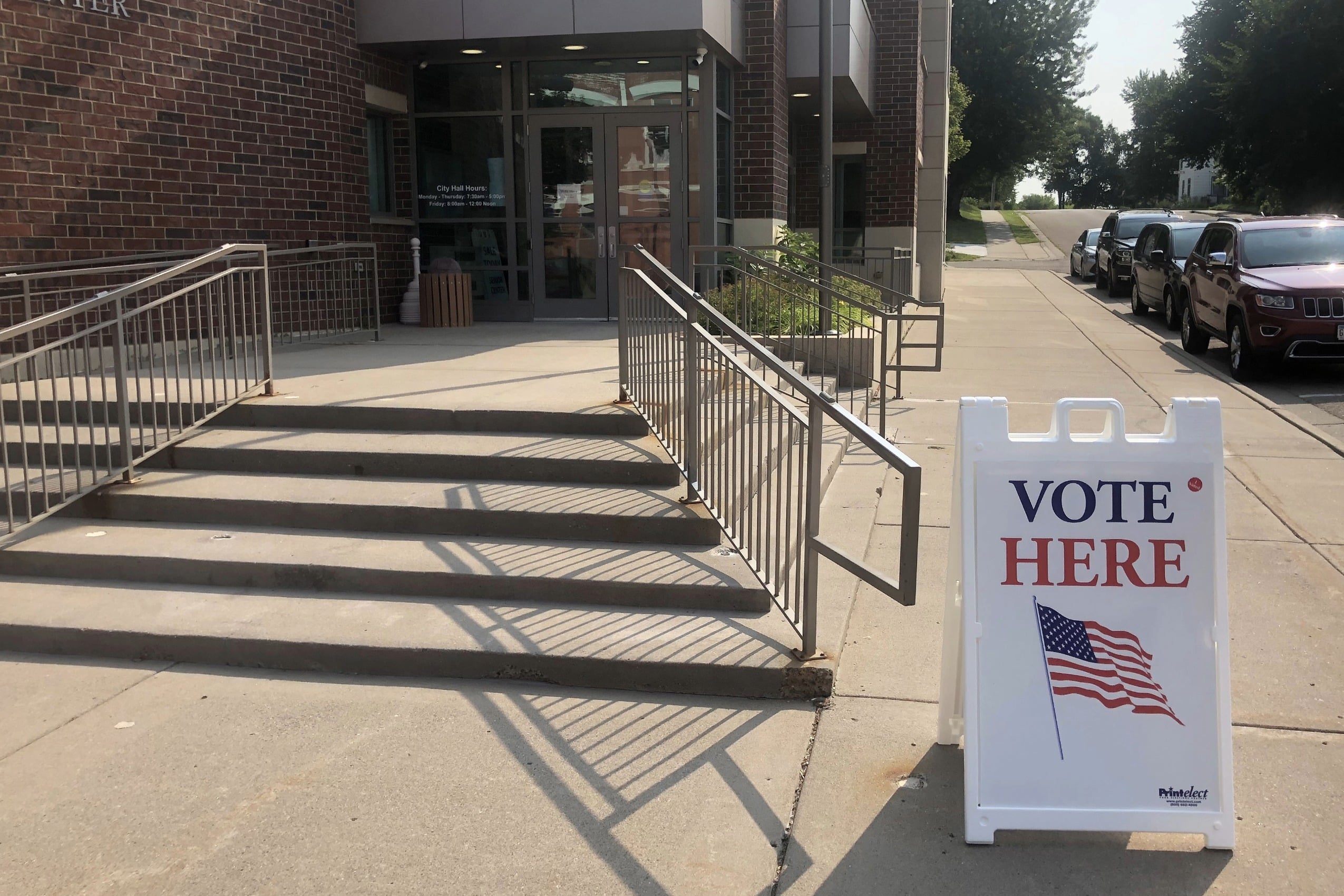
Over 1.1 million people voted in Minnesota’s state primary election this year. With those votes, Minnesotans nominated Republicans and Democrats for governor, U.S. Senate, and other offices, thus setting the stage for the fall general election.
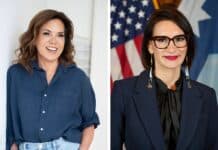
In the race for governor, U.S. Sen. Amy Klobuchar won the DFL nomination against token opposition. She will face Republican House Speaker Lisa Demuth in the fall general election. Demuth won the GOP gubernatorial nomination in a competitive race against Mike Lindell.
Meanwhile, Lt. Gov. Peggy Flanagan bested Congresswoman Angie Craig in a hard-fought race for the DFL nomination for U.S. Senate. In the fall general election, Flanagan will face Republican Michele Tafoya who won the GOP Senate nomination over Adam Schwarze.
But beyond the fall matchups, the results of the primary shed new light on how Minnesota’s political landscape is changing. With that, here are the biggest takeaways from the state primary election.
The Minnesota Republican Party’s endorsement is dead
For decades, the Minnesota Republican Party has gathered before the state primary election to endorse candidates for statewide office. Those Republican-endorsed candidates have gone on to win their party’s nomination in election year after election year.
In fact, every GOP-endorsed candidate for governor and U.S. Senate has ended up winning their party’s nomination for more than two decades. The last time a Republican governor or Senate candidate lost the endorsement but won the nomination was in 1994.
The Minnesota DFL also endorses candidates for statewide office, but DFL primary voters have often rejected DFL-endorsed candidates at the primary. In 2010, Mark Dayton lost the DFL gubernatorial endorsement but won the primary. Tim Walz did the same in 2018.
In recent years, however, the endorsement process has faced criticism for giving a small number of party delegates too much influence, and many Republicans and Democrats have expressed a desire to do away with endorsements and simply have a primary.
Last night, Republican primary voters explicitly rejected the GOP-endorsed candidates and may have ushered in the end of the endorsement process.
Kendall Qualls, the Republican-endorsed candidate for governor, lost to Lisa Demuth. Adam Schwarze, the GOP-endorsed candidate for U.S. Senate, lost to Michele Tafoya. Additionally, Nate George, the GOP-endorsed candidate for state auditor, lost to Scott Jensen.
Only Tad Jude, who sought the GOP nomination for secretary of state, was endorsed by the Minnesota GOP and went on to win his primary. Ron Schutz, the GOP-endorsed candidate for attorney general, also won his primary, but he was running unopposed.
Record turnout
According to Minnesota Secretary of State Steve Simon, the more than 1.1 million votes cast in Tuesday’s primary set a new record for Minnesota. Simon said this was the first time more than 1 million votes had been cast in a primary.
The previous high was 925,554 votes in 2018.
Although Republicans saw higher turnout this year compared to past cycles, DFLers still turned out to vote in greater numbers than Republicans during the primary.
In total, 684,979 people cast ballots in the DFL primary for governor while 413,265 people casts votes in the Republican primary for governor. Amy Klobuchar was the winning DFLer with 614,308 votes, and Lisa Demuth won the GOP nomination with 179,545 votes.
That means 271,714 more people voted for DFL gubernatorial candidates than Republican gubernatorial candidates. Klobuchar also outpaced Demuth by 434,763 votes.
The story was similar in the U.S. Senate primary. In total, 697,138 people voted in the DFL Senate primary while 406,505 people voted in the GOP Senate primary.
Peggy Flanagan won the DFL nomination for U.S. Senate with 411,428 votes cast in her name. Angie Craig finished second in the DFL primary with 274,566 votes cast for her. Michele Tafoya won the GOP Senate primary with 211,636 votes cast in her name.
Like the race for governor, more DFLers than Republicans showed up and voted in the Senate primary. In total, 290,633 more votes were cast for DFL Senate candidates than GOP Senate candidates, and Tafoya was outpaced by both Flanagan and Craig.
Clearly, more DFLers showed up to vote than Republicans despite competitive races on both sides. While a part of that enthusiasm gap can be explained by Minnesota’s leftward lean, Republicans will need to close that gap if they want to win in November.
The polls cannot be trusted
During the summer, a series of KSTP/SurveyUSA polls surveyed voters on their preferences in the DFL and GOP primaries. Those polls had approximate credibility intervals of +/-5%, large shares of undecided voters, and failed to accurately predict the outcome of the primaries.
One poll, taken in mid-June, showed Mike Lindell leading in the Republican primary for governor with 27% support. Lisa Demuth was in second place with 22% support. In another poll, taken in mid-July, Lindell polled at 35% while Demuth scored 26%.
The final poll, taken between July 29 and Aug. 4, showed Lindell at 34% and Demuth at 28%. In the state primary election, however, Demuth crushed Lindell by 11 points — Demuth at 43% and Lindell at 32%.
The same KSTP/SurveyUSA polls also failed to predict the outcomes of the Republican and DFL primaries for U.S. Senate.
In the DFL Senate primary, a KSTP/SurveyUSA poll from mid-June showed Angie Craig at 41% and Peggy Flanagan at 36%. The second poll, from mid-July, had both candidates at 40%. The third poll, from late-July/early-August, had Craig at 42% and Flanagan at 40%.
On Tuesday night, Flanagan demolished Craig, taking in nearly 60% of the vote while Craig got roughly 40% of the vote.
In the GOP Senate primary, three KSTP/SurveyUSA polls taken between June and August had Michele Tafoya winning the primary by a wide margin, which ultimately happened. However, the three polls showed Adam Schwarze polling at 5%, 7%, and again at 5%.
Schwarze would ultimately win nearly 24% of the vote on primary night.
Luke Sprinkel
Luke Sprinkel previously worked as a Legislative Assistant at the Minnesota House of Representatives. He grew up as a Missionary Kid (MK) living in England, Thailand, Tanzania, and the Middle East. Luke graduated from Regent University in 2018.