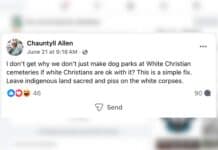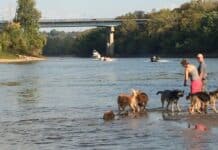




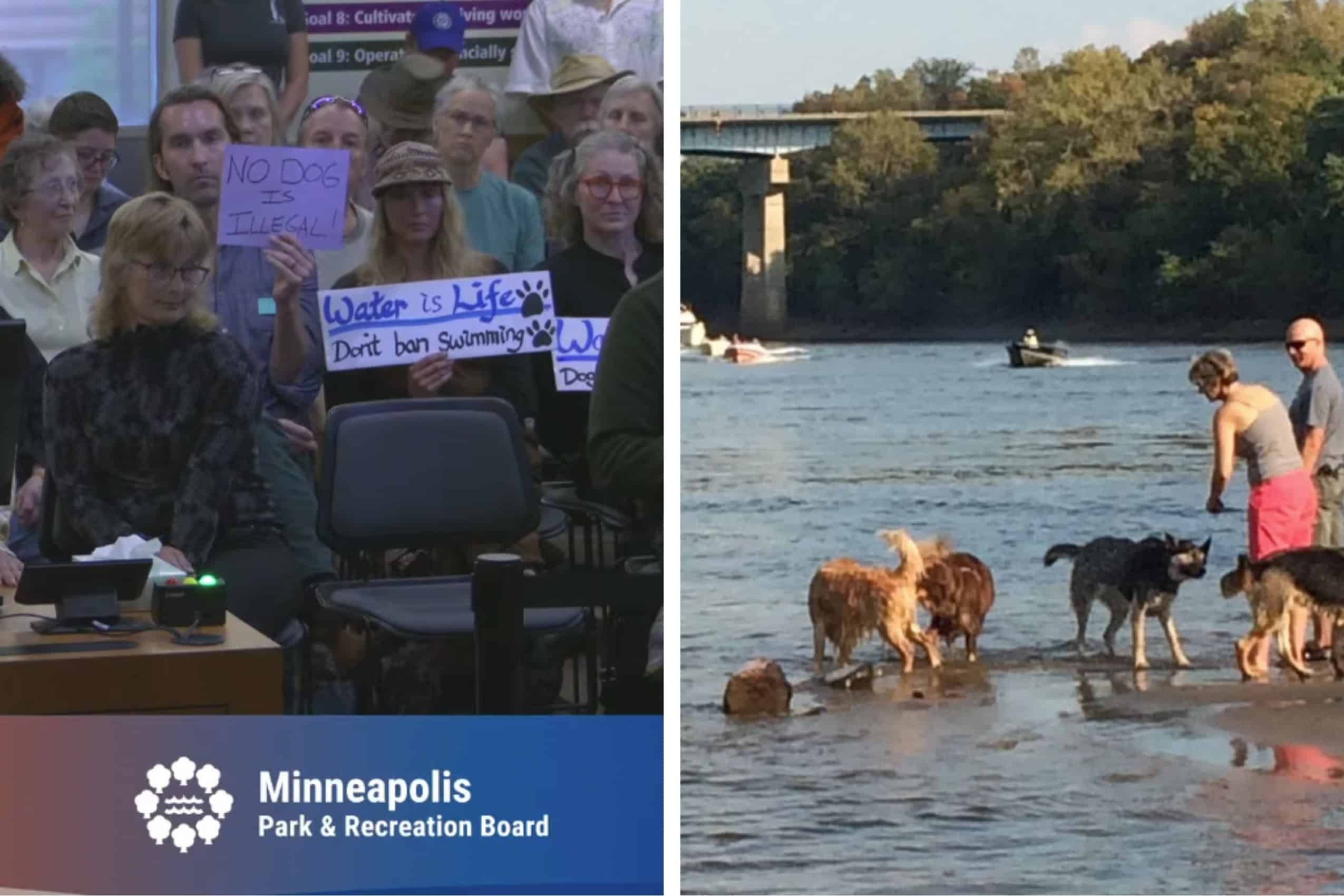
The Minneapolis Park and Recreation Board voted 8-1 Tuesday night to close the popular Minnehaha Off-Leash Dog Park by the end of 2026, ending more than three decades of off-leash access and setting off a contentious debate over sacred land, burial-site claims and public transparency.
The board based its decision in part on the park’s location within the Mni Owe Sni (Coldwater Spring) Traditional Cultural Place, an area commissioners say contains unmarked Dakota graves and burial sites connected to the U.S.-Dakota War of 1862.
However, the board has not made public any documentation confirming human remains specifically within the six-acre off-leash area.
The non-confidential version of a 2025 archaeological assessment concluded the area has only a “moderate to high potential” for “archaeological resources” but does not identify any confirmed burial sites or human remains within the dog park itself.
Alpha News contacted all nine Park Board commissioners and asked whether the board possesses any verifiable evidence that human remains, burial sites or unmarked graves are located within the six-acre Minnehaha Off-Leash Dog Park. Despite the issue being central to the board’s decision, none of the commissioners responded.
A member of the Upper Sioux Community and dog-park user drew attention to Commissioner Tom Olsen’s comments to the media that “there are burial sites on the land,” though he wouldn’t “share specifics.”
“Because statements like this are understandably interpreted by the public as confirmation that human remains are known to exist within the dog park, they have the potential to substantially influence public opinion on grounds that may not be supported by the currently available evidence,” she wrote to Olsen. “To my knowledge, the existence and location of burial sites within the dog park have not been definitively established.”
Alpha News previously reported on the debate surrounding the off-leash dog park, including testimony from Juanita Espinosa, a member of the Park Board’s Native American Advisory Council, who described the site as a sacred and spiritual “energy field.”
Espinosa claimed that if a dog is near someone who is praying, the animal can absorb the energy of those prayers instead of allowing it to reach the intended recipient.
“They in essence get that good energy, and that energy is supposed to go out to the person that made those prayers for,” Espinosa said. “If someone sees a dog there, they’re not gonna make their prayer there as a Native person.”
A safe space?
Tuesday’s meeting grew increasingly tense as supporters and opponents packed the hearing room, listened to hours of testimony and waited for commissioners to cast their votes.
Dakota activist Erica Crazy Hawk delivered fiery testimony in support of closing the dog park. After leaving the podium, and as the next speaker prepared to address the board, Crazy Hawk began shouting and moving through the audience, which was largely composed of opponents of the closure.
Attendees remained quietly seated as Crazy Hawk continued shouting, at times using profanity. On some occasions, she stood inches from seated attendees and extended her hand toward their faces while continuing to yell.
Despite the disruption, board members did not stop the proceedings or ask security to intervene.
WATCH: Multiple outbursts as the Minneapolis Park and Recreation Board voted 8-1 Tuesday night to close the popular Minnehaha Off-Leash Dog Park
Supporters of closing the park say it is too spiritually significant to Native Americans to continue allowing dogs to roam free.… pic.twitter.com/6OyFLb9Qdw
— Alpha News (@AlphaNews) June 18, 2026
At one point, Crazy Hawk shouted, “There shouldn’t even be a vote on this at all.”
“Thank you Erica,” one board member responded. “We hear you.”
“Yeah, you better,” Crazy Hawk shouted back.
Carter Casmaer, who attended the meeting, said the episode left many audience members stunned.
“[Crazy Hawk’s] statements and her behavior were representative of the larger Park Board,” Casmaer told Alpha News. “They’ve been disrespectful to community members and denigrated them unnecessarily.”
“It left the audience that was there for a civic discussion in shock and deeply disappointed,” he added.
Critics question leash distinction
The approved plan does not prohibit dogs from the area entirely. Instead, it eliminates off-leash use while continuing to allow dogs on leash.
That distinction has become one of the most disputed aspects of the proposal: If dogs are incompatible with the site’s spiritual significance, why would a leash make a difference?
That same question surfaced during the board’s discussion before the vote.
During debate on the resolution, Commissioner Charles Rucker sought clarification on what exactly would change if the dog park were decommissioned.
“My question is … are the constituents still going to be able to bring their dogs down on a leash?” Rucker asked.
“Yes … that is the plan at the moment,” stated Commissioner Olsen, who serves as board president.
The exchange immediately drew reactions from audience members.
“What’s the difference — on leash or off leash — what’s the difference?” one attendee shouted.
“The difference is that’s the compromise at the moment,” Olsen replied.
“What’s the difference if our dogs are on the leash or off the leash in terms of respect to the Dakota?” another attendee asked.
Olsen then suggested the allowance for leashed dogs may not be permanent, calling it an “interim thing.”

“A leashed dog will be allowed, that said, at the end of this and future planning for this space, as we have a community engagement plan for what to do, it could come that even in the future no dogs would be allowed on a leash,” Olsen said.
Casmaer said those comments confirmed what many opponents had suspected.
“They have no intention of keeping a dog park open and coexisting in a way that we know we can,” Casmaer said. “They just wanted to incrementally pass changes to eventually shut it down.”
Evidence and transparency concerns persist
Later in the hearing, Commissioner Dan Engelhart offered some insight into what he sees as the distinction between off-leash and on-leash dogs.
“To be clear, the difference is, when you’re there, no matter who you are and what level of reflection or spiritual or whatever the word is, to have someone else’s dog run up on you is disrespectful to what’s going on in that land,” Engelhart said. “A massive amount of death happened there, we know that.”
Casmaer argued that commissioners relied heavily on oral history and testimony from Native elders while declining to provide the public with documentation that could independently verify claims about burial sites and human remains being cited in support of the closure.
“The commissioners have, in their emails to constituents, literally written that they don’t need to hear or see any more information beyond statements from Native elders to make a decision,” Casmaer said.
Casmaer pointed to an email from Engelhart, provided to Alpha News, in which Engelhart wrote that he found it “deeply disrespectful” to expect members of the Native community to provide additional explanations or spend more time addressing questions about the issue.
One commissioner breaks ranks
At one point during the meeting, an attendee questioned the Park Board’s authority over portions of the land encompassed by the proposal.
Commissioner Cathy Abene, the board’s lone vote against the resolution, said concerns like that factored into her decision.
“I cannot support this resolution because of questions like that,” Abene said. “There’s too much uncertainty about any of this. I don’t think any of us really understand it.”
For Casmaer, the debate ultimately became about more than dogs, park land or even the future of a single recreation area. He said the meeting exposed what he views as a board unwilling to seriously engage with dissenting viewpoints.
“Some may say, ‘This is what democracy looks like,’ but what it really looks like is a far-left board who’s more concerned about being soothed within its own echo chamber than doing anything that would resemble a democratic process and making a public decision,” Casmaer said.

Jenna Gloeb
Jenna Gloeb is an Edward R. Murrow Award-winning journalist, media producer, public speaker, and screenwriter. Most recently, she worked as a reporter and on-air host for CCX Media. Jenna is a Minnesota native and resides in the Twin Cities with her husband, son, daughter, and two dogs.