



Several Republicans said during an April 13 meeting of Minnesota’s House anti-fraud committee that they see gaps in measures that several state lawmakers are advancing—in line with proposals from Democratic Gov. Tim Walz—to prevent, detect, and punish fraudsters more effectively.
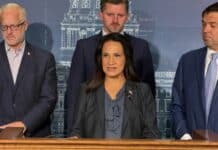
Republican Rep. Kristin Robbins, the committee’s chairwoman, told budget Commissioner Erin Campbell that state agency leaders ought to be held responsible if they mismanage their departments or fail to follow anti-fraud procedures.
“The public is fed up with people being ‘helped to comply’ instead of actually being held accountable. … There should be consequences,” Robbins said.
Minnesotans want to know: “Is anyone going to get fired?” Robbins said, calling for more “teeth” in the proposed changes. Several of Robbins’s GOP colleagues made similar comments at the latest meeting of the House Fraud Prevention and State Agency Oversight Policy Committee.
Campbell replied that it is outside her agency’s authority to discipline officials in individual state agencies.
Republican Rep. Patti Anderson, the committee’s vice chair, said the governor has that authority. Given that Walz is leaving office at the end of his current term in January 2027, “We’re going to have a new governor and no matter who that person is, they’re going to spend all of their time” addressing fraud, Anderson said.
Main features of Walz’s proposal
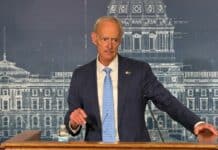
Shireen Gandhi, commissioner of the state’s Department of Human Services, testified during the committee meeting that Walz’s proposal would “tighten oversight” at every phase of the Medicaid program. New regulations would create more stringent vetting of providers and better systems for reviewing fees providers charge.
Fraudsters are targeting health care systems not just in Minnesota but across the nation, she said, using “increasingly sophisticated fraud and abuse schemes.”
“Bad actors are adapting faster than ever, exposing gaps in aging technology, disconnected data, and manual processes that were built for a different era,” Gandhi said.
Walz’s proposal calls for upgrading technology and “modernization that will link licensing, enrollment, claims review and auditing,” Gandhi said.
The governor also wants to add new layers of pre-payment review and standardize “electronic visit verification” to track who provided service, to whom, where, and for what length of time, Gandhi said.
Walz issued his proposals for combating fraud in late February.
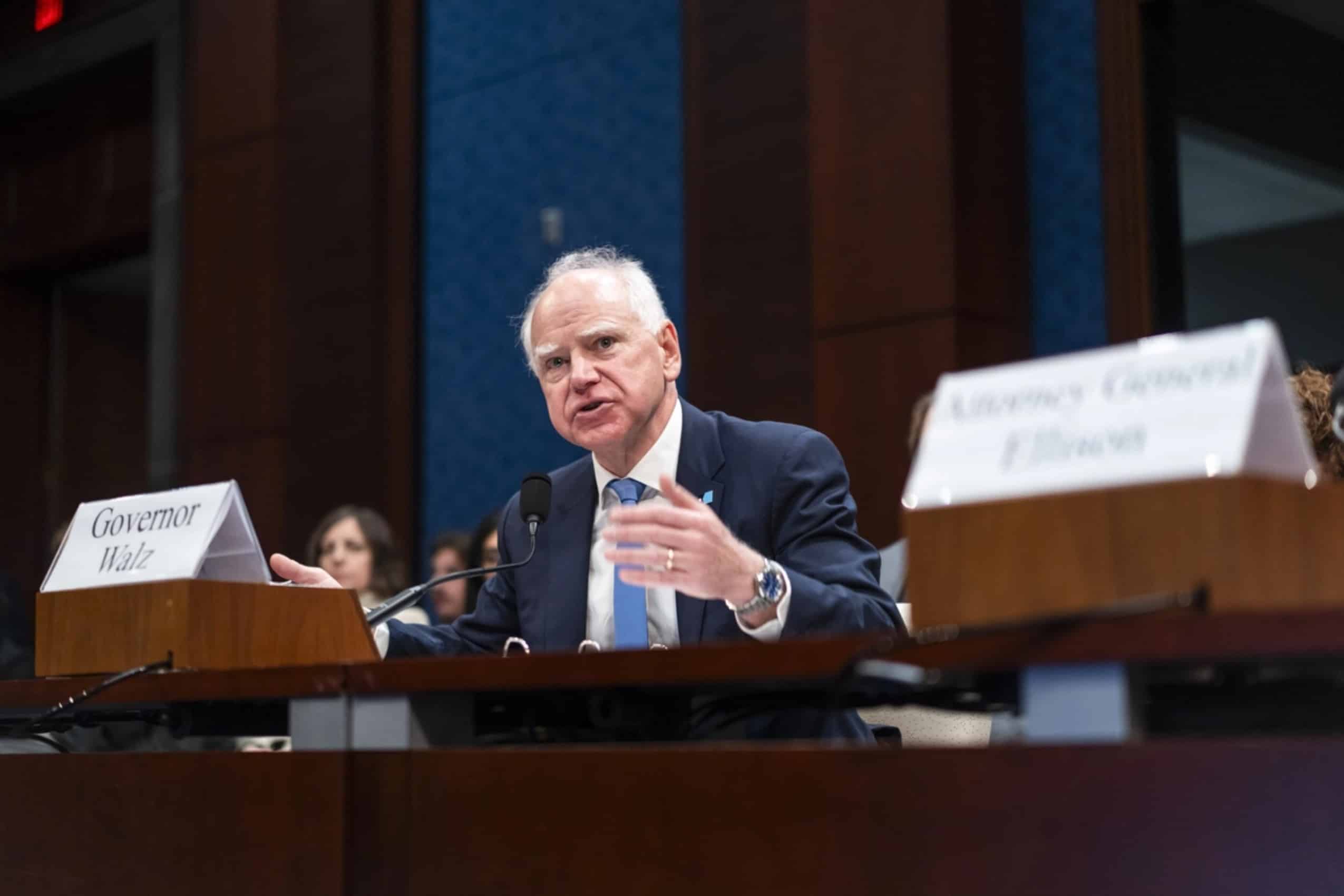
“Fraud steals from the people of Minnesota and undermines the programs we all rely on,” Walz said in a news release at the time. “This package strengthens oversight, improves detection, expands enforcement, and increases penalties to protect every dollar Minnesotans depend on. We’ve followed the experts, audits, and proven roadmaps; now it’s time for the Legislature to act.”
Since then, lawmakers have advanced multiple bills to enact many of Walz’s recommendations.
Key elements of his proposal, according to the release, include using “predictive analytics and machine learning to identify suspicious billing earlier.”
The governor also seeks a centralized Office of Inspector General “to lead statewide fraud prevention, set standards, and refer cases for civil or criminal enforcement.”
He proposed expanding the Bureau of Criminal Apprehension’s financial crimes and fraud unit’s staffing and giving it more power to seek additional records with subpoenas.
Walz also wants laws enacted to permanently ban convicted fraudsters from obtaining future state contracts and grants, increase penalties under the state’s “theft of public funds” law, and allow fraud-related crimes to be prosecuted seven years after the alleged offenses.
Criticisms and concerns
Robbins said she was concerned that, based on her reading of current proposals, “We still lack the ability to shut off the money” that continues to flow to people convicted of fraud.
And Robbins said she would like a more precise definition of what constitutes a credible allegation of fraud. Rep. Dave Pinto, the Democrat lead on the committee, said it would also be important to specify who determines whether an accusation is credible.
Government-program fraud has emerged as a multibillion-dollar problem in Minnesota, leading to multiple federal actions including investigations and freezing funding of some programs since late 2025. Following public outcry over fraud in Minnesota and elsewhere, President Donald Trump recently appointed Vice President JD Vance to head a nationwide fraud-prevention task force.
Congressional Republicans also launched probes into how Walz and Minnesota Attorney General Keith Ellison handled fraud allegations.
Rep. Pam Altendorf, a Republican member of the anti-fraud committee, said existing proposals seem to be adding more government employees to investigate fraud after it has already occurred.
Instead, “the money should be on the front end, to stop any bad people with intent” to defraud agencies, Altendorf said.
The current proposals are “putting our dollars absolutely in the wrong spot,” she said.
This article was originally published by The Epoch Times.