


U.S. House Republicans passed their No Aid for Ghost Students Act of 2026 on June 10, marking the end of a 3-month effort to pass the bill through the House of Representatives.
The bill, originally introduced to the floor by Congressman Burgess Owens of Utah in March 2026, seeks to crack down on criminals who pocket financial aid.
These criminals — “ghost students” — are thieves who impersonate higher education students to enroll in courses and receive federal financial aid that they can steal. The problem has grown since 2019, prompted by an increase in online courses being offered.
The No Aid for Ghost Students Act would require the U.S. Education Department to put every FAFSA application through a screening process to detect identity fraud. It would also provide more guidance to universities on how to detect fraud and require schools to verify a student’s identity for applications flagged by the Department of Education.
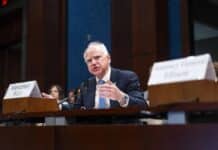
“Whether it’s fraud through housing programs, autism centers, day cares, or our universities, criminals are abusing our public systems to scam taxpayers and harm vulnerable populations,” Congressman Tom Emmer, R-Minn., said.
A recent press release from Emmer’s office details that more than 7,715 applications were flagged as fake or potentially so from 2024-2025 in the Minnesota State Colleges and Universities system. Meanwhile, the U.S. Department of Education identified $90 million in payments that went to fraudulent students across the nation.
In June 2025, the department announced it would be implementing stronger anti-fraud initiatives by requiring students to show valid identification to their registrars. But despite the success of the preventive measures since then, the issue still proves to be a significant problem for Minnesota.
U.S. Education Secretary Linda McMahon sent a letter in December to Gov. Tim Walz saying that “In Minnesota, 1,834 ghost students were found to have received $12.5 million in taxpayer-funded grants and loans.”
“They collected checks from the government, shared a small portion of the money with the college, and pocketed the rest — without attending the college at all,” she wrote.
Her department stated in a June 2025 press release that at Riverland Community College alone, more than 100 potentially fake applications on average were submitted per year in the last two financial aid periods.
The Minnesota Legislature also passed a higher education bill in May that updates the state’s anti-fraud policies and provides $3 million to the Minnesota State system in 2027 for fraud-detection software against ghost students.
By implementing the No Aid for Ghost Students Act of 2026, Emmer and the House Republicans hope to further strengthen those efforts.
“By combatting fraud in federal student aid, House Republicans are supporting future generations of students and giving those who truly need the aid the ability to receive it,” Emmer said.

Rachael Van Rossum
Rachael Van Rossum is a journalist and author who studies political science in the Twin Cities. She previously interned with the Illinois House of Representatives and recently published her debut fantasy novel "The Hellburner of Sovi." Rachael is passionate about telling compelling stories and bringing to life the voices of political figures, athletes, and members of her community through engaging writing. She is the Alpha News journalism fellow for the summer of 2026.