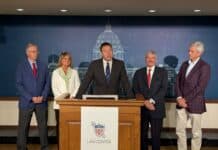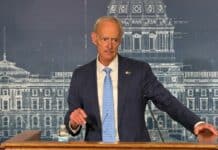


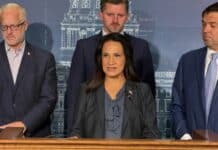

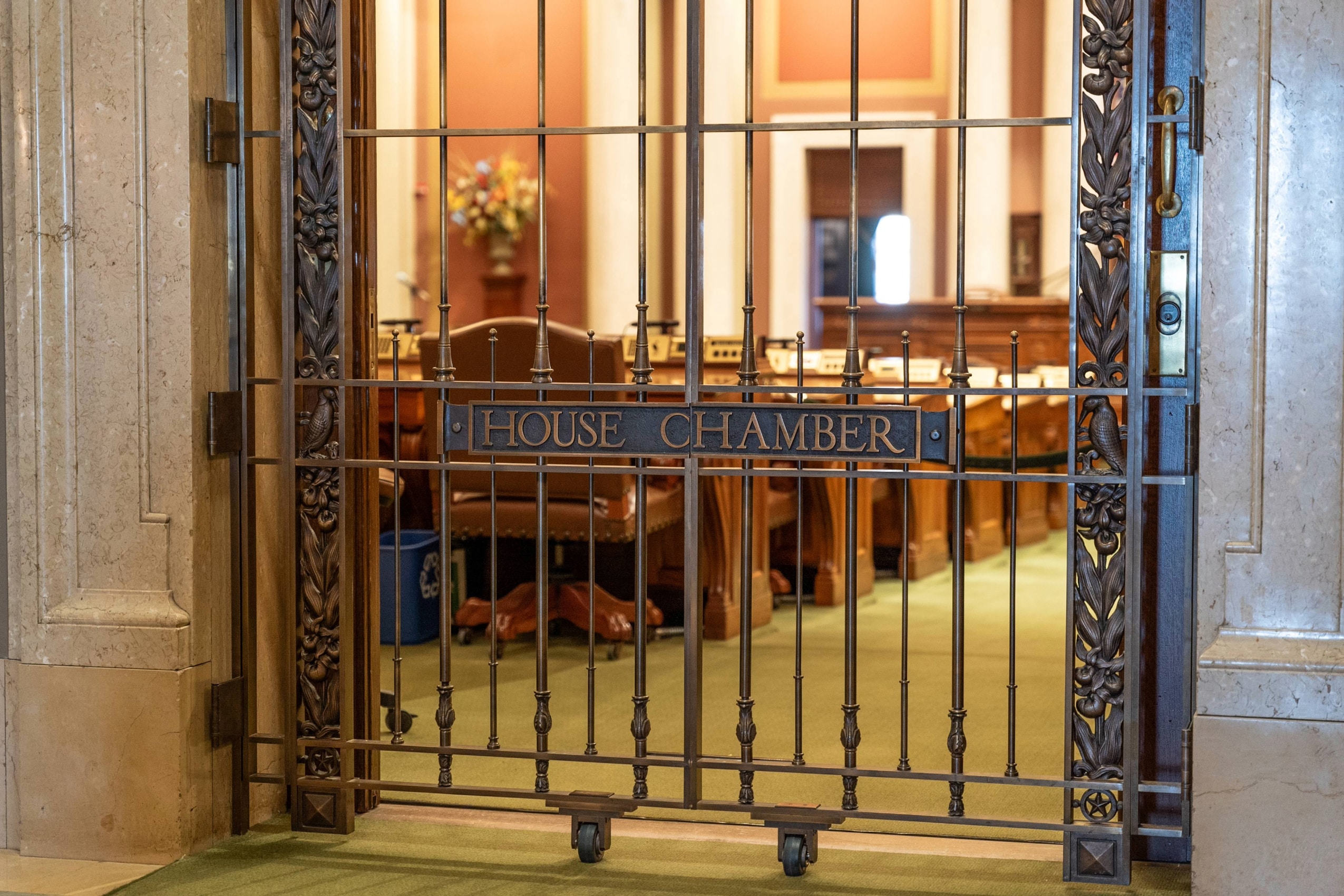
On Wednesday, lawmakers in the Ways and Means Committee of the Minnesota House of Representatives advanced SF 856, a bill that would establish an independent, statewide office of the inspector general (OIG) to investigate fraud.
That bill, which would be the most significant anti-fraud measure enacted by the Minnesota Legislature in recent years, has been in the works since 2025.
Last year, DFL Sen. Heather Gustafson and GOP Sen. Michael Kreun authored legislation to create an OIG that would investigate fraud throughout state government programs and agencies. That bill was a response to Minnesota’s infamous, ongoing fraud problem.
In June of 2025, the DFL-controlled Minnesota Senate passed that bill in a 60-7 vote, but the House never took SF 856 up for a vote before the 2025 legislative session ended. As such, SF 856 has been sitting in the House awaiting further action.
This year, the OIG bill has emerged as a major point of contention in the evenly-divided House (67 Republicans and 67 Democrats). During this legislative session, Republicans have repeatedly tried to advance SF 856 but faced opposition from House Democrats.
At one point, DFL Rep. Matt Norris attempted to dramatically alter the bill by removing the proposed office’s internal law enforcement agency. Republicans said Norris was trying to “gut” SF 856 and accused Gov. Tim Walz of being behind those efforts.
Despite the drama that has unfolded this session, a bipartisan collection of legislators has continued to work on the OIG bill for months. That OIG working group includes Gustafson, Kreun, Norris, and Republican Rep. Patti Anderson, a former Minnesota state auditor.
Yesterday, with three weeks left before the end of session, Norris and Anderson presented their bill to the House Ways and Means Committee. The pair announced that an agreement had been reached on the OIG bill and all four legislative caucuses now support it.
As part of the agreement, Norris said the OIG’s internal law enforcement agency would remain in the bill, but that law enforcement division would not be active until January of 2028. He explained that the OIG would work with the Minnesota Bureau of Criminal Apprehension (BCA) for its law enforcement needs during the interim.
Norris also mentioned that other “miscellaneous cleanup items” within the bill had been addressed by the OIG working group as part of the agreement.
Speaking about the development of the OIG bill, Anderson said “it was a long process, but we’re good, and the Senate is good, and that’s the key. This is a bill that all four caucuses, both bodies, are behind and is something that is greatly needed for the State of Minnesota.
However, Democrats on the committee were critical of the bill during yesterday’s hearing.
While Democrats said fraud needed to be addressed, they expressed concerns that the bill cost too much, had not been heard in the Public Safety Committee, and that the OIG’s work would be duplicative and interfere with the jurisdiction of other agencies.
Rep. Cedrick Frazier, the DFL co-chair of Ways and Means, said his caucus would advance the bill out of committee because “we have an agreement,” but he noted that the concerns expressed by his caucus are “valid.”
No Republicans spoke against SF 856 during the hearing.
Rep. Paul Torkelson, the GOP co-chair of Ways and Means, said the cost of the OIG “is significant, but it’s minimal compared to the amount of money that the taxpayers have lost to fraud in these last years. And while there may be some duplication, it’s obvious that the current systems don’t work.”
The committee held a voice vote to advance SF 856 to the General Register, one of the last stops before a bill is taken up for a vote by the full House. Several audible “no” votes were heard, but the bill advanced anyway.
Following the vote, Gustafson released a statement which said “I commend the House authors for their work, I and look forward to continued progress in the future.”
Similarly, Kreun said “I’m glad the House has reached a deal on this bill for a pathway to passage. Passing this bill sends a clear message to fraudsters that the jig is up, and to providers, recipients, commissioners and state employees that Minnesotans expect clean government and accountability.”
Should SF 856 be passed by the full House, then the bill would return to the Senate for a vote to approve the House changes. If the bill is passed by the Senate, then SF 856 would go the governor’s desk for his signature.
Walz has previously said he would sign legislation creating an OIG.

Luke Sprinkel
Luke Sprinkel previously worked as a Legislative Assistant at the Minnesota House of Representatives. He grew up as a Missionary Kid (MK) living in England, Thailand, Tanzania, and the Middle East. Luke graduated from Regent University in 2018.