


Minnesota has reached an ideological and economic tipping point.
Throughout our state’s history, we have celebrated success, and entrepreneurs have built up significant industry that is impressive for our size. Home to nearly 20 Fortune 500 companies and thousands of small businesses, we are still reaping the economic rewards brought to us by the spirit of hard work and capitalism that we exemplified throughout the 20th century.
However, over the last decade, Minnesota has lost its way. As regular Minnesotans continued to go to work, raise families, and enjoy our great outdoors, the Democratic Socialists of America (DSA) have succeeded in using out-of-state funding to turn Minneapolis and St. Paul into two of the preeminent strongholds of socialist ideology within the United States. Hijacking the levers of power within the traditionally moderate Democratic-Farmer-Labor (DFL) Party, socialists have transformed the DFL into a new and radical party that bears little resemblance to the DFL of old. The New DFL rejects fundamental American principles such as capitalism, freedom of speech, and the rule of law. Knowing that the majority of Minnesotans oppose their objectives, the New DFL encourages street anarchy and violence as a useful tool for driving forward their collectivist vision.
For students of history, the results have been predictable: Anti-business policies and lawlessness facilitated by the New DFL have led to an exodus of industry and wealth from our state. If this trend continues, the Twin Cities risk becoming the next Detroit, taking the rest of Minnesota’s economy down with them.
The good news is that regular Minnesotans are waking up. Tired of seeing our taxes skyrocket year-over-year as public services simultaneously deteriorate, we are experiencing the real-time consequences of what continued governance under the New DFL will mean for the future of Minnesota. In order to save our state for ourselves and the generations to come, it is time for regular Minnesotans like you and me to become more engaged than ever before.
Socialist infiltration and the New DFL
Currently, four out of the 13 members of the Minneapolis City Council are associated with the DSA, as are two of the seven St. Paul City Council members. Their numbers within these councils, and within the state legislature, continue to pose a danger to the economic future of Minnesota.
These leftist ideologues run for office under the guise of the familiar DFL label but have swiftly consumed the formerly moderate party from within. They have been effective in attaining positions of power within the party and even succeeded in getting a socialist appointed as co-chair of the House Taxes Committee. She has not had a job in the private sector, yet she holds considerable sway over how much you and I have to pay the state government each year. The ruling principle of the New DFL is that they think they know better than you how to spend your own money.
As with every socialist experiment in world history, as investment dries up and the wealthy leave, an increasing percentage of Minnesota’s tax burden will fall on the rest of us.
Below, I will outline the capital flight that has occurred due to New DFL policies and the economic decline of the Twin Cities, showing how both will ultimately impact you.
MSP commercial property values in free fall
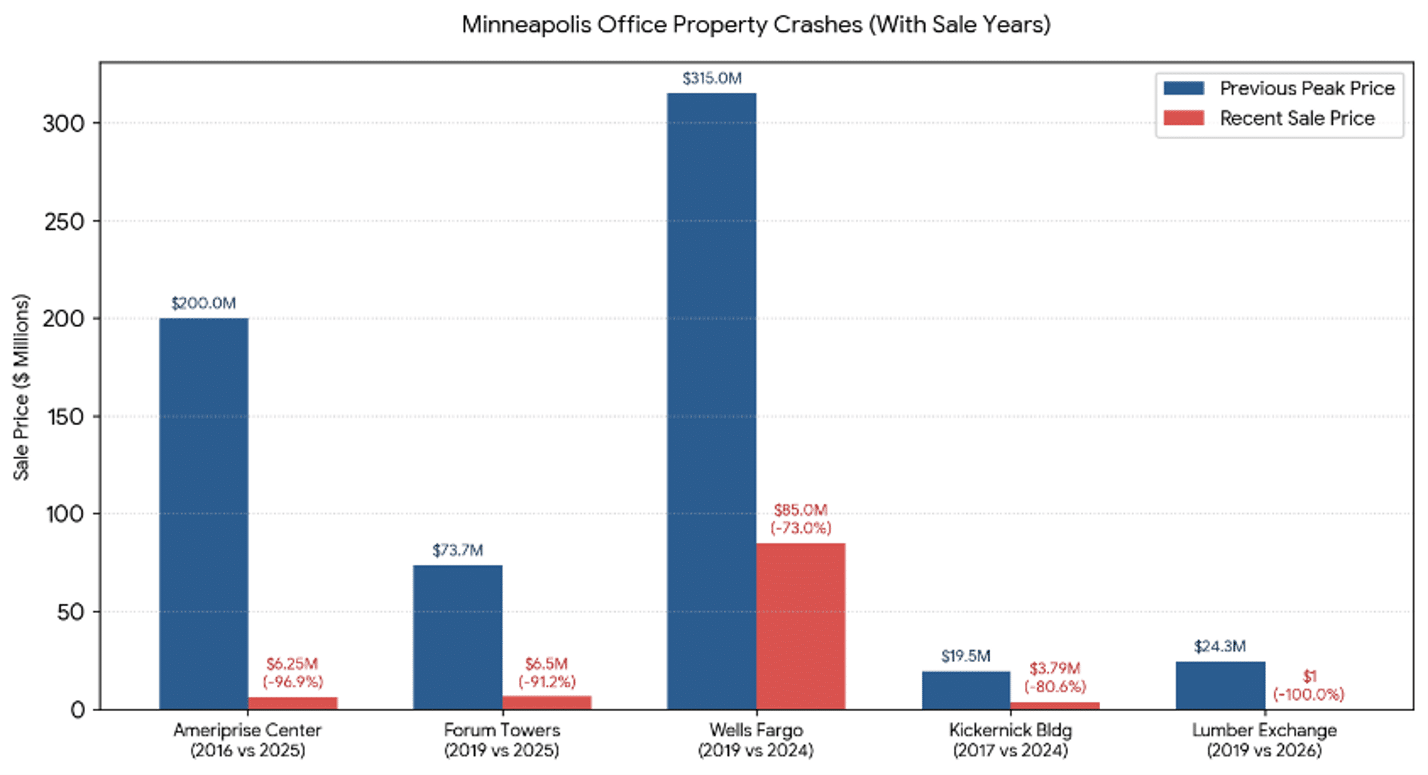
In a disturbing indication of where the New DFL is taking our state, let’s take a look at how the Twin Cities commercial property market is doing:
Ameriprise Center: Sold for $200 million in 2016. Sold for $6.25 million in 2025.
Forum Office Towers: Sold for $73.7 million in 2019. Sold for $6.5 million in 2025.
Wells Fargo Center: Sold for $315 million in 2019. Sold for $85 million in 2024.
Kickernick Building: Sold for $19.5 million in 2017. Sold for $3.79 million in 2024.
Lumber Exchange Building: Sold for $24.3 million in 2019. Sold for $1 in 2026 (deed-in-lieu-of-foreclosure).
You read that correctly. This February, an office building in Minneapolis was so financially distressed that it was transferred for One. Single. United States Dollar. When someone can walk down the street in our state’s largest city and choose between buying an entire commercial building, or an Arizona Iced Tea, we have a major problem.
St. Paul has likewise seen its commercial property values plummet, but fortunately not to the same extent as Minneapolis.
Causes and effect of the corporate exodus
The New DFL blames this exodus on work-from-home policies stemming from COVID-19. This certainly is a factor, but then why are cities like Nashville and Charleston booming, while Minneapolis and St. Paul are stalling out?
It is quite simple: Business favors low-tax, low-regulatory environments where conditions are predictable. When the New DFL passes laws like Paid Family and Medical Leave, which allows employees to take up to 20 weeks per year off work, that’s unpredictable. When they encourage rioting and looting in our streets, which Gov. Tim Walz allowed to occur twice during his tenure, that’s unpredictable. When they flippantly propose wealth taxes, income tax hikes, and other drastic measures like the quintupling of car tab fees, that’s unpredictable.
New DFL policies have forced companies out of the Twin Cities, and Minnesota is increasingly seen as an un-investable state. Why would a business owner subject themselves to the headwinds that the New DFL creates, when they could just as easily set up operations in the Dakotas, Iowa, or Wisconsin?
Decisions made by socialist politicians in the Twin Cities are the real cause of the plummeting building values that we have seen. Lacking enough commercial property tax revenue to meet their budgets, counties have resorted to hiking residential property taxes on the middle class.
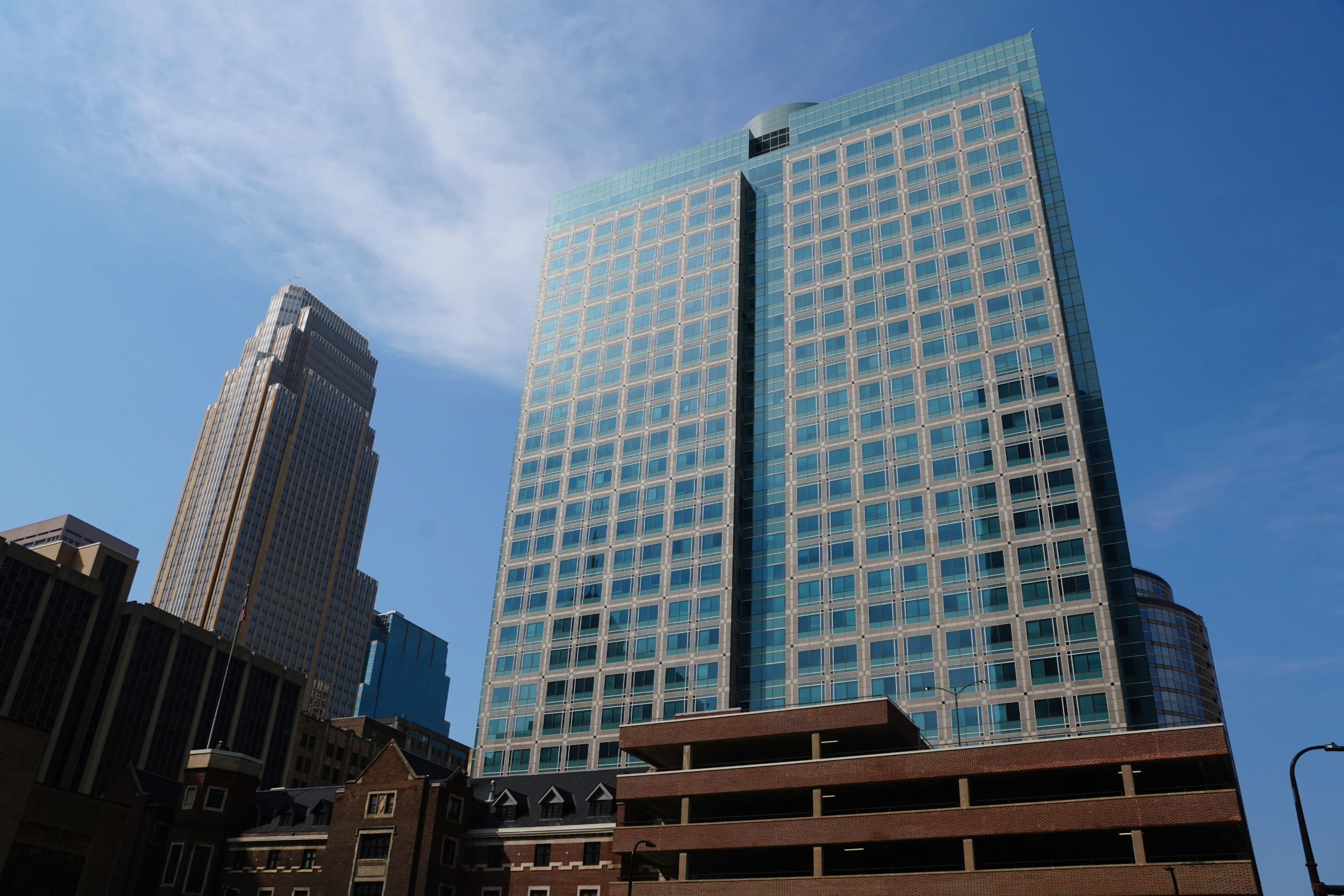
Hennepin and Ramsey Counties carry major voting power at the state legislature. When faced with deficits, New DFL politicians do not hesitate to ask for state-level bailouts for their districts, which are then subsidized by the taxpayers of Greater Minnesota. In this way, the collapse of Minneapolis and St. Paul affects us all.
Minnesota individuals are taxed (to death!)
It is not just corporations leaving. Here are several tax policies causing Minnesota’s high-earners to fly south:
State income taxes: 9.85% for top earners is among the 10 highest state income tax rates in the nation. This year, the New DFL attempted to raise this rate to 10.85%, a move that would have given Minnesota the fourth-highest state income tax in the nation.
Capital gains taxes: 9.85% for top earners.
Property taxes: Homeowners in wealthy enclaves, such as Lake Minnetonka, Edina, and White Bear Lake, regularly pay more than $40,000 per year in property taxes. For the most expensive homes, these annual property tax rates are north of $300,000 per year!
Social Security taxes: Can reach 9.85% for top earners. Minnesota is one of only eight states in the nation to tax Social Security.
Death taxes: Range between 13% and 16% for estates over $3 million.
Proposed wealth tax: Would tax all ASSETS of over $10 million in value (businesses, homes, vehicles, art, etc.) at 1% per year. This will lead to mass litigation regarding valuations of unsold assets. It will also impact farmers, who hold valuable land assets, but don’t necessarily have the annual cashflow to pay the tax.
It is worth noting that Florida has a 0% tax rate for all of these categories, except for property taxes, which they are holding an upcoming referendum to eliminate.
Individual exits could cause tax doom spiral
Common refrains given by socialist activists when confronted with these numbers are, “The rich can afford it!” or “Don’t let the door hit you on the way out!” However, after the wealthy have fled, who is going to pay for the door? The answer is you and I.
Currently, the top 1% of earners in Minnesota contribute approximately 30% of our state’s total annual income tax revenue, while the top 10% of earners contribute approximately 63% of that total. The bottom 90% of earners pay only 37% of our state’s total income tax.
If you were a bank, you would think twice about issuing a loan to a business that gets 63% of its revenue from only 10% of its clients, especially if you knew that the business was treating that 10% poorly.
The math is simple: If the wealthy continue to leave, our state becomes insolvent.
And the wealthy are leaving. Having the most resources, they are the most mobile. There is a reason that Naples, Florida, has received the nickname “Little Minnesota.” So many Minnesota “expats” have established residency there that they’ve practically colonized the city. It’s hard to blame them, as the New DFL has made it abundantly clear that they are not welcome here. Besides, this is not San Diego, where the tradeoff between high taxes and great weather is easier to justify.
If trends continue, it will be up to you and me to make up the extra 63% of lost income tax revenue, on top of what we already pay. Facing these tax hikes, the middle class will leave, and you can see how this situation could easily spiral out of control in a cycle of accelerated decline.
The majority of Minnesotans oppose New DFL agenda
Despite these obstacles that we face, I remain optimistic about the future of Minnesota.
The socialists in charge of the New DFL are aware that their policies are unpopular with regular, working Minnesotans, which is why they go to great lengths to disguise their real agenda. Until now, they have been successful in convincing the public that they are the same “aw-shucks” party of moderates that we grew up with. Gov. Walz exemplified this when he rode his folksy grandpa persona into office and then proceeded to pass the most radical anti-business agenda in state history. Fortunately, the trend I am witnessing is that hardworking Minnesotans are growing wise to this bait-and-switch and the message is spreading that the New DFL is no longer the party that it used to be.
At the end of the day, the overwhelming majority of Minnesotans are not radical. We just want the government to leave us alone.
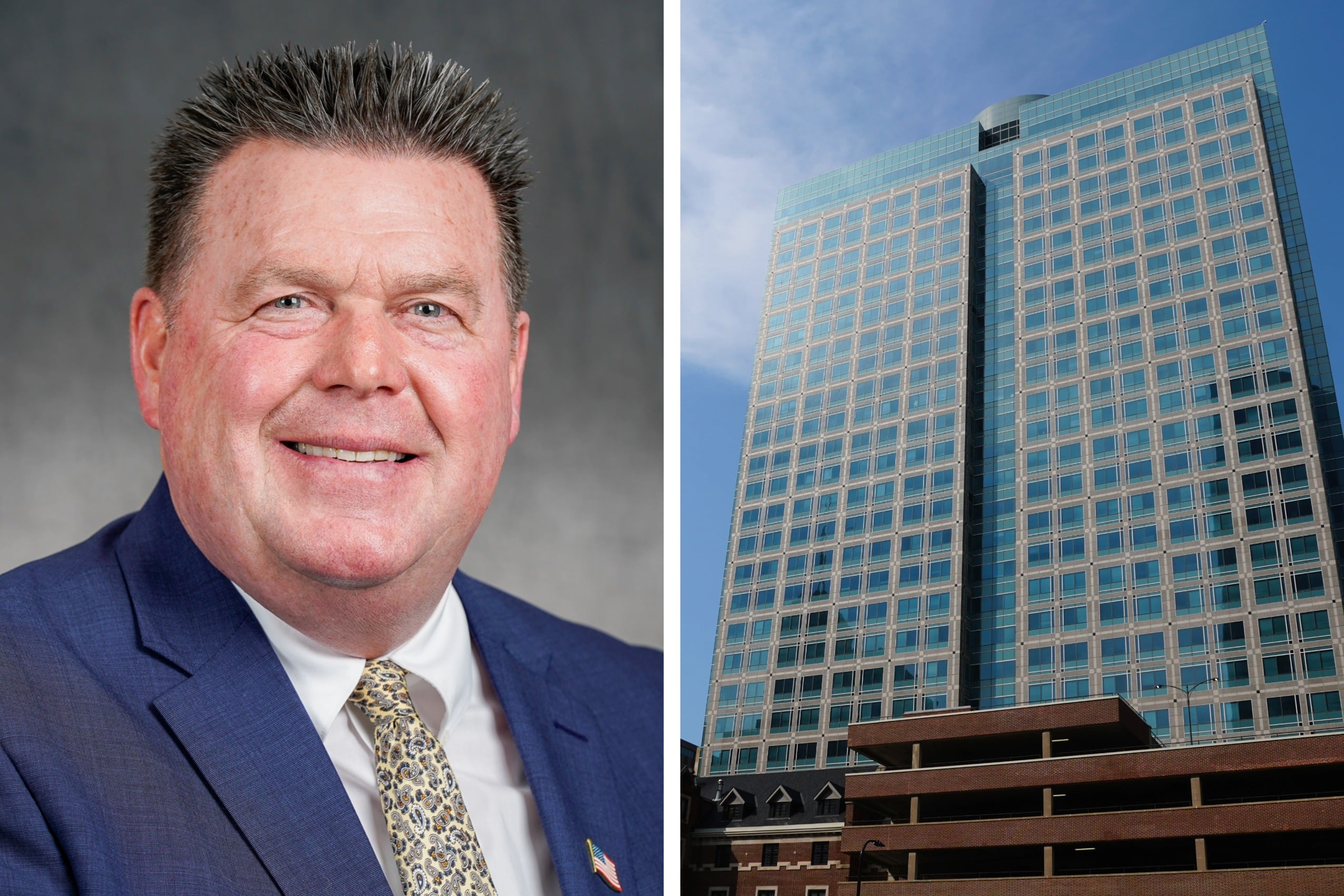
Tom Murphy is a Republican state representative who represents District 9B in the Minnesota House.
The views and opinions expressed in this commentary are those of the author and do not represent an official position of Alpha News.

Tom Murphy
Tom Murphy is a Republican state representative who represents District 9B in the Minnesota House.