



The U.S. labor market remained hot in May as the hiring momentum continued heading into the summer, new government data released on June 5 show.
The economy added 172,000 new jobs last month, from the upwardly revised 179,000 positions in April, according to the Bureau of Labor Statistics.
Economists had penciled in a reading of 85,000.
The unemployment rate held steady at 4.3 percent—in line with the consensus forecast.
May’s nonfarm payrolls report extends the string of solid indicators highlighting the labor market’s strength following the volatility that kicked off the year.
“AI may eventually kill off jobs, but that time is not now. It’s also very difficult to remain anchored to a stagflation narrative when growth and employment are rising,” Jamie Cox, managing partner for Harris Financial Group, said in a note emailed to The Epoch Times.
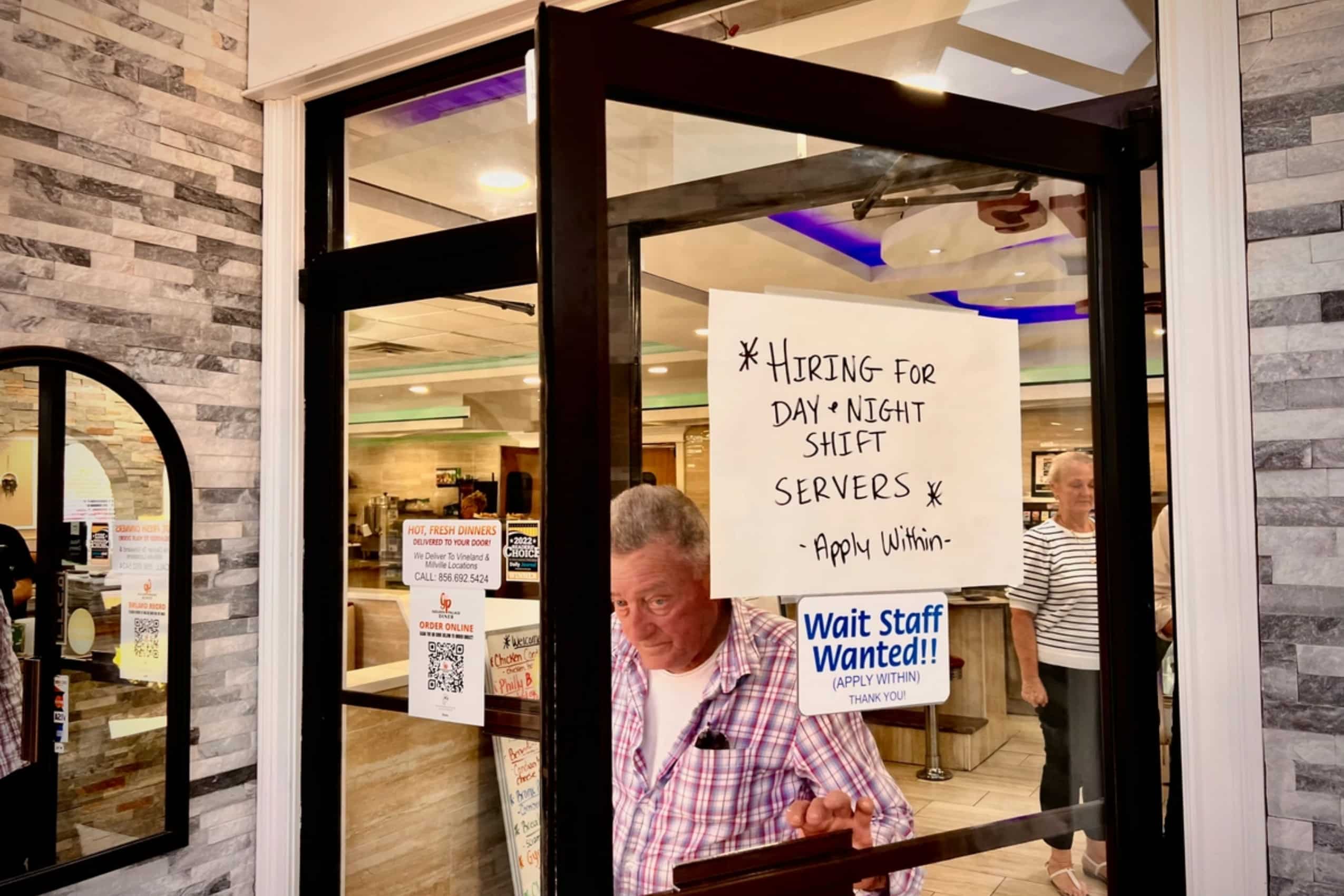
Leisure and hospitality was the top sector for job creation, adding 70,000 positions and “well above the average monthly gain of 14,000 over the prior 12 months,” the bureau said.
Healthcare, which has accounted for a large share of employment growth since last summer, picked up 35,000 jobs. It is also maintaining the average monthly pace over the past year.
Social assistance created 12,000 positions.
Financial activities employment declined by 22,000 and is down by 107,000 since last year’s peak.
Local government—excluding education—rose by 55,000. This represented the second straight month of payroll expansion in the public sector.
Wage growth matched economists’ expectations. Average hourly earnings rose 0.3 percent monthly and slowed to 3.4 percent year over year, from 3.6 percent in April.
Average weekly hours were unchanged at 34.3, and the labor force participation rate was flat at 61.8 percent.
Upward revisions were made to previous months’ data. March payrolls were adjusted by 29,000, from 185,000 to 214,000. April’s job numbers were revised up by 64,000, from 115,000 to 179,000.
“With these revisions, employment in March and April combined is 93,000 higher than previously reported,” the bureau stated.
Market reaction
U.S. stocks slumped in pre-market trading following the latest data.
Investors added to their bets that the Federal Reserve will raise interest rates to fight renewed inflationary pressures.
The tech-heavy Nasdaq Composite Index declined more than 1 percent. The broad-market S&P 500 erased 0.6 percent. The blue-chip Dow Jones Industrial Average was flat.
Yields on U.S. Treasury securities shot up after the May figures.
The 10-year yield—the primary benchmark—topped 4.53 percent. The 30-year returned above 5 percent. The 2-year, which tracks monetary policy expectations, rose to 4.13 percent.
The price stability side of the Federal Reserve’s mandate has ostensibly become the focal point for a growing chorus of monetary policymakers as downside risks to the labor market diminish.
Dallas Federal Reserve President Lorie Logan, speaking at an event hosted by The University of Texas at El Paso, said she would consider tightening policy later this year.
“These conditions indicate that monetary policy is not restraining the economy,” Logan said in prepared remarks on June 3.
“I am increasingly concerned that higher interest rates could be necessary later this year to fully restore price stability and appropriately balance both sides of the Fed’s dual mandate.”
For Kevin Warsh, the new head of the Federal Reserve, it is a case of tradeoffs and navigating a challenging climate, from sidestepping political pressure to restoring inflation credibility.
Before the June 16–17 Federal Open Market Committee meeting, the Fed will have a fresh tranche of inflation data to sift through, including the May consumer price index.
May’s annual consumer inflation rate is forecast to reach 4.2 percent, according to the Cleveland Fed Inflation Nowcasting Model. The June headline reading could slow to 4.1 percent.
Traders are making a quarter-point rate hike their base-case scenario for later this year or early 2027.
The odds of an increase to the benchmark federal funds rate—a key policy rate that influences business and consumer borrowing costs—at the January 2026 policy meeting stand close to 60 percent.
Summary of employment conditions
Prior to the May nonfarm payrolls report, a series of employment figures suggested the job market was solid.
Job vacancies climbed by 731,000 to a higher-than-expected 7.618 million in April—the highest since November 2024—the bureau reported. The data also indicated low layoffs and separations.
Private employers, according to payroll processor ADP, added 122,000 new jobs last month.
While planned job cuts jumped from April to May, the year-to-date total of nearly 398,000 layoffs is down 43 percent from the same period in 2025.
Additionally, unemployment claims edged up to a four-month high, but they remain around historically low levels.
Considering the multiple developments unfolding across global financial markets, employment conditions have not been at the center of attention, says Tom Essaye, president and co-founder of Sevens Research Report.
“The labor market may not be the typically important focus of markets given geopolitics and AI, but it’s still very important, and a Goldilocks jobs report will help continue to foundationally support this market by helping to keep growth solid and further push back on stagflation concerns,” Essaye said in a June 4 note emailed to The Epoch Times.
This article was originally published by The Epoch Times.