

“Welcome back, Minnesota — we missed you.”
That is the future I envision for our state and what I hope to help achieve as governor through principled leadership, accountability, and meaningful change.
By the summer of 2030, I believe a majority of Minnesotans—regardless of political party, ethnicity, or religion—will say those words to one another as we enter another gubernatorial election season and look ahead to re-electing Kendall Qualls for a second term as governor of Minnesota.
It will not be a campaign slogan. It will be a shared sense of relief.
A relief rooted in the belief that Minnesota found its footing again. That our communities became safer, our economy stronger, our schools more focused on excellence, and our government more accountable to the people it serves. Most importantly, it will reflect a renewed confidence that Minnesota’s best days are still ahead.
The previous four years will stand in sharp relief against the difficult era many remember under Tim Walz—years marked by rising crime, economic strain, a series of ongoing protests year after year, and the slow hollowing-out of once-thriving communities in Minneapolis and St. Paul. Neighborhoods that had been full of life became less safe, less certain.
Businesses closed. Friends and families relocated to more prosperous states. Confidence eroded.
But Minnesota didn’t stay there.
The turnaround didn’t come from a miracle. It came from a clear, disciplined approach—a five-step formula that restored both confidence and common sense to state leadership. Simple in concept, challenging in execution, and transformational in its impact.
At first, progress was hard to see. The problems had been building for years. But by the end of year one, something began to change. Small wins turned into momentum. Rays of hope began to break through what once felt like permanent clouds.
The first step was economic freedom.
In the first year, the Qualls Administration and the legislature began by lifting the burden that had been weighing down Minnesota families, entrepreneurs, and job creators alike. Taxes and regulations that once hindered growth were reduced or eliminated. The permitting process, once a maze of delays and uncertainty, was aggressively streamlined so businesses could start, expand, and hire without unnecessary obstruction and unpredictability.
The result? Opportunity returned.
Housing costs stabilized as supply increased. Energy projects moved forward. Small businesses reopened or launched for the first time. People were no longer punished for working hard—they were rewarded for it. And prosperity, once uneven and uncertain, became accessible again to those willing to earn it.
The second step was restoring safety.
Before the Twin Cities could become vibrant again, they had to become safe again. That meant supporting law enforcement—not with words, but with action. When leadership faltered at the city council level, the state stepped in. Hundreds of officers were hired and deployed strategically in coordination with local police chiefs and the Hennepin County Sheriff’s Office.
Order was restored.
Curfews for minors under 18 were implemented to curb late-night crime and protect young people from dangerous environments. Communities that once felt abandoned began to feel protected again. Families returned to parks. Businesses reopened their doors after dark. Public safety became the foundation for everything else.
Because without safety, nothing else works.
The third step was academic excellence.
Minnesota refocused its education system on outcomes, not ideology. Academic excellence and high standards were restored. Parents were re-engaged because they were allowed to decide the best options for their children’s education with the state’s School Choice program. And critically, the trades returned to high schools—giving students pathways to success that didn’t require a four-year degree, but did require skill, discipline, and purpose.
Young people once again saw a future in Minnesota.
Whether in the classroom, the workshop, or the workforce, the message was clear: excellence matters. And every student deserves a path to achieve it.
The fourth step was making Minnesota America’s Summer Family Vacation Destination.
For over a decade, millions of Americans have permanently relocated from the Democrat-led states of California, New York, New Jersey, and Illinois to the pro-business and pro-family states of Tennessee, Texas, Florida, and other southern states. The summer months can be brutally long for these transplants. With a strategic and ongoing ad campaign, Minnesota became the premier summer destination for American families.
From lakes and parks to festivals and small-town experiences, Greater Minnesota began to experience vibrant activity they haven’t seen in decades.
The fifth and final step was energy independence.
By lifting the moratorium on nuclear energy, Minnesota embraced a future that balanced environmental responsibility with economic reality. It will take years to complete the construction of a next-generation nuclear energy facility, but nuclear energy will provide Minnesotans with reliable, affordable energy and a competitive advantage, attracting industry, stabilizing costs, and ensuring long-term sustainability.
It was a bold decision—but the right one.
And underpinning all of it was a renewed commitment to accountability. Out-of-control government spending was reined in, and longstanding fraud was aggressively investigated and prosecuted. Minnesotans regained confidence that their tax dollars were being protected and used for their intended purpose—not lost to waste, abuse, or political favoritism.
And through it all, something deeper happened.
Minnesotans came together.
That became the Minnesota model.
Different perspectives. Different talents. One shared goal: a stronger, safer, more prosperous state.
So, when Minnesotans say in 2030, “Welcome back,” they won’t just be talking about economic growth or lower crime or better schools.
They’ll be talking about something bigger.
Not because they suddenly agreed on everything—but because they remembered how to work together despite their differences. Like a championship football team, Minnesota rediscovered the value of each position. Not everyone plays quarterback. Not everyone blocks. Not everyone runs the ball. But when every position does its job—when every strength is valued—the team wins.
And that’s a comeback worth celebrating.
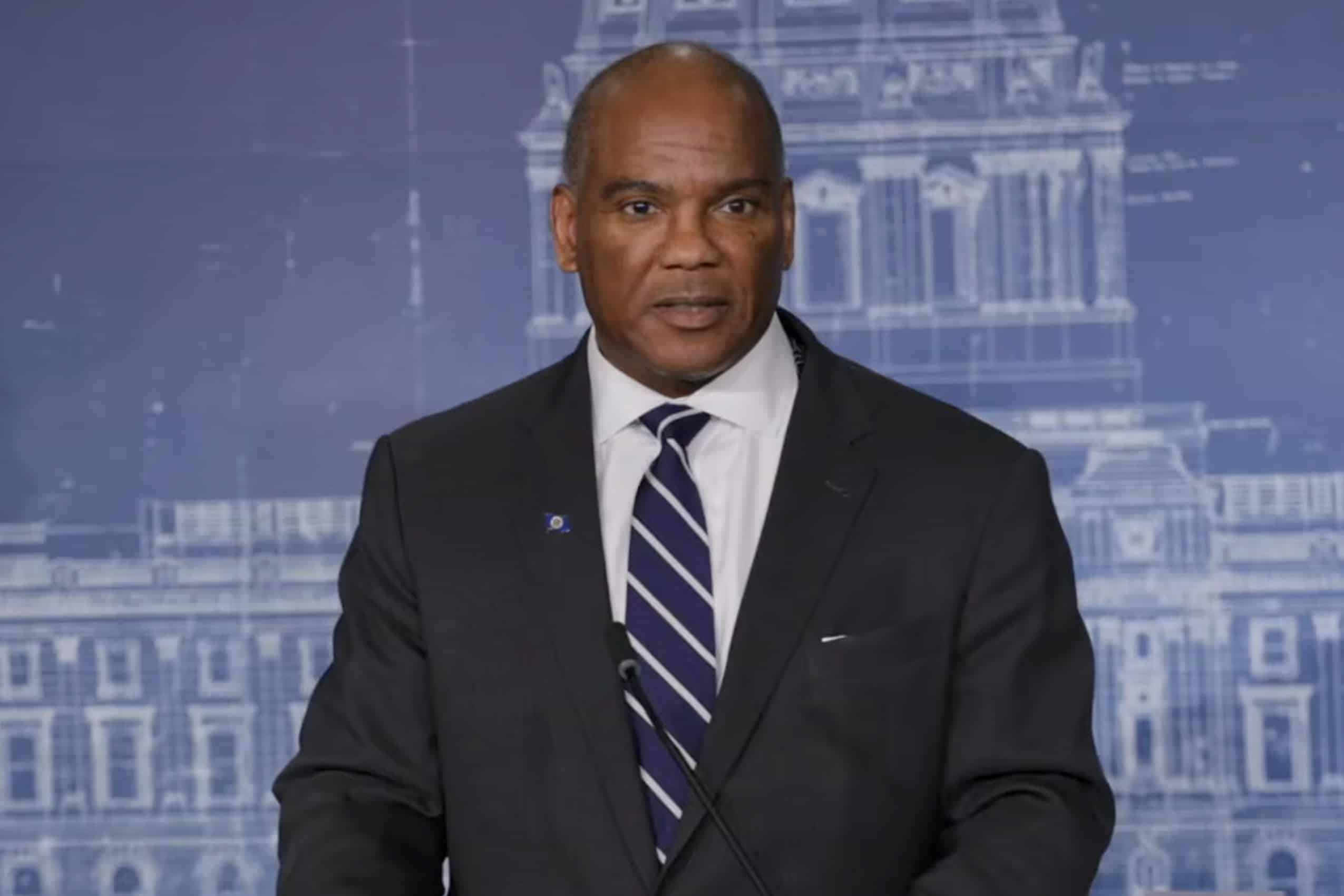
Kendall Qualls is a conservative candidate for governor, U.S. Army veteran, and former business leader. He is also the founder and president of TakeCharge, an organization devoted to uniting Americans of all backgrounds around a shared history and common set of beliefs.
The views and opinions expressed in this commentary are those of the author and do not represent an official position of Alpha News.

Kendall Qualls
Kendall Qualls is the President of TakeCharge, Minnesota which is an organization committed to supporting the notion that the promise of America works for everyone regardless of race or station in life. Mr. Qualls was a Republican candidate for Governor of Minnesota. Prior to his candidacy, he was a health care executive and served in the U.S. Army as an Artillery officer. Mr. Qualls has been married for 36 years and has five children.