




It’s perhaps yet another kind of Somali fraud that we haven’t heard much about, and one that may involve fake businesses, fake injuries, and fake workers’ comp claims.
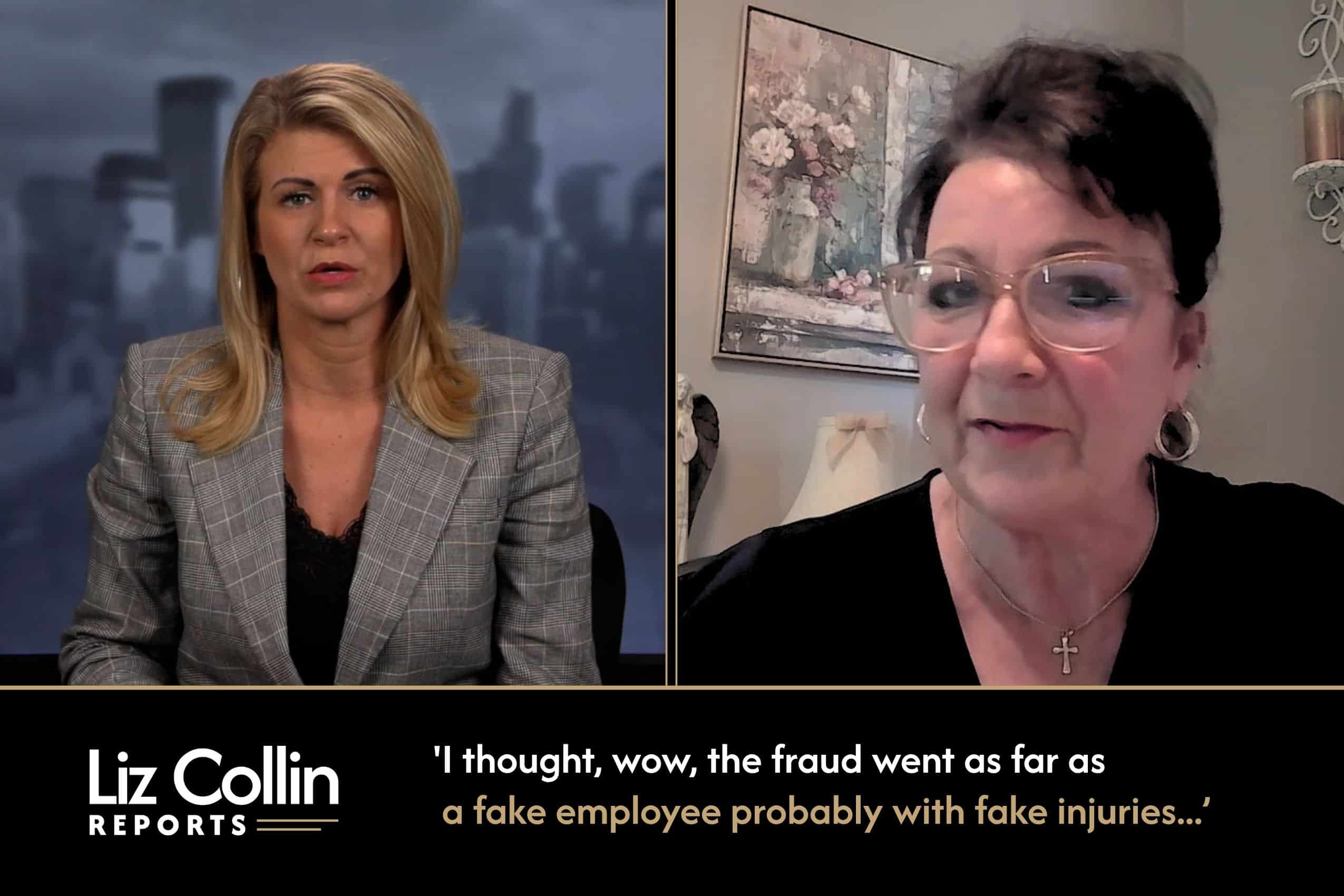
Janeen Balsimo retired in the fall after working as a Minnesota state employee for nearly 30 years. She joined Liz Collin on her podcast.
Balsimo spent her last years at the Department of Human Services (DHS) in the Tort Recovery Unit as a tort specialist.
She said that she wanted to blow the whistle on workers’ comp cases after what she noticed the last couple of years at her job—as hindsight and the exposure of fraud throughout Minnesota provided even more perspective.
Balsimo explained how she “recovered taxpayer dollars where another party should have been paying for the bills. For instance, like auto accidents or work comp. So we would get cases from attorneys representing the client.”
“And then when the case would settle, we would get paid, the attorney would get paid his fees. DHS would get paid our portion. And then the client would be awarded whatever type of injury that they had back, usually got more awards than neck or arm. So they would get anywhere from $20,000 to $150,000 for their award for their injuries,” Balsimo explained.
However, she noticed a strange trend emerging in her normally routine work. “About a year ago, I can remember my caseloads of Somalian cases were going way up. They were going up so much I even confided in another coworker. She had noticed it as well,” Balsimo said.
She said “that’s when I noticed my Somali cases, they all worked at a daycare center, an adult care center, a hospice or an autism center. And I found that really strange and they ended in the LLC because I had to keep typing it over and over and it was just really strange to me.”
“Then I retired a few weeks before the Nick Shirley exposure … and one day I was watching a video and I noticed the names of the businesses he was investigating. And they looked really familiar. Like I almost remember the name of the businesses just by typing them all the time and just dealing with them. And I could not believe it … it all came together, Balsimo said.

“I went, oh my gosh, this was like a wow moment. These cases were probably fraudulent,” she added.
With the benefit of hindsight, Balsimo thought, “wow, so the fraud went as far as the employee was a fake employee, probably with fake injuries, because there is no people at these places.”
“Out of my just work comp cases, because we have other types of injury cases as well, I would say it seemed like 50% of my work comp cases … were Somali cases,” she recalled.
She said it amounted to hundreds of cases, if not more.
“It’s unbelievable the extent of the fraud. It’s actually really disturbing. And it makes sense. I mean, our taxes so high over the last seven years. You know, the taxpayers are the ones that are suffering for this fraud and just everything that’s going on in Minnesota right now,” Balsimo said.
“It’s just not fair to the taxpayer,” she added.
Balsimo said she reached out to a former colleague who is still working in workers’ comp cases after she connected the dots. She said her colleague told her that the unit is aware of her concerns.
However, when Alpha News reached out to DHS to ask if there is any type of investigation into workers’ comp cases, a spokesperson directed Alpha News to Minnesota’s Department of Labor and Industry (DLI).
Neither DHS or DLI directly answered if anyone is investigating Balsimo’s concerns. Instead, DLI explained how the workers’ comp system in Minnesota operates and noted that injured employees are required to submit a form to their insurance company.
“The insurance company will conduct an investigation, which typically includes employer input and medical documentation,” DLI said.
“After the investigation, the insurance company will either admit or deny liability for the claimed injury. Claims that are accepted are paid by the workers’ compensation insurance company and when claims are denied, the worker can appeal the denial and request a hearing by filing a claim petition form with the Court of Administrative Hearings.”
In the meantime, DLI said those who suspect workers’ comp fraud can file a report with the Minnesota Bureau of Criminal Apprehension.

Dr. JC Chaix
Dr. JC Chaix is an editor, educator, and an expert in media studies. He wrote and directed the Alpha News documentary "The Fall of Minneapolis" and "Minnesota v We the People."

Liz Collin
Liz Collin is a multi-Emmy-Award-winning investigative reporter, news anchor, and producer who cares about Minnesota. She is the producer of The Fall of Minneapolis and Minnesota v We the People documentary films, and author of the Amazon best-selling book, They’re Lying: The Media, the Left, and The Death of George Floyd. Her work has prompted important state laws. Yet perhaps most of all, Liz has been giving a voice to the truth—and helping others tell their stories—for more than 20 years.