

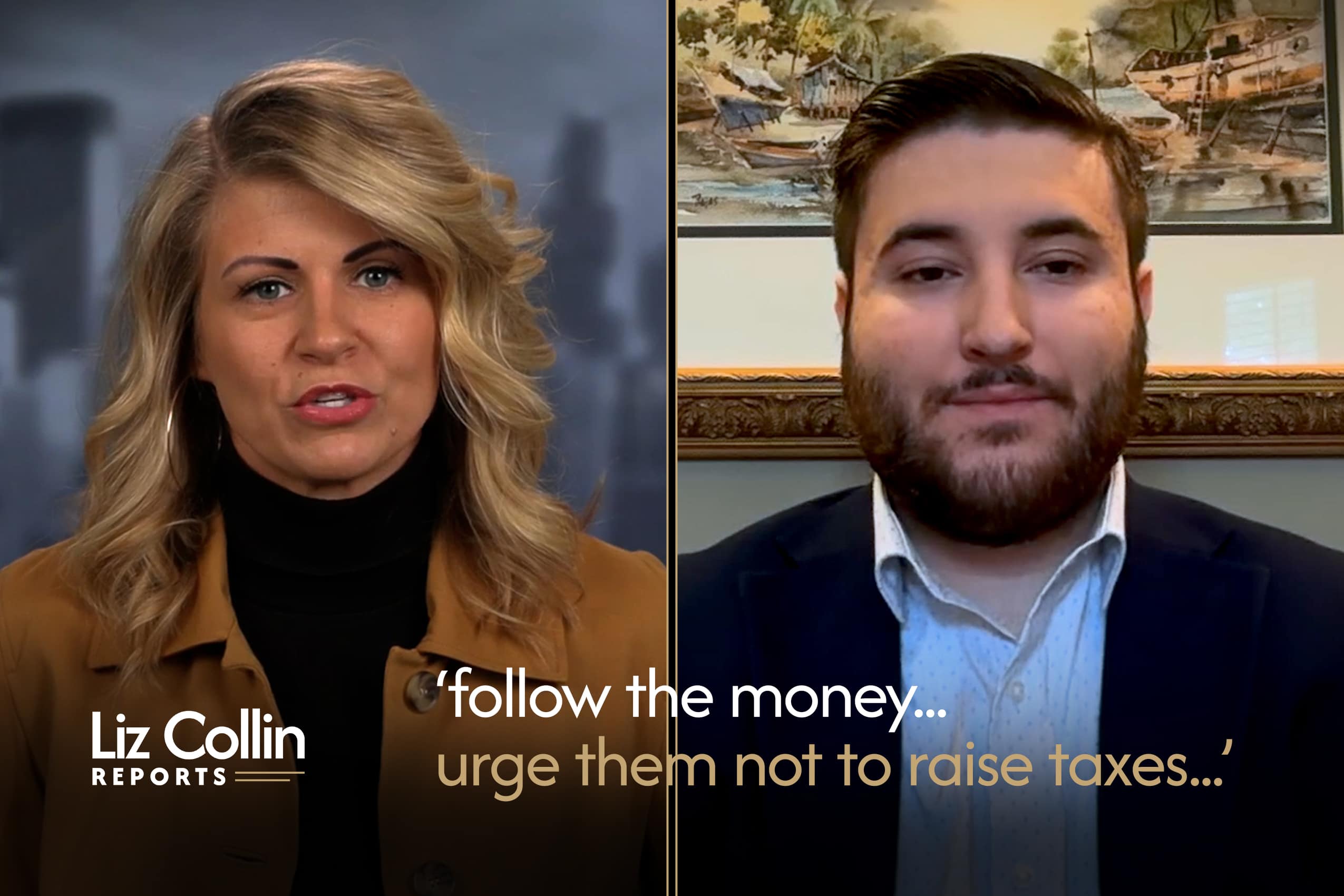
With fraud and property taxes on the rise in Minnesota, one man followed the money on a months-long hunt for answers. Sebastian Stoss joined Liz Collin on her podcast to talk about the discoveries he made after he decided to D.O.G.E. Minnesota’s most densely populated county.
Stoss, whose frustration with rising property taxes has inspired a run for state House in District 36A, uncovered some shocking numbers in Ramsey County. On top of high property taxes—and a proposed 9.75% increase—Stoss found that the county spent $38.4 million on 213 NGOs (non-governmental organizations).
WATCH THE VIDEO:
“This is really a nonpartisan issue. It affects Republicans, Democrats, and everybody in between. In particular, it affects people of my generation, Gen Z, because the housing market is currently at its most unaffordable it’s ever been. People my age don’t really have a hope of buying a house. And it also affects our seniors, who oftentimes are on fixed incomes and can no longer afford to live in the houses they’ve lived in all their lives. So we saw that Ramsey County has the highest property tax rate in the whole state and we were wondering where this money was going,” Stoss said.
Stoss wanted to know more about NGO, or nonprofit, spending. He filed a data request with Ramsey County asking how much money NGOs receive “from the property tax revenue.”
“It took us two months. Two months of repeatedly being ignored, stonewalled. And it was only after we went directly to one of the Ramsey County commissioners where we finally got at least some of the information that we requested,” Stoss said.
“They finally sent us a spreadsheet with some of the information we requested and it turns out that last year, Ramsey County gave a whopping $38.4 million to a total of 213 NGOs,” Stoss said.
 Loading...

 Reload document
  Open in new tab
Meanwhile, Ramsey County has proposed a 9.75% property tax increase.
“People think property taxes are supposed to go towards fixing our roads, our schools and paying for our police and fire departments. The main problem here is that property tax money does not belong in the coffers of NGOs. It just doesn’t. And ultimately, I think that it’s a gross misappropriation of funds. It’s definitely wasteful,” Stoss said.
“This money doesn’t belong to them. It belongs to fix our roads and schools and pay for our police and fire departments. And also Ramsey County doesn’t have any metrics to gauge how these NGOs perform. They don’t measure them in any way from what I can tell,” he added.
Stoss took his findings to Ramsey County commissioners and spoke at a recent meeting. Commissioners did not respond and quickly hurried on to the next meeting item. Stoss says there has been no followup.
“As I said, every step of the way, they were stonewalling us and ignoring us in the hopes that we would go away, which we didn’t. And actually, after I gave that speech to the public budget hearing at Ramsey County, I approached one of the county commissioners to ask, are these NGOs being audited? And she said, ‘there’s oversight, there’s oversight’—Yeah, there’s nothing to see here,” Stoss explained.
Stoss encourages others to take a more active role in questioning where their money goes—no matter where they live.
“Well, people can call their county commissioners. People can find out who their county commissioners are, call them and do what I did. Come to the budget hearings, they’re public. They open the floor for people to speak and urge them not to raise property taxes. In fact, at this hearing that I spoke at, there was a great number of people testifying, urging them not to raise property taxes because people were saying, we are getting priced out of our homes and neighborhoods. We can’t afford this and people feel like they’re not being heard, they’re being ignored,” Stoss said.
Ramsey County responds
In a statement to Alpha News, a Ramsey County spokesperson said the list provided to Stoss was not a compilation of nonprofits “receiving only property tax funding, but rather a record of contracted non-profit organizations that provided services to Ramsey County in 2024.”
Stoss was provided with the list after requesting the “names and dollar amounts of money that goes to non-profit organizations from the property tax revenue.”
“The sources of funding for these contracts can be a mix of levy (property taxes), federal and state grants and/or other resources. It is also not uncommon for funding for contracts to change throughout the contract as new sources become available. For example, a new grant might come to the county decreasing the need to use levy (or property tax) for a particular contract,” the spokesperson said.
“Contracts are organized in our system by type of contract and who we contract with and not funding source and therefore we are unable to pull a list of levy only (or property tax only) funded non-profits per Mr. Stoss’s request and provided him with a list of all our non-profit contracts which we did have available,” he added.
As for oversight of contracts, the spokesperson said “county department staff review the work done by vendors (both nonprofit and for-profit ones) to make sure the county gets what was promised in contracts. All invoices must be reviewed to ensure work was performed before being paid.
“The county has a single audit process, which is conducted by the State Auditor, that examines contracts on a quantitative level (e.g. whether documents were executed correctly),” he added. “You may find the county’s single audit information on the Finance website under ‘Current Financial reports.’”
Additionally, the spokesperson said the county provides data under the Minnesota Government Data Practices Act as promptly as it can and that there is no specific deadline for data requests unless the requester is the subject of the request.
“According to MNGDPA, the county is not required to provide data that the county does not already have and is not required to create data,” the spokesperson said. “When someone requests data from us that we don’t have, we tell the requester that we have no responsive data. In some cases, we may be able to provide something close to what the requester wants if we have that available, as a courtesy.”

Liz Collin
Liz Collin is a multi-Emmy-Award-winning investigative reporter, news anchor, and producer who cares about Minnesota. She is the producer of The Fall of Minneapolis and Minnesota v We the People documentary films, and author of the Amazon best-selling book, They’re Lying: The Media, the Left, and The Death of George Floyd. Her work has prompted important state laws. Yet perhaps most of all, Liz has been giving a voice to the truth—and helping others tell their stories—for more than 20 years.

Dr. JC Chaix
Dr. JC Chaix is an editor, educator, and an expert in media studies. He wrote and directed the Alpha News documentary "The Fall of Minneapolis" and "Minnesota v We the People."