



Content advisory: this article contains graphic details about sexual abuse
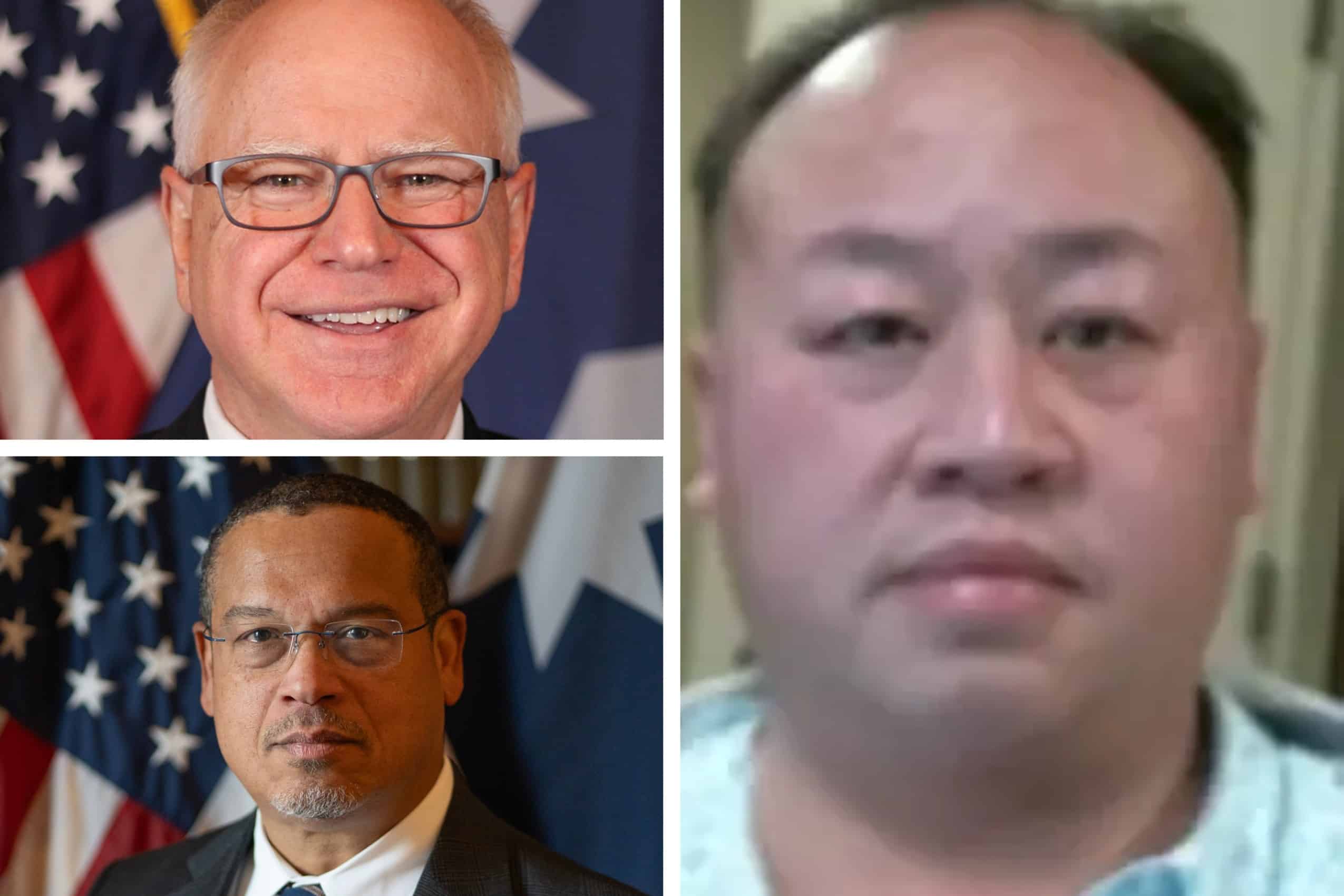
Minnesota Gov. Tim Walz, Attorney General Keith Ellison and Chief Justice Natalie Hudson unanimously voted to pardon a Hmong man from Laos who repeatedly sexually assaulted a 10-year-old girl over a two-and-a-half-year period.
In his clemency application, Tou Lue Vang argued that a pardon could protect him from immigration consequences, writing: “Without the protection a pardon can provide, I face the very real risk of detention and deportation.”
A review by Alpha News of court files and clemency records reveals disturbing details about Vang’s crimes and the statements he made to investigators — raising a question many Minnesotans are asking: Did the state’s top elected officials vote to erase Vang’s criminal record so the Trump administration couldn’t deport him?
Criminal complaint details repeated abuse
According to the 2005 criminal complaint, the girl told investigators that when she was in fourth grade, Vang — who later married her sister — entered her bedroom.
The complaint states: “[Victim] said that Vang sat down beside her, reached his hand into her pants and touched her vagina … She said that he put his fingers inside of her vagina and then pulled down his own pants and asked her to touch his penis, which she did. He then penetrated her vagina with his penis.”
The girl told police the assaults occurred at least “four or five times.”
The complaint also notes: “She recalled one incident when he came into her bedroom, put his penis into her mouth and ejaculated.”
When questioned by police, Vang admitted having sexual intercourse with the victim multiple times.
He also told investigators: “I made a mistake, but this is a minor thing. It is a cultural thing in Thailand to marry and have sex with girls as young as 12.”
He further claimed that the 10-year-old victim “should be arrested also because she was as much at fault.”
Perhaps most shocking, despite pleading guilty to first-degree criminal sexual conduct involving a child under 13, Vang never served a day in prison. Instead, the court imposed a stayed 144-month prison sentence and placed him on probation for 30 years. He was discharged from probation in 2019
Pardon application raises additional questions
In his application for clemency, Vang made clear that immigration consequences were a significant factor in seeking clemency.
“Without the protection a pardon can provide, I face the very real risk of detention and deportation.”
Vang also wrote that he would have made different choices if someone had taught him “that a relationship must occur between two consenting adults aged 18 or older.”
Vang argued that he was no longer the person he once was and described his work history, including a job as a Walmart cashier where he said he developed “strong customer service and interpersonal skills.”
Multiple news outlets reported that the victim wrote a letter supporting Vang’s pardon. However, that letter was not included in the publicly released version of Vang’s clemency application reviewed by Alpha News.
The Star Tribune and FOX 9 each reported that Walz’s office supplied them with a copy of the letter. In it, the victim reportedly wrote: “What happened to me was wrong, but I have had many years to think about this. I have made my peace with it. I forgive him.”
Ellison challenger says pardon ‘makes a conviction disappear’
Ron Schutz, the Republican-endorsed candidate for attorney general, said he was “shocked” when he learned that the Minnesota Board of Pardons voted to grant clemency to Vang.
“When I first read that the Minnesota Board of Pardons, which includes Keith Ellison and Tim Walz, granted a pardon to Tou Vang who had been convicted of sexually abusing a ten-year-old girl for two years, I was shocked,” Schutz told Alpha News.
Schutz noted that Vang never served prison time despite pleading guilty to first-degree criminal sexual conduct.
“A pardon has the effect of setting aside a conviction. From a legal standpoint, it is like waving a magic wand and declaring, ‘this two-year period of sexually abusing a ten-year-old girl never happened,'” Schutz said.
While acknowledging that Vang appears to have stayed out of trouble since his conviction, Schutz said rehabilitation alone is not justification for granting clemency.
“Mr. Vang argues that he has become a good citizen,” Schutz said. “Mr. Vang’s reward for being a good citizen is that on March 15, 2019, he was discharged from probation and had his civil rights restored. But merely being a good citizen is not the basis for a pardon.”
Instead, Schutz said the timing of the pardon and the reasons outlined in Vang’s clemency application point to another explanation.
“I think the answer can be found in Mr. Vang’s stated reason for seeking the pardon: ‘Without the protection a pardon can provide, I face the very real risk of detention and deportation,'” Schutz said, referencing Vang’s application.
Ellison has said his vote was not intended to shield Vang from deportation. Schutz said he doesn’t buy that explanation.
“Keith Ellison claims his vote to pardon Mr. Vang was not to protect him from deportation. If you believe that, I have a bridge in Brooklyn that I’d like to sell you.”
Schutz added that had he been serving as attorney general, he would have voted differently.
“If I were Attorney General, I would not have voted to pardon Mr. Vang.”
Immigration status
Vang’s pardon drew the ire of the U.S. Department of Homeland Security (DHS), which said it could prevent his removal from the country and accused Minnesota leaders of protecting “a criminal illegal alien.”
According to court records and DHS, Vang arrived as a refugee from Laos in 1994 and later became a lawful permanent resident.
After his 2005 conviction for first-degree criminal sexual conduct, he lost that status, and a federal immigration judge ordered his removal in 2006. Because Laos historically refused to accept many deportees, Vang remained in the United States under federal supervision for nearly two decades, The New York Times reported.
By 2026, Vang wrote in his clemency application that he faced “the very real risk of detention and deportation” and said a pardon would allow him to remain in the United States with his wife, children and extended family. DHS has since said the pardon could thwart his removal from the country.

Jenna Gloeb
Jenna Gloeb is an Edward R. Murrow Award-winning journalist, media producer, public speaker, and screenwriter. Most recently, she worked as a reporter and on-air host for CCX Media. Jenna is a Minnesota native and resides in the Twin Cities with her husband, son, daughter, and two dogs.