




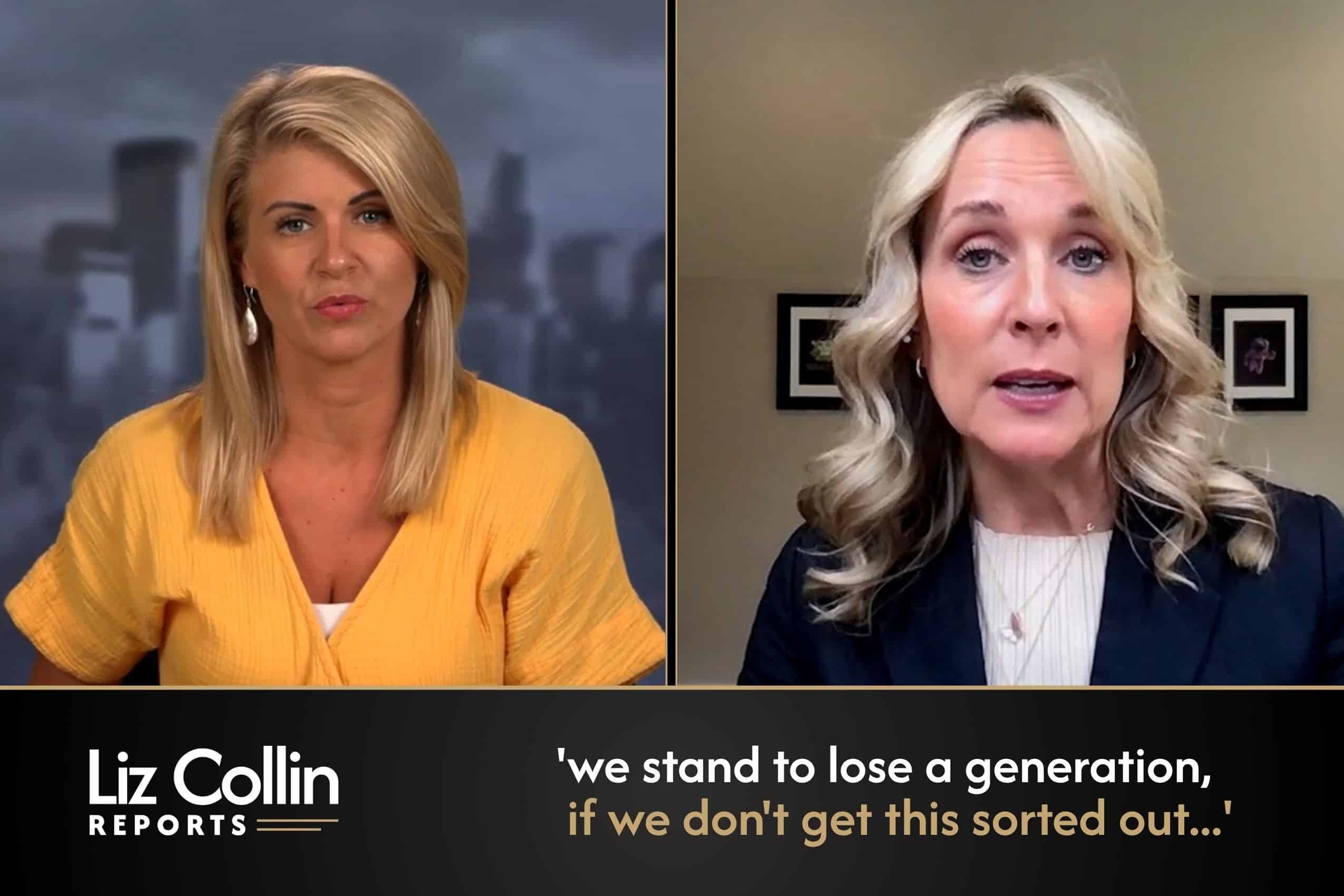
Heather Bacchus, who lost her son Randy Michael to cannabis-induced psychosis and suicide at the age of 21, joined Liz Collin on her podcast.
She’s been a brave voice in Minnesota, battling through her own grief to help others after her family lost their son.
WATCH:
While the issue may be controversial, Bacchus pointed out several facts that she feels parents and the public should understand.
She explained a key difference between marijuana and hemp: “There’s marijuana and then there’s hemp, and marijuana contains THC, which gets users high.”
According to the U.S. Centers for Disease Control and Prevention (CDC), “hemp is defined as any part of the cannabis sativa plant with no more than 0.3% of tetrahydrocannabinol (THC), the mind-altering substance in cannabis.”
However, in talking about the levels of THC in cannabis products being marketed today, Bacchus said, “THC in yesteryear’s plant … was right around 3%. And the THC that’s in marijuana today … you’d be hard pressed to find much under 15% in a dispensary.”
She said that some products available in Minnesota “go up to 80% or more.”
“I think it’s essential that parents know that today’s product is not nearly the same product that was around when they were young or grandparents when they were young. And it’s much stronger and has much more risk for our youth to be using and adults, too,” Bacchus said.
She also noted that along with drinks, gummies, oils and topicals, and other kinds of THC products, “some of the dabs and waxes in other parts of the country go up to 99% THC.”
Working to educate students, parents, and lawmakers about THC products
Bacchus spoke about her efforts to educate students and parents alike — using her son’s story as part of her message.
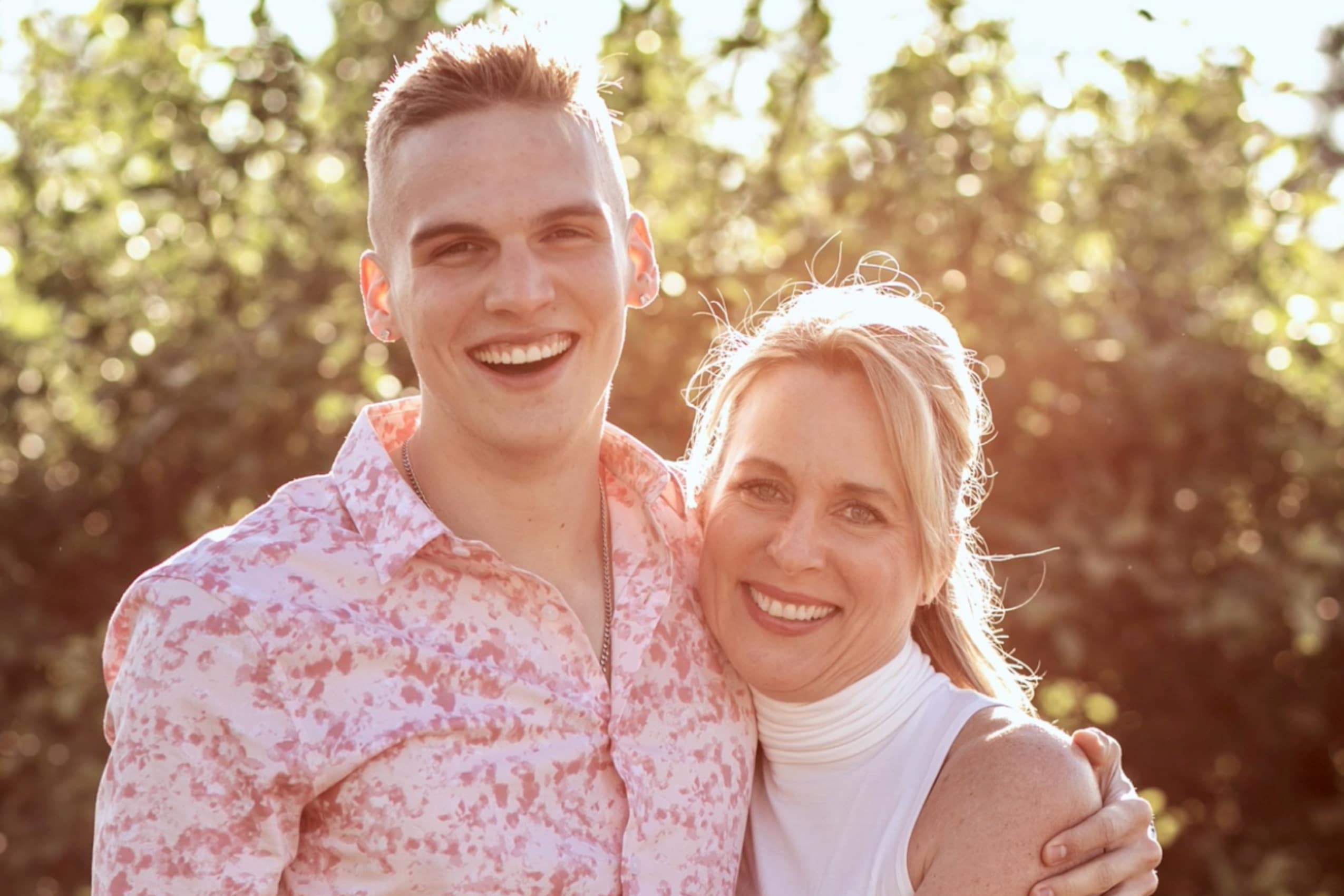
“Parents are a little harder to get into the room because they’re so busy, but we go to schools and we try to educate kids —and share our son’s story with the hopes that they’ll take what he has to share and the reality that really this did cause psychosis for him. It increases anxiety and depression. And it really unraveled his life.”
Toward reaching the goal of greater awareness, Bacchus explained how her nonprofit organization, Be Extraordinary Be You, aims to educate others about “the real harms and true dangers of today’s highly potent Marijuana (THC) on our youth, our families and our communities.”
She also talked about how her efforts involve educating lawmakers, especially about the need for warning labels and other safeguards in the cannabis industry.
Back in 2023, Heather and her husband Randy were front and center at the Capitol in St. Paul, urging Minnesota legislators not to legalize marijuana in Minnesota.
In talking about her efforts with the Minnesota legislature since then, particularly with warning labels and other safeguards, Bacchus said, “Again, it was brought forth this year in the session.”
However, she pointed out that, “the warning labels, they passed through the Senate. They also passed that you couldn’t put any cannabis business within 500 feet of a hospital … but then they fell off during the committee hearings.”
Part of the problem, according to Bacchus, is that the legislature wasn’t “really open at all really to putting any potency caps in. And this is really what we need to do in order to protect our public health.”
New documentary takes on the THC business
Bacchus also spoke about how she and her husband took part in a recently released documentary called THC INC.
“My hope is that people will come to the documentary with an open mind and heart and hear really how the marijuana industry is really no different than the tobacco industry,” Bacchus said.
“They used to sell tobacco that it was healthy and good for you. They’re doing that same thing with marijuana. They put misleading information out there,” she added.
Bacchus explained that thousands of studies done in the U.S., Canada, and Europe show “the detriment of high-potency THC products. And that’s really anything that’s above 15% … and now the products range from 16% up into 99% THC.”
“With the higher potency, there comes greater risk,” she added.
Bacchus hopes that people will watch the documentary, continue the conversation afterward, and help “to educate our lawmakers.”
“We need to put good policy in place to protect our public health, our youth — or we stand to lose a lot of people, young people, and really a generation if we don’t get it straightened out,” she said.
‘A Higher Love’
In speaking with Collin about her work, Bacchus also mentioned her book “A Higher Love.”
“My goal in writing the book was initially just to not forget my son. But then when we learned all this information about today’s product, we wanted to share that information,” she said.
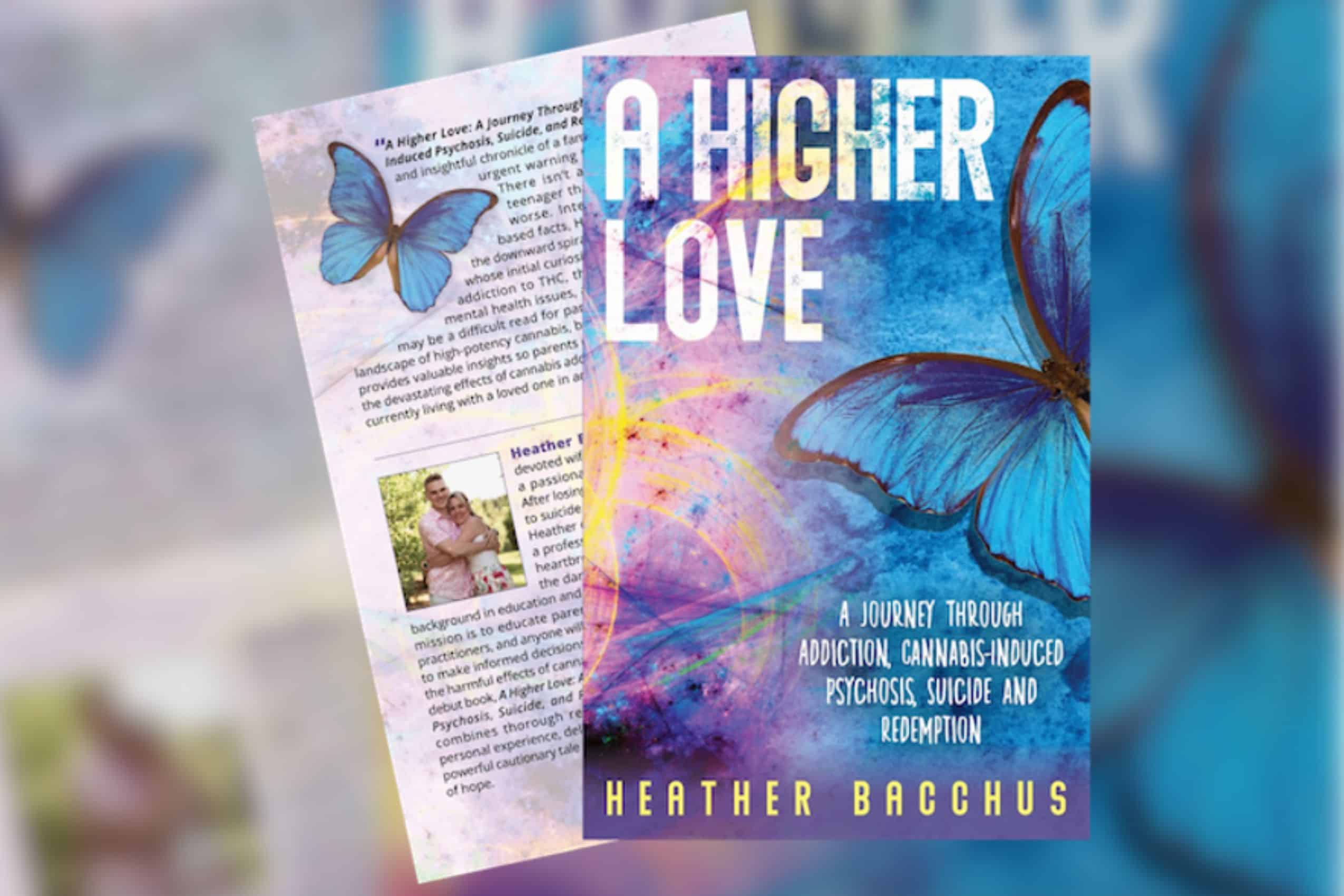
“My hope is that by sharing what we wish we would have known five years ago, we will help to save some other people’s lives,” she added.
She said her family is happy to connect with others to help educate kids and parents about the cannabis industry.
If you or someone you know is struggling with thoughts of suicide, there is help available 24 hours a day. Call the National Suicide Prevention Lifeline at: 988.

Liz Collin
Liz Collin is a multi-Emmy-Award-winning investigative reporter, news anchor, and producer who cares about Minnesota. She is the producer of The Fall of Minneapolis and Minnesota v We the People documentary films, and author of the Amazon best-selling book, They’re Lying: The Media, the Left, and The Death of George Floyd. Her work has prompted important state laws. Yet perhaps most of all, Liz has been giving a voice to the truth—and helping others tell their stories—for more than 20 years.

Dr. JC Chaix
Dr. JC Chaix is an editor, educator, and an expert in media studies. He wrote and directed the Alpha News documentary "The Fall of Minneapolis" and "Minnesota v We the People."