


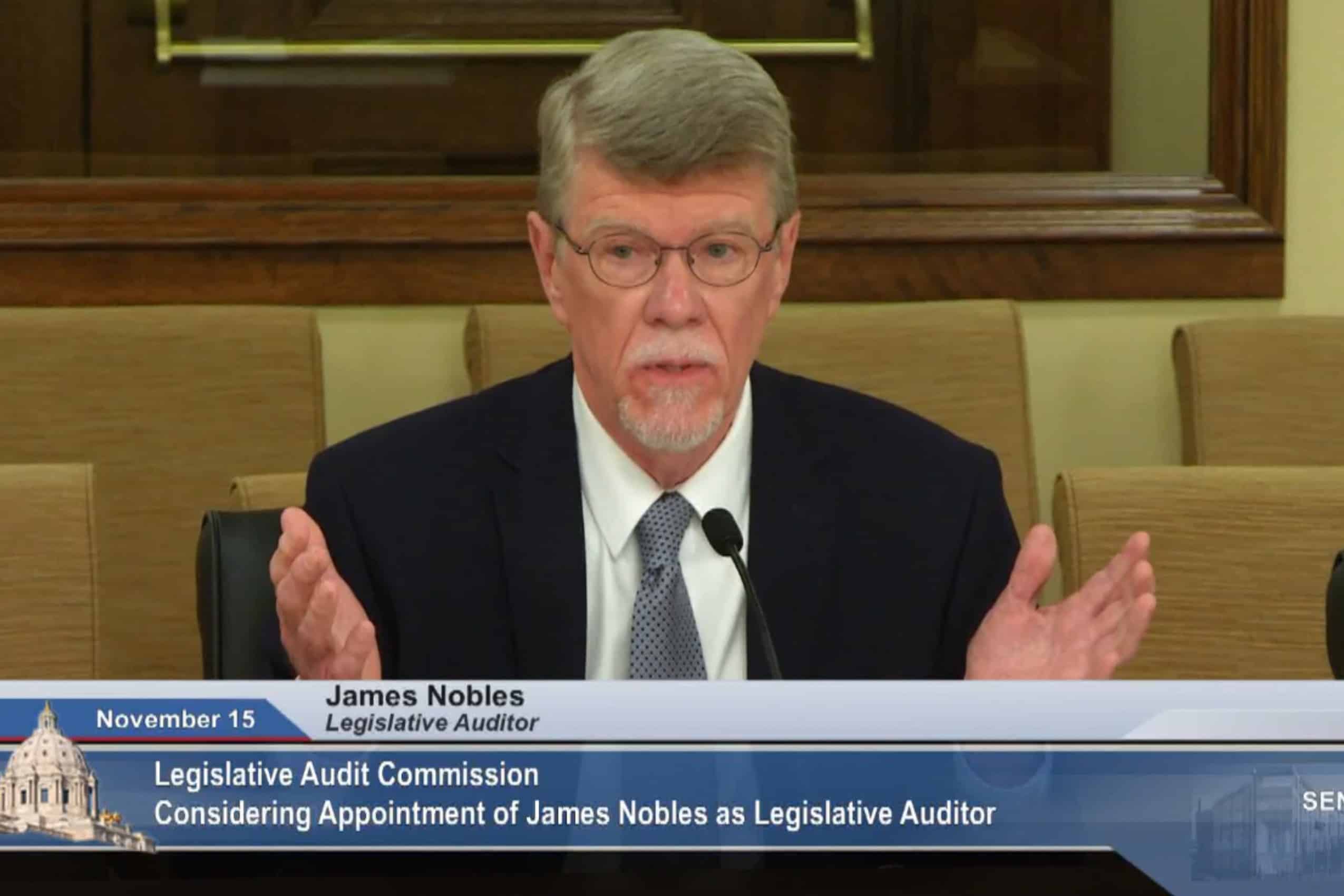
The late House Speaker Melissa Hortman privately told Minnesota’s longtime legislative auditor that some Democrats believed his office was being too hard on certain state programs — especially those run by Somali community organizations.
That’s according to Jim Nobles, who led the Office of the Legislative Auditor (OLA) for 38 years. In a recent Star Tribune op-ed, Nobles says Hortman acknowledged to him that some members of her caucus felt OLA reports were “subjecting human service programs to too much criticism.”
Nobles says Hortman also confirmed that DFL House committee chairs had been instructed not to give OLA’s fraud reports public hearings — even as she conceded, as a former prosecutor, that the fraud was real and needed to be investigated.
Former auditor blasts state over weak safeguards
In Nobles’ op-ed, he calls out what he described as a stunning lack of financial safeguards that has let millions in taxpayer dollars slip away — cheating both taxpayers and the vulnerable families those programs were designed to serve.
Nobles writes that “the theft of millions of tax dollars from Minnesota programs resulted not just from the actions of thieves but also from the failure of state executive officials to implement basic financial safeguards recommended in numerous audit reports for several years.”
Minnesota’s four executive offices — governor, attorney general, secretary of state, and state auditor — have all been controlled by Democrats since 2011, in some cases longer. Since 2019, the offices have been held by Democrats Tim Walz, Keith Ellison, Steve Simon, and Julie Blaha, respectively.
Nobles points to the Minnesota Department of Human Services (DHS) and other state agencies that entrusted community organizations to manage critical programs without verifying their trustworthiness or the validity of their claims.
As Nobles notes, these organizations claimed to serve “hundreds, even thousands, of people in their communities,” but investigations — primarily by federal authorities — revealed widespread theft.
The consequences of this “negligence” are profound, as Nobles suggests.
“As a result,” he writes, “families — particularly Somali families — did not receive the food, child care or other state-funded services that they needed and that taxpayers had paid for. Added to this betrayal, people in these community organizations were using the stolen money to buy expensive homes, automobiles and other personal items for themselves.”
Investigators have peeled back layers of corruption in Minnesota’s public programs — especially those tied to child care, food, and housing aid. The now-infamous $250 million Feeding Our Future scandal remains the most striking example.
“This egregious lack of oversight by state officials,” Nobles adds, “has also deepened public mistrust in government.”
Lawmakers downplayed the problem
Nobles said the Legislature also shares blame.
“While executive officials were obviously negligent, less obvious is the fact that some key legislators tried to minimize the fraud problem and shield the Department of Human Services and the Walz administration from criticism,” he says.
When the OLA issued a report on child care fraud, the then-chair of the House Human Services Committee dismissed it, saying, “there’s always going to be fraud,” and refused to let Nobles present the findings.
Nobles claims that another legislator, a leading supporter of publicly funded child care subsidies, accused the OLA of being too harsh, calling references to proven fraud cases “unnecessary and harmful.”
With state leaders unwilling to act, Nobles credits federal authorities for stepping in.
“I applaud their willingness to hold people and organizations accountable for their theft of taxpayer money,” he writes. “Yes, they were just doing their job, but they deserve appreciation because state officials failed to do theirs.”

Jenna Gloeb
Jenna Gloeb is an Edward R. Murrow Award-winning journalist, media producer, public speaker, and screenwriter. Most recently, she worked as a reporter and on-air host for CCX Media. Jenna is a Minnesota native and resides in the Twin Cities with her husband, son, daughter, and two dogs.