


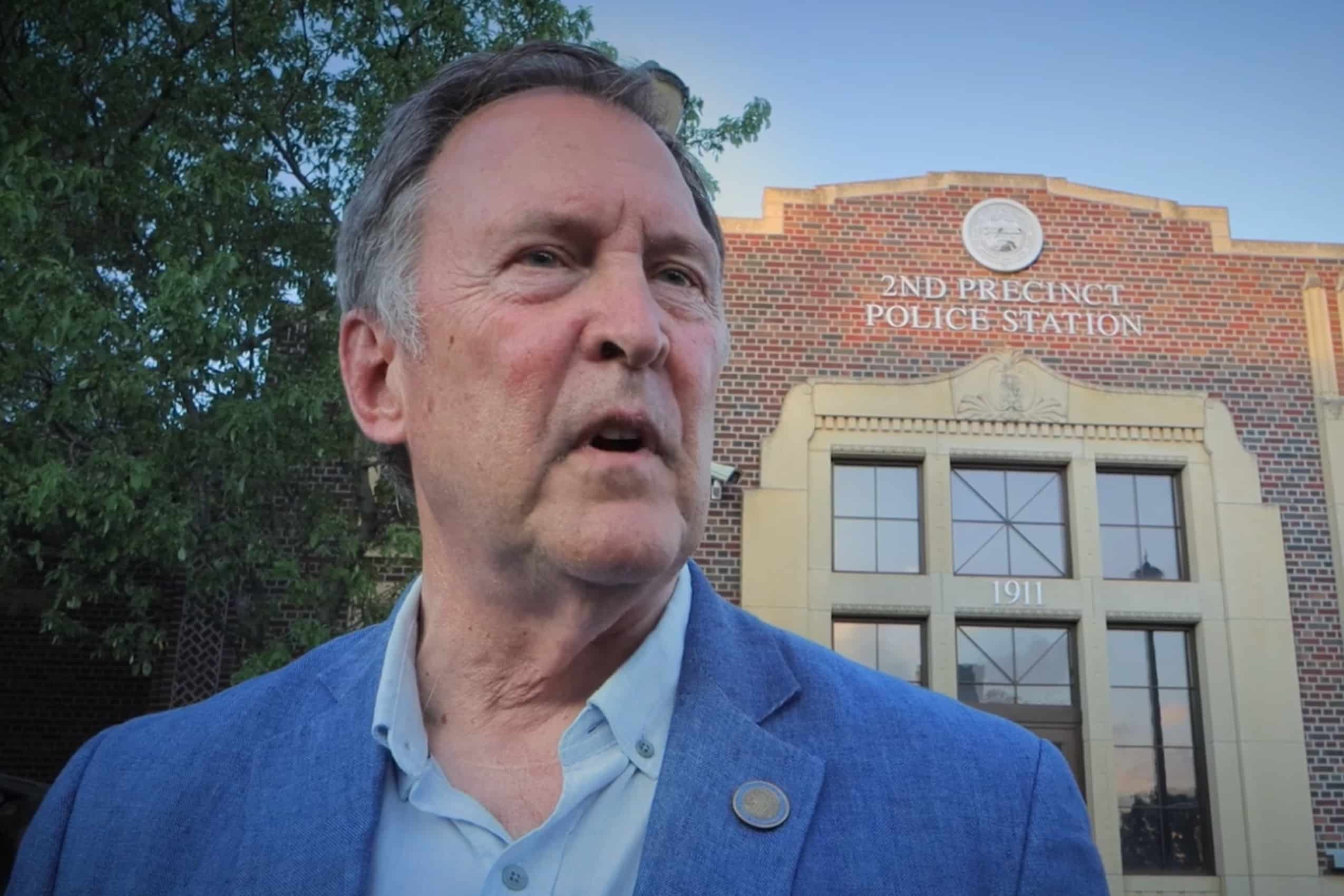
Minneapolis City Council Member Michael Rainville says the city is facing a wide array of challenges which include a budget crisis, council dysfunction, and public safety issues.
Rainville, a second-term city council member who belongs to the council’s more moderate wing, described those challenges in an interview on the Better Minneapolis Podcast last week and warned that the city is at “a real turning point.”
Minneapolis’ budget crisis
Perhaps most pressing is what Rainville referred to as the city’s “budget crisis.” According to Rainville, Minneapolis is looking at a 13% increase in overall property tax collection next year if the city decides to fund all of its operations at current levels.
“We can no longer keep raising property taxes,” Rainville said. “So every renter, every homeowner is paying the price for our overspending. And especially the low income and the fixed income residents of our city, we’re forcing them out.”
Rainville explained that Minneapolis’ property tax collection was at its height after the city hosted the Super Bowl in 2018 and the NCAA tournament in 2019.
“Everything was working,” he said. “Hotels were full. Restaurants were full. There were 36,000 people employed just in the hospitality industry. Crime was low. It was all working. And then we had the double whammy of the COVID and the riots and it’s just a different city now.”
Rainville explained that the city’s staffing and programming levels expanded during the plentiful years, but “the money’s not there anymore.” He said the downtown area alone has lost $54 million in property tax revenue in recent years.
“That’s why your taxes have gone up, mine, and renters’ rents keep going up because the property tax has to be paid. So, it’s a mess, right?” he said.
Rainville explained that Minneapolis Mayor Jacob Frey will unveil his proposed city budget in August and the city council will begin reviewing the budget and listening to budget requests from city departments. Rainville said the 13% property tax increase is “unacceptable” and “at the end of the day, we’ve got to cut the budget.”
Dysfunction on the Minneapolis City Council
Rainville, who described himself as belonging to the “fiscally conservative wing” of the city council, also called out the dysfunction on the city council.
At present, the council is divided between more moderate DFLers and a far-left, Democratic Socialists of America (DSA)-aligned faction. Earlier this year, the council actually hired a firm to help council members improve their working relationships and collaboration.
Discussing the decision to hire the firm, Rainville said, “It’s a really good idea because we are not serving our taxpayers well or our visitors or the business community. It’s just not working. And the biggest reason it’s not working is the conflicts we have.”
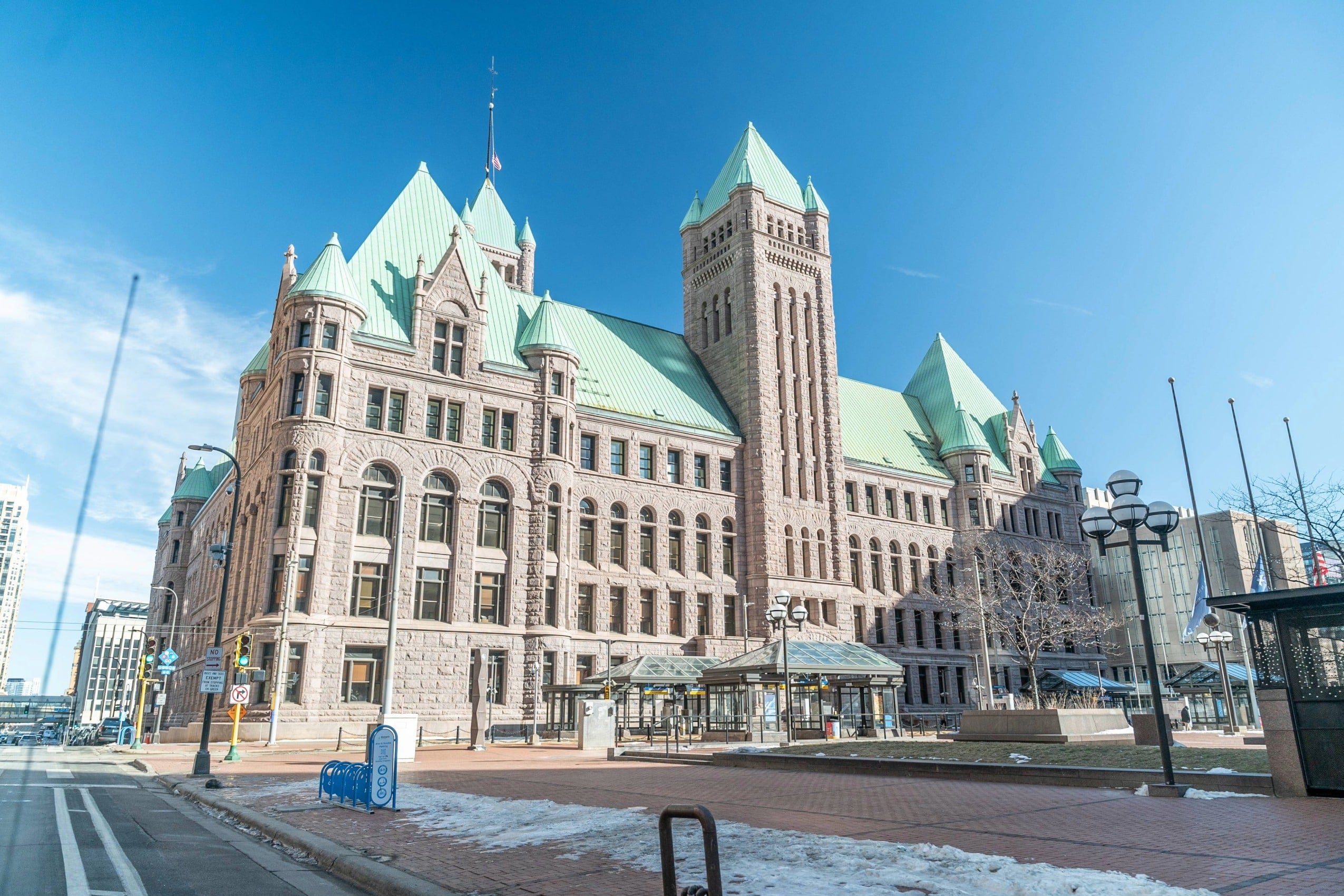
Throughout the interview, Rainville described a council where members do not have much life experience, moderate members are kept out of key positions, and council meetings are marked by confusion about process, last-minute changes, and stress on staff.
“It’s not normal,” Rainville said of the dysfunction. “And it speaks to the inexperience and the lack of following the decorum and the rules of council.”
During the interview, Rainville said the council has been impacted by members who “aren’t doing their homework” which leads to disruptions to the normal legislative process.
“It’s very chaotic, and it puts an incredible stress on the city staff, whether it’s the clerks or the attorneys or just, you know, our [recreation] services, police, fire.” Rainville said. “It’s not a good way to run a city.”
Public safety challenges
The second-term council member also discussed the city’s well-documented public safety problems. In his comments, Rainville compared Minneapolis to Chicago, saying the city has come to expect that “It’s a weekend. There’s going to be shootings.”
Rainville said the city had over 900 police officers before the death of George Floyd and now the city has just over 600 officers. However, he noted that approximately 80 of those officers have been on the job for only a year and a half or less.
“It’s getting better, but way too slow,” Rainville said of the city’s law enforcement capability. “We’re not near the ability to help our citizens be safe compared to 2020.”
The Minneapolis City Council member also warned about the lack of 911 responders, saying he went to a roll call at a precinct that morning and there were just five 911 responders. He noted that the city’s fire department response time is worse than the national average.
Additionally, the city is without a current police chief after the resignation of Brian O’Hara earlier this year. Rainville said the city has hired a firm to search for a new police chief.
A major topic of discussion during Rainville’s interview was the city council’s vote against a no-cost, 75-day pilot program to study the use of drones in law enforcement response.
Rainville said major cities such as New York, Atlanta, Denver, and Philadelphia use drones to help police respond to calls. According to Rainville, police drones can respond to crime scenes faster than police officers and learn about the situation before an officer arrives.
In fact, Rainville said a Minneapolis drone program would have prevented the shooting death of Officer Jamal Mitchell in 2024. Officer Mitchell was shot and killed by an active shooter who Mitchell mistook for a wounded bystander.
“If there would have been a drone out there, they would have saw what happened and that [the shooter] was the shooter,” Rainville said.
However, the Minneapolis City Council voted against using the drone pilot program in a 6-6 vote. Far-left council members voted against the drone program and expressed concerns about surveillance of citizens and the drone company’s relationship with ICE.
“What ICE did here in Minneapolis was terrible, but it has nothing to do with the drone pilot project to see if it can help our local public safety,” Rainville said, criticizing how the debate unfolded over the drone pilot program.
“And that’s part of the frustration of this council,” he added. “They pull everything all at once. They don’t stick to the subject being debated. They justify their votes not based on the facts in front of them, but things that happened in the past or could happen.”

Rachael Van Rossum
Rachael Van Rossum is a journalist and author who studies political science in the Twin Cities. She previously interned with the Illinois House of Representatives and recently published her debut fantasy novel "The Hellburner of Sovi." Rachael is passionate about telling compelling stories and bringing to life the voices of political figures, athletes, and members of her community through engaging writing. She is the Alpha News journalism fellow for the summer of 2026.

Luke Sprinkel
Luke Sprinkel previously worked as a Legislative Assistant at the Minnesota House of Representatives. He grew up as a Missionary Kid (MK) living in England, Thailand, Tanzania, and the Middle East. Luke graduated from Regent University in 2018.