


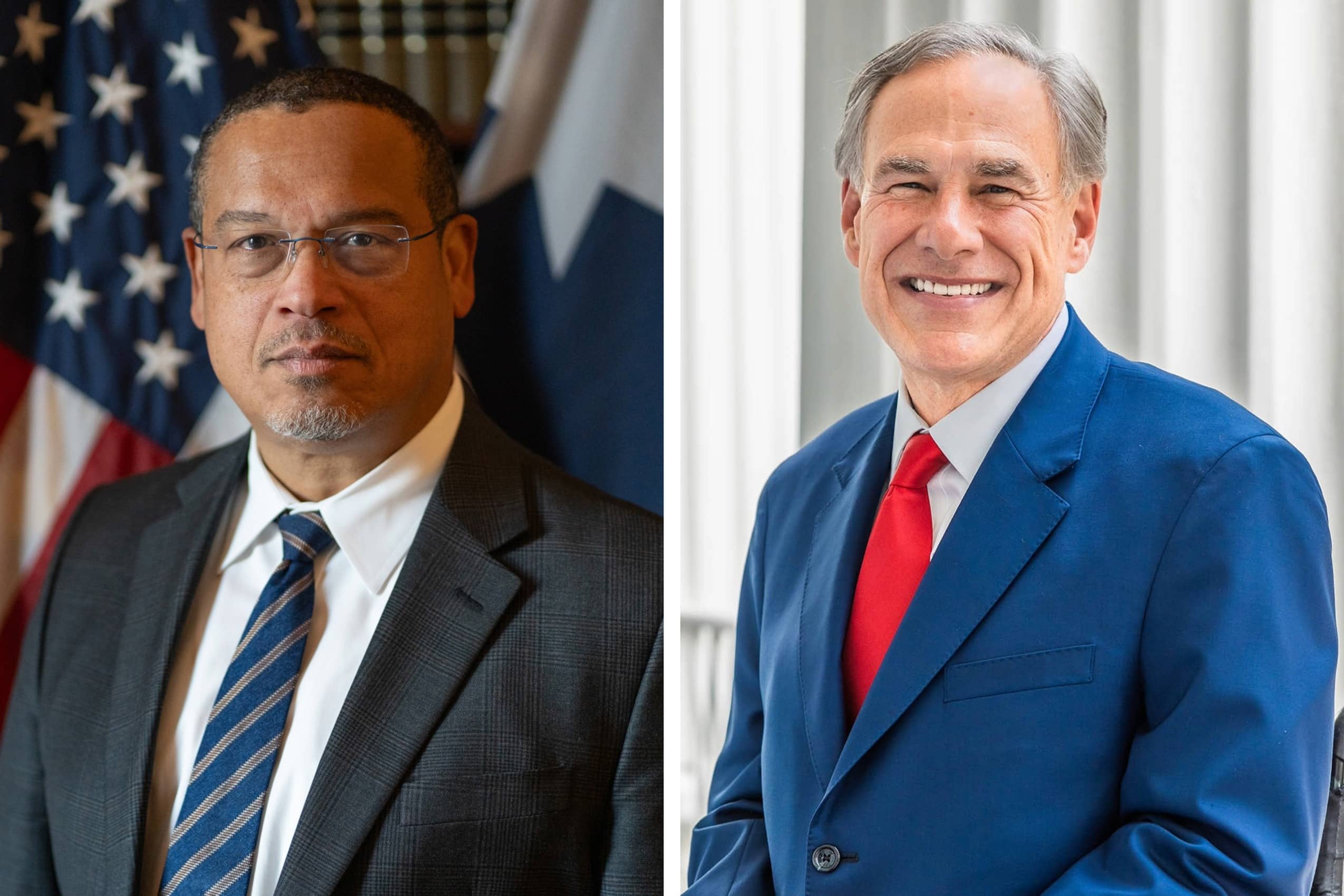
(The Center Square) – Minnesota Attorney General Keith Ellison sued Texas Gov. Greg Abbott to force the extradition of an Immigration and Customs Enforcement agent accused of assault and falsely reporting a crime.
Agent Christian Castro was arrested May 29 in Texas, but Abbott has refused to sign an extradition to send Castro to Minnesota to stand trial.
Ellison sent a letter to Abbott on Aug. 13 stating that he would face legal action if he did not comply.
“Abbott’s refusal to extradite Castro is unconstitutional and violates federal law and Texas law,” Ellison said in a statement. “I will not stand for that, so I’m taking Abbott to court. Christian Castro will stand trial in Minnesota.”
Castro was charged on May 18 with second-degree assault and falsely reporting a crime after a Jan. 14 action in Minneapolis where Castro is accused of firing a gun at the front door of an occupied home.
One bullet struck a victim in the leg and then went into a child’s wall in the home, according to the criminal complaint.
Castro is accused of falsely claiming that a crime had been committed and is accused of providing false information to an officer on the scene.
Minnesota’s extradition request was sent on June 2 from Gov. Tim Walz to Abbott.
“Gov. Abbott’s withholding of the rendition warrant threatens to deprive Minnesota of its constitutional right to Castro’s return,” Ellison’s office said in a statement. “Furthermore, because Texas law mandates Castro’s discharge from custody after 90 days, Abbott’s continued refusal to extradite creates a substantial risk that Castro will be released from custody and flee Texas to avoid prosecution in Minnesota.
“Such an outcome is directly contrary to the intended purpose of the U.S. Constitution’s Extradition Clause of enabling states to bring offenders to trial as swiftly as possible.”