




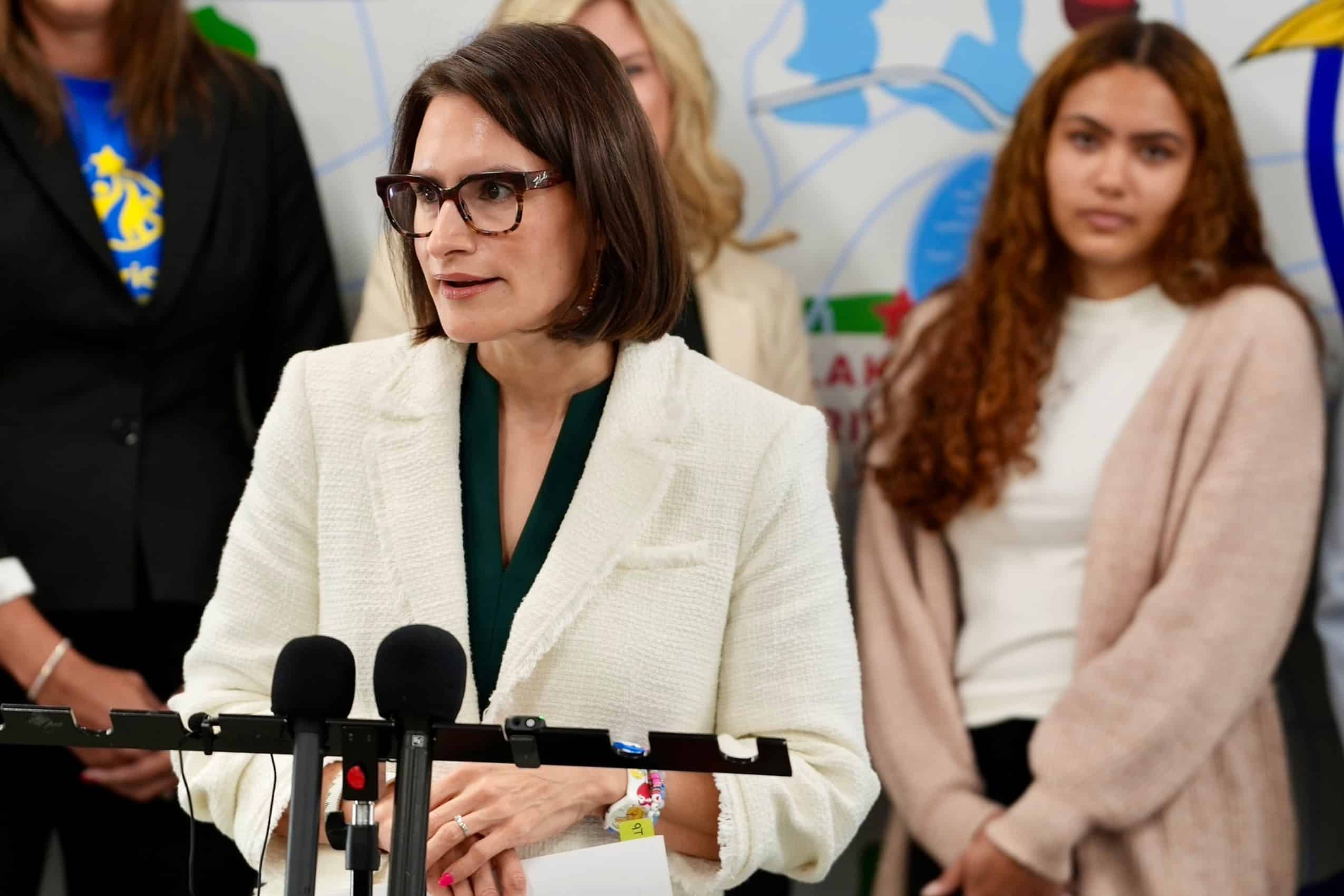
Long before becoming Minnesota’s lieutenant governor and the DFL nominee for U.S. Senate, Peggy Flanagan pushed Minneapolis Public Schools to restrict military recruiters’ access to students, arguing the military disproportionately targeted poor students and students of color.
“Everyone knows military recruiters are going after students that are poor and students of color. That’s many of our students,” Flanagan said during a July 2005 Minneapolis school board discussion, according to a Star Tribune report published at the time.
The comments are part of Flanagan’s early political record that takes on new relevance as she seeks to represent Minnesota in the U.S. Senate.
Flanagan won the DFL nomination for the open Senate seat in August and will face Republican Michele Tafoya, a former longtime sports broadcaster, in November. The two are competing to succeed retiring Democratic Sen. Tina Smith.
Flanagan’s early years in elected office
Flanagan made the military recruitment remarks during her first year on the Minneapolis Board of Education.
She had been elected to the board in November 2004, receiving more than 71,000 votes and finishing first among the candidates competing for three at-large seats.
The following summer, the board found itself debating how military recruiters interacted with students.
According to the July 27, 2005, Star Tribune article, Minneapolis Public Schools had received complaints from students and parents about what they described as aggressive military recruitment efforts.
A South High School graduate told the newspaper she had completed a form opting out of military recruitment but nevertheless received a recruiting call.
The article centered in part on requirements contained in the federal No Child Left Behind Act. Schools receiving federal funding were required to provide military recruiters access to certain student directory information while also allowing parents and students to opt out.
The Star Tribune later appended a correction to its original article clarifying the type of student information schools were required to provide. According to the correction, recruiters received access to directory information, typically including names, addresses and telephone numbers.
Board members discussed ways to make the opt-out process more visible, including putting forms online, making them available in school offices and printing them in multiple languages.
It was during that discussion that Flanagan offered a broader criticism of military recruiting.
“Everyone knows military recruiters are going after students that are poor and students of color,” she said.
Alpha News contacted the Flanagan campaign asking whether she still believes military recruiters disproportionately target poor students and students of color, but her campaign did not respond.
“Only a socialist like Flanagan who hates America and wants to make our country a third world hellhole would slander our brave men and women in uniform,” said National Republican Senatorial Committee Regional Press Secretary Nick Puglia.

Jenna Gloeb
Jenna Gloeb is an Edward R. Murrow Award-winning journalist, media producer, public speaker, and screenwriter. Most recently, she worked as a reporter and on-air host for CCX Media. Jenna is a Minnesota native and resides in the Twin Cities with her husband, son, daughter, and two dogs.