

Two members of Congress have introduced a bill that would require refugee resettlement nonprofits to disclose key information about the total number of noncitizens they support.
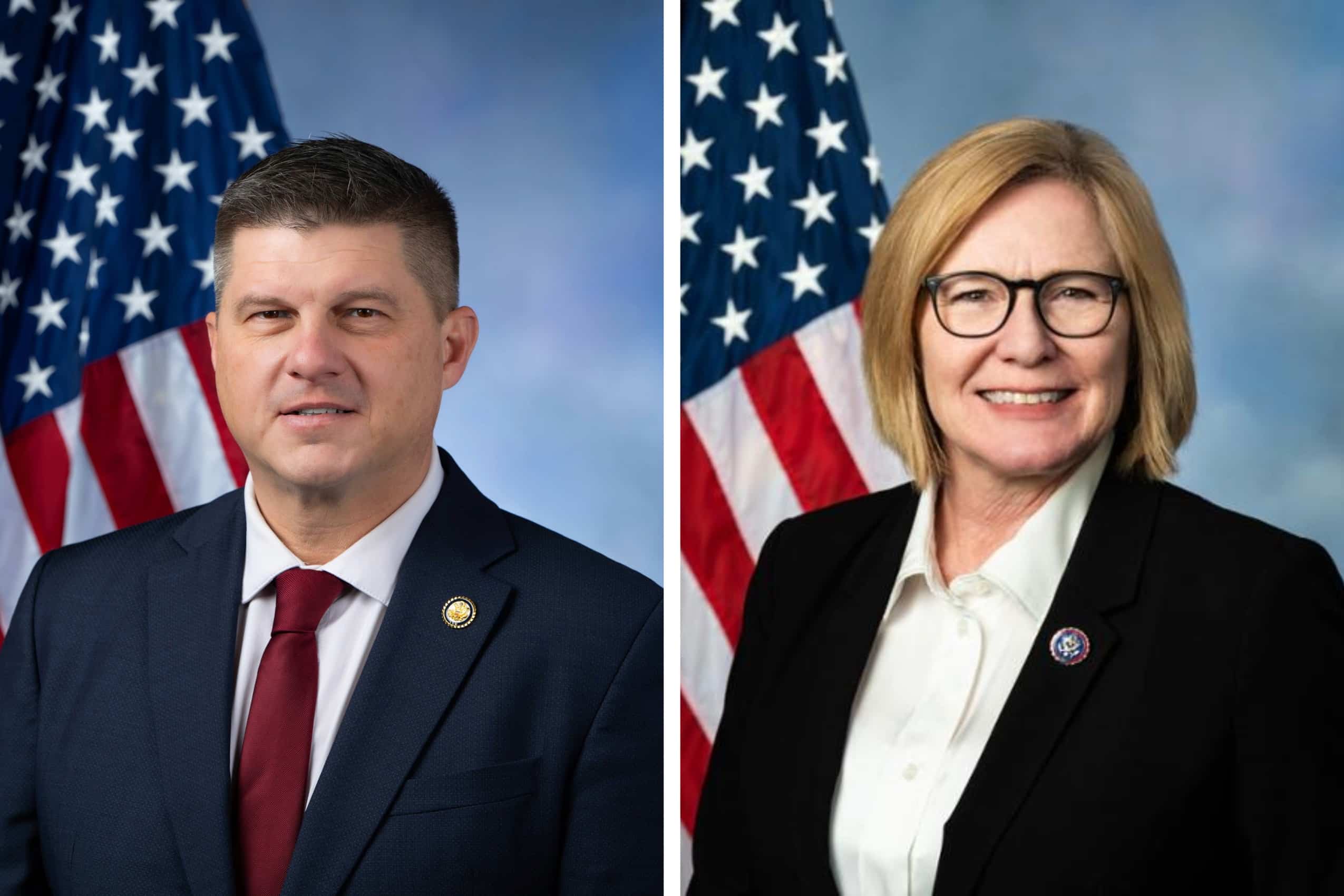
Authored by Rep. Brad Finstad and Rep. Michelle Fischbach, the Immigrant Resettlement & Welfare Abuse Prevention Act would require nonprofits to disclose how many noncitizens they assist with resettlement and accessing federally-funded programs.
Finstad represents much of southern Minnesota, and Fischbach represents much of western Minnesota. Both lawmakers are Republicans.
“In Minnesota, the seemingly endless fraud we’ve seen under Democrat leadership has put a spotlight on poor policies and failed oversight that have allowed bad actors to exploit our federally funded programs,” Finstad said in a press release.
“Rep. Fischbach and I are leading the Immigrant Resettlement & Welfare Abuse Prevention Act to help prevent further abuse of our taxpayer-funded programs by establishing clear reporting rules that will increase transparency regarding nonprofits that help resettle non-citizens and their role in enrolling them in federally funded assistance,” he added.
In recent years, Minnesota has seen a massive wave of fraud in state-run, federally-funded programs. The U.S. Attorney’s Office in Minnesota has estimated that upwards of $9 billion could have been lost to fraud since 2018.
The overwhelming majority of those charged and convicted in Minnesota’s fraud saga are from the Somali community. Somalis first came to Minnesota as refugees in the 1990s.
Although the exact number is not known, tens of thousands of Somalis live in Minnesota and have become U.S. citizens. The Center for Immigration Studies recently found that Somalis use welfare programs at far greater rates than native Minnesotans.
In Minnesota, there are six resettlement organizations that have partnerships with the U.S. State Department. Those groups are Arrive Ministries, Catholic Charities, Minnesota Council of Churches, International Institute of Minnesota, and two Lutheran Social Services groups.
The resettlement organizations “are responsible to assist assigned persons with refugee status with basic needs and provide core services during the first 30-90 days after U.S. arrival,” which includes helping those refugees apply for public benefits.
“Hardworking Minnesotans have seen firsthand the devastating consequences of unchecked spending and the lack of oversight that invited massive fraud into our state,” Fischbach said in a statement.
“There is growing concern that nonprofits are putting taxpayers on the hook,” she added. “This bill is about putting American taxpayers first and ensuring that any organization assisting in the resettlement and welfare of non-citizens provides transparency. We will not allow the exploitation of our system to be subsidized by the American taxpayer.”
In a statement discussing current law on this subject, a spokesperson for Finstad’s office said nonprofits are already required to disclose governance details, nonprofit activities, and financial information via publicly-available tax forms.
However, the spokesperson said there is currently “no standardized requirement to report the number of non-citizens served, the types of resettlement or relocation assistance provided, and whether those individuals receive federal benefits.”

Luke Sprinkel
Luke Sprinkel previously worked as a Legislative Assistant at the Minnesota House of Representatives. He grew up as a Missionary Kid (MK) living in England, Thailand, Tanzania, and the Middle East. Luke graduated from Regent University in 2018.