




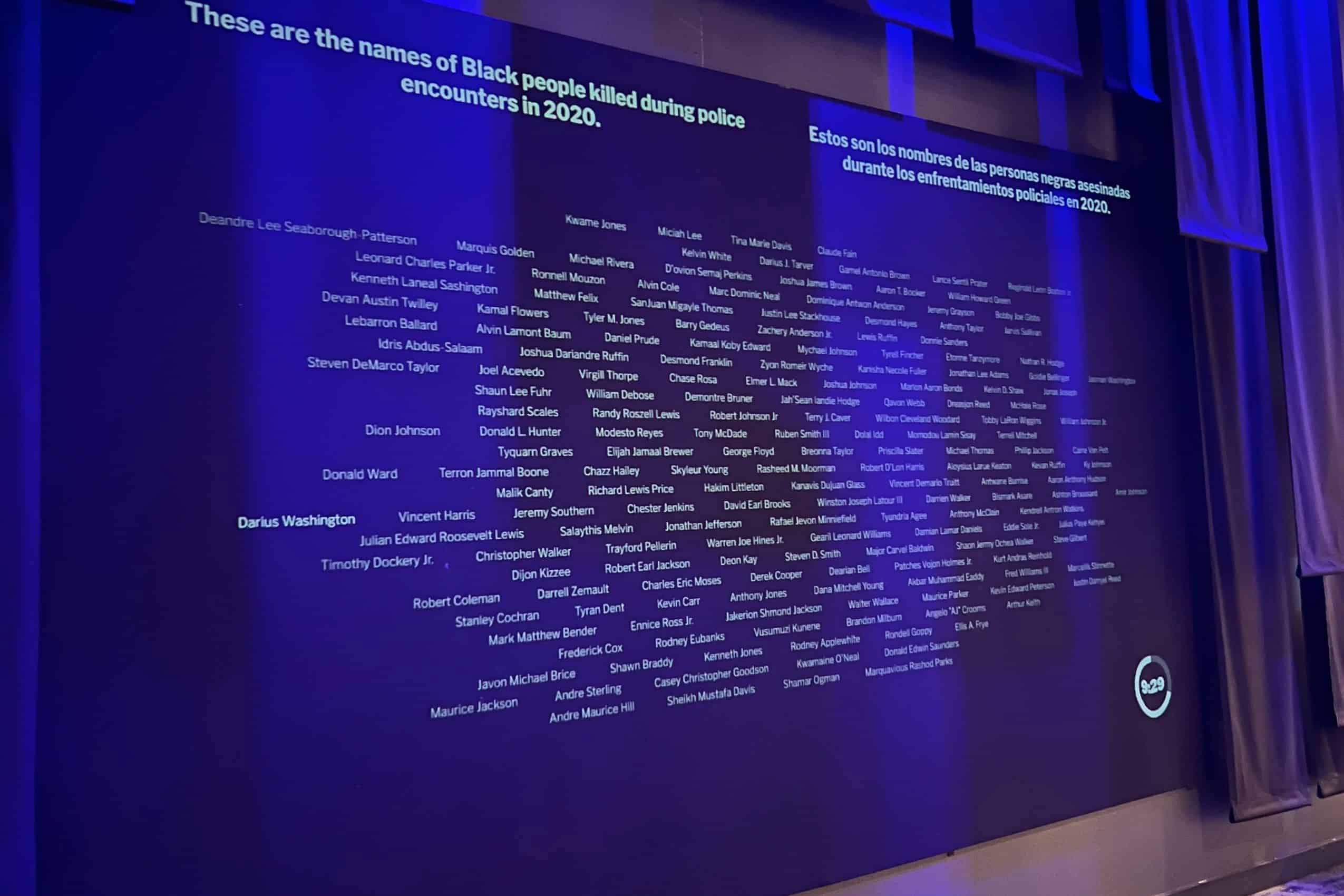
The Science Museum of Minnesota is displaying an exhibit that includes a memorial video listing the names of black Americans killed during police encounters in 2020 — but without providing visitors with factual background about the individual cases or circumstances surrounding those incidents.
The exhibit, titled “Race: Are We So Different?” includes an in-person display and online memorial video that lists the names of more than 250 black men and women allegedly killed during encounters with police in 2020. The video opens with text stating:
“These are the names of Black people killed during police encounters in 2020. Each was someone’s son or daughter. Someone’s brother or sister. Someone’s parent. Someone’s friend. Each one left behind a wounded family. A hole in the community.”
The presentation continues: “This experience lasts 8:46, the length of time officer Derek Chauvin knelt on George Floyd’s neck. Say their names.”
For the duration of the 8 minutes and 46 seconds, the video cycles through names while audio of labored breathing plays in the background.
The presentation concludes with the name of George Floyd.
The exhibit webpage provides no additional information about the incidents referenced in the memorial, including whether those listed were armed, resisting arrest, threatening officers or civilians, or whether investigations later determined police actions were justified or unjustified.
Cases included in the memorial
In addition to high-profile cases such as George Floyd and Breonna Taylor, the memorial also includes lesser-known names such as Dijon Kizzee and Tony McDade.
Kizzee, 29, was fatally shot by Los Angeles County sheriff’s deputies in August 2020 after they attempted to stop him for a bike infraction and he fled on foot.
According to media reports, Kizzee “was holding some items of clothing in his hands, punched one of the officers in the face and then dropped the items in his hands … The deputies noticed that inside the clothing items he dropped was a black semiautomatic handgun. At which time a deputy-involved shooting occurred.”
The Los Angeles County District Attorney’s office reviewed body-camera and surveillance video and declined to file criminal charges against the deputies, determining the use of force was justified.
McDade, 38, was fatally shot by Tallahassee police in May 2020. According to reports, officers responded after McDade was identified as the suspect in the stabbing death of a 21-year-old man earlier that day.
Body-camera footage showed McDade pointing a handgun at an officer, who then fired, striking McDade multiple times. A bloody knife was recovered at the scene.
A grand jury reviewed the evidence and ruled the officer’s use of deadly force justified and no charges were filed against the officer.
Alpha News asked museum officials whether presenting only the names and emotional framing of police encounter deaths — without factual context about the incidents themselves — risks turning a Science Museum exhibit into political advocacy rather than objective educational content.
The museum did not respond to requests for comment.
The source of the data for the display is not immediately apparent. However, The Washington Post police shooting database lists 251 black victims in 2020. The database also indicates that 219—or about 87%—were armed. The museum exhibit does not reflect whether those listed were armed or unarmed.
Museum previously criticized over sexual identity-focused displays
The Science Museum of Minnesota has previously drawn criticism for pushing progressive social themes.
In December 2024, Alpha News reported that the museum’s gift shop was selling merchandise tied to identities such as genderfluid, polysexual, pansexual and non-binary as part of its “Mental Health: Mind Matters” exhibit.
The items included enamel pins featuring pride-flag color schemes alongside dopamine chemical structures, as well as pronoun pins such as “ze/zer.”
The “dopamine pins” included polysexual, pansexual, bisexual, lesbian, asexual, genderfluid, aromantic, non-binary, and rainbow pride designs.
The museum did not have any pins for those who are heterosexual or cisgender, and they did not respond to Alpha News’ request for comment as to why those sexual and gender orientations were not included.

Jenna Gloeb
Jenna Gloeb is an Edward R. Murrow Award-winning journalist, media producer, public speaker, and screenwriter. Most recently, she worked as a reporter and on-air host for CCX Media. Jenna is a Minnesota native and resides in the Twin Cities with her husband, son, daughter, and two dogs.